

biological
High COD in Activated Sludge WWTP | Beta Pramesti Asia
High COD in activated sludge needs influent, biodegradability, aeration, SRT, RAS/WAS, toxicity, nutrients, clarifier, and effluent target diagnosis steps.
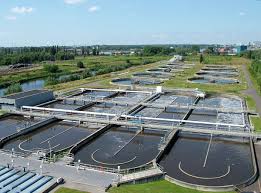
High COD in an activated-sludge WWTP should be traced through inlet load, biodegradability, aeration, sludge age, RAS/WAS control, toxicity, nutrients, and clarifier performance. PT Beta Pramesti Asia, through beta.co.id, designs and supports industrial wastewater programs in Indonesia using influent data, effluent targets, aeration demand, settleability, and solids management.
Technically reviewed: 5 August 2026.
How Does Activated Sludge Work?
In an activated-sludge system, wastewater enters an aeration tank supplied with air or oxygen. Biomass uses available organic matter and nutrients, then the mixed liquor flows to a secondary clarifier for solids separation.
A portion of the settled sludge returns as return activated sludge (RAS) to maintain the biomass inventory. Excess biomass leaves as waste activated sludge (WAS) and continues to sludge treatment.
How Should SVI, Solids Inventory, and Sludge Age Be Calculated?
Calculate SVI from a settling test and MLSS measured on the same mixed-liquor sample. Then calculate solids inventory within a consistent system boundary and divide it by daily solids lost through WAS and the effluent. RAS only transports solids between the clarifier and aeration tank; it is not a loss from the system.
Use these units so each step remains auditable:
- SVI (mL/g) = 30-minute settled sludge volume (mL/L) ÷ MLSS (g/L).
- Aeration solids inventory (kg) = aeration volume (m³) × MLSS (mg/L) ÷ 1,000.
- WAS solids (kg/day) = WAS flow (m³/day) × WAS TSS (mg/L) ÷ 1,000.
- Effluent solids (kg/day) = effluent flow (m³/day) × effluent TSS (mg/L) ÷ 1,000.
- Simplified SRT (days) = biological solids inventory (kg) ÷ total solids leaving (kg/day).
Illustrative example: a 30-minute settled volume of 270 mL/L at 3,000 mg/L, or 3.0 g/L, MLSS gives an SVI of 90 mL/g. An 800 m³ aeration tank at that MLSS holds approximately 2,400 kg of solids. If 20 m³/day of WAS at 8,000 mg/L removes 160 kg/day and 500 m³/day of effluent at 20 mg/L removes 10 kg/day, the simplified SRT based on aeration inventory is 2,400 ÷ 170 = 14.1 days.
That result is not automatically the design SRT. The example excludes solids held in the clarifier, other biological zones, and any other loss pathways. Define the calculation boundary once, include material inventories, and apply the same method to every trend. RAS solids transport can be calculated as RAS flow × RAS TSS ÷ 1,000 to evaluate clarifier operation, but it must not be counted as solids leaving the system.
| Data-quality check | Criterion for a comparable result |
|---|---|
| Settling test and MLSS | Take fresh mixed liquor from the same point, begin promptly, use a 30-minute result, and record any sample dilution |
| Flow and solids concentration | Use the same representative period for WAS, effluent, MLSS, and process flows |
| Inventory boundary | State whether clarifier, selector, or other biological-zone inventory is included |
| Treatment of RAS | Record it for the internal balance and clarifier control, not as a solids loss |
| Operating decision | Use a multi-day trend with load, DO, temperature, settleability, and clarifier condition; do not change wasting from one sample alone |
What Must Be Included in a Request for Quotation?
| Component or data | Buyer question | Evidence to request |
|---|---|---|
| Influent and equalization | What are normal/peak flow and the variation in BOD, COD, TSS, pH, temperature, oil, and inhibitory compounds? | Dated laboratory data, flow profile, and design basis |
| Aeration tank and blowers | What is the oxygen demand and turndown range from minimum to peak load? | Mass balance, oxygen calculation, blower curves, and DO control strategy |
| Secondary clarifier | Are area, depth, weirs, and sludge collection suitable for hydraulic and solids loads? | Design criteria, normal/peak loading cases, and mechanical drawings |
| RAS and WAS | How are return flow and wasting controlled to maintain biomass inventory? | Pump range, measurement points, controls, and operator procedure |
| Nutrients and alkalinity | Does the influent provide adequate nitrogen, phosphorus, and buffering? | Influent analysis, nutrient balance, and any chemical-addition basis |
| Effluent and sludge | What must be achieved and where will excess sludge go? | Acceptance targets, sampling method, discharge/reuse destination, and sludge plan |
When Is Activated Sludge a Suitable Choice?
Activated sludge belongs in the comparison when the organic load is sufficiently biodegradable, operators can sustain aeration and solids control, and land is available for aeration and clarification. A configuration can be developed for nitrogen or phosphorus removal, but process zones, recycle flows, carbon, alkalinity, and controls must be demonstrated in the design.
For a smaller footprint or membrane solids separation, compare a membrane bioreactor or MBR. When the problem is nutrient deficiency or biomass recovery, review biological nutrients and a biological booster; neither replaces correction of design, toxic loading, aeration, or wasting. Excess solids should be aligned with the sludge-treatment program.
The U.S. EPA Process Control Manual for Aerobic Biological Wastewater Treatment Facilities explains that process control relies on operating records, system observations, and laboratory data read together. That principle helps define a baseline and acceptance evidence; site permits and local regulations still establish effluent limits.
How Should Acceptance Criteria Be Defined?
Acceptance criteria should state load conditions, test duration, sample points, laboratory methods, equipment availability, and treatment of data outside the design envelope. Avoid a statement such as “effluent meets target” without agreeing on influent conditions and the stabilization period.
- Verify flow, influent composition, and any bypass or recycle streams during the test.
- Record DO, pH, temperature, settleability, MLSS/MLVSS where used, RAS/WAS flow, and clarifier condition.
- Test effluent with agreed methods and laboratories for the contractual parameters.
- Record energy, chemicals, sludge production, alarms, and operator interventions.
- Accept the system only after results, deviations, and corrective actions are closed in a joint report.
For nutrient- or chemical-metering hardware, review Beta dosing pumps or Watermart dosing pumps. Send the design basis, influent data, effluent target, plot space, utilities, and acceptance scope through the Beta Pramesti Asia contact page.
Diagnose an activated-sludge upset before adding chemicals
One symptom can originate in loading, aeration, the clarifier, RAS/WAS control, toxicity, nutrients, or an instrument. Compare trends from before and after the upset, verify measurements, and then change one primary variable so the process response remains interpretable.
High COD in a WWTP: separate the evidence first
High COD in a WWTP does not automatically mean the biology needs more bacteria. Separate biodegradable soluble COD, particulate COD leaving with TSS, refractory COD, and possible toxic compounds that suppress biomass. A defensible fix reads influent and effluent data with DO, pH, alkalinity, MLSS, SRT, settling, RAS/WAS, and equalization condition.
| High-COD pattern | Differentiating evidence | First action |
|---|---|---|
| COD and effluent TSS rise together | Clarifier condition, SVI, sludge blanket, pin floc, bulking, and hydraulic peak | Stabilise settling and solids inventory before adding chemicals |
| Soluble COD remains high while TSS is normal | BOD/COD fraction, refractory compounds, toxicity, and residence time | Review biodegradability, equalization, pretreatment, or downstream polishing |
| COD rises after a production change | Flow profile, batch discharge, pH, oil, surfactants, solvent, or sanitizer | Hold shock load in equalization and verify inhibition before changing the biology |
| COD rises with ammonia | DO, alkalinity, sludge age, temperature, and nitrification inhibitors | Restore nitrification conditions and review nutrient removal where nitrogen limits also apply |
| COD drops in aeration but final effluent misses target | Polishing, coagulation, filtration, or membrane need | Compare MBR, WWTP coagulants, or sludge treatment according to the remaining COD source |
| Operating symptom | Evidence to review together | Defensible first action |
|---|---|---|
| Cloudy effluent or rising TSS | Flow profile, clarifier blanket, settleability, floc, RAS/WAS, weirs, and influent condition | Stabilise hydraulic load and solids inventory; distinguish carryover, bulking, pin floc, and mechanical failure |
| Unstable DO | Sensor calibration, airflow, blower pressure, diffusers, level, temperature, and organic load | Demonstrate oxygen demand and transfer before changing a setpoint or adding capacity |
| Rising effluent ammonia | pH, alkalinity, temperature, DO, sludge age, ammonia load, and inhibitory compounds | Protect nitrification conditions and identify biomass loss or inhibition before chemical correction |
| Changed foam or odour | Foam type, septic influent, surfactants/oil, sludge age, aeration, and microbiological condition | Trace the source and process condition; do not mask the symptom with defoamer without diagnosis |
| Suspected nutrient deficiency | Biodegradable BOD/COD, nitrogen, phosphorus, flow, actual dose, and laboratory results | Prepare a balance first, then trial biological nutrients or a biological booster only against a written baseline and endpoint |
Frequently Asked Questions
Is activated sludge suitable for every industrial wastewater?
No. Biodegradability, inhibitory compounds, load variation, temperature, pH, nutrients, alkalinity, and operator capability need evaluation. Pretreatment may be required before the biological process.
Why is the effluent cloudy even when aeration is running?
Cloudiness can come from poor sludge settling, hydraulic overload, RAS/WAS changes, pin floc, bulking, or clarifier carryover. Check the clarifier and solids inventory together with DO and influent data before adding chemicals.
What data is required for a system quotation?
Prepare a flow profile, dated influent analysis, effluent target and destination, operating hours, available area, utilities, redundancy preference, sludge data, noise or odor limits, and the acceptance-test definition.