

ion exchange
Condensate Polisher for Power Plants | Beta Pramesti
Condensate polisher for power plants protects condensate quality by removing sodium, chloride, silica, iron, copper, and corrosion products before boilers.
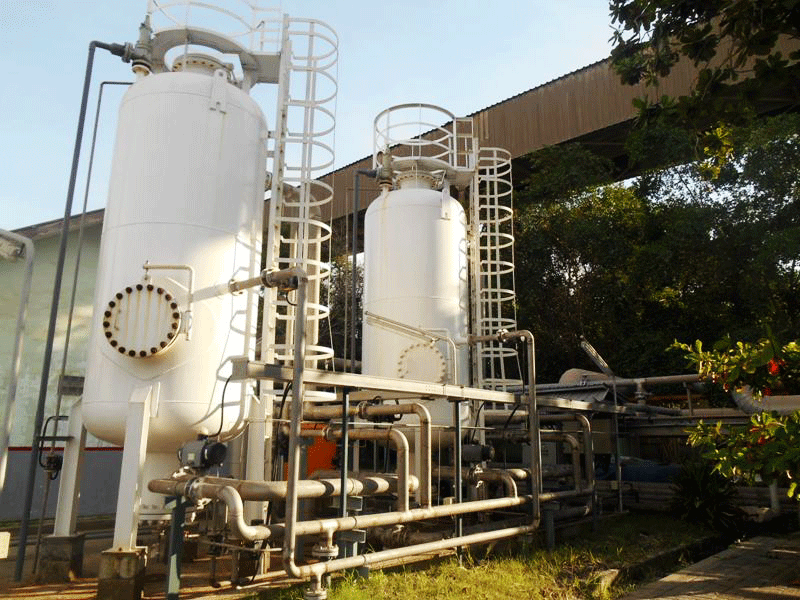
Condensate Polisher for Power Plants
A condensate polisher for power plants is an ion-exchange unit in the condensate line that removes dissolved ions and corrosion particles before the water returns as boiler feedwater. PT Beta Pramesti Asia evaluates polisher needs from boiler pressure, condensate return, condenser-leak risk, conductivity, sodium, silica, and resin configuration.
Technically reviewed: 5 August 2026.
The condensate polisher is placed after the condenser or condensate pump discharge and before the deaerator or feedwater train, depending on the plant design. It is different from a demineralizer: the demin plant prepares makeup water, while the polisher protects returned condensate while the steam cycle is operating.
Main functions of a condensate polisher
A condensate polisher protects steam-cycle water quality when condensate carries sodium, chloride, silica, trace hardness, iron, copper, or corrosion products. In power plants and HRSGs, it acts as a buffer during start-up, minor condenser leakage, or contaminant spikes that can damage boilers, economizers, and turbines.
| Operating risk | What the polisher removes | Evidence to monitor |
|---|---|---|
| Condenser leakage | Sodium, chloride, sulfate, hardness, and silica | Cation conductivity, sodium analyzer, chloride, and silica trend |
| Condensate-line corrosion | Iron, copper, and fine oxides | Dissolved Fe/Cu, differential pressure, and deposit inspection |
| Start-up after maintenance | Debris, resin fines, and remaining construction contamination | Turbidity, pressure drop, conductivity, and staged sampling results |
| Sensitive steam quality | Trace ions that can carry over to the drum or turbine | Sodium, silica, conductivity, pH, and plant or OEM chemistry limits |
Working principle and resin configuration
A condensate polisher usually uses mixed-bed ion exchange. Cation resin exchanges positive ions such as Na, Ca, and Mg, while anion resin exchanges negative ions such as Cl, SO4, and ionized silica. Together they reduce conductivity and contaminants before condensate returns to the boiler system.
Configurations may include deep bed, mixed bed, or precoat systems according to flow, quality target, space, regeneration strategy, and operating philosophy. For media components, review mixed bed and ion exchange resin. For boiler-feedwater integration, compare the Betagard boiler chemical program.
Data needed before a quotation
A condensate-polisher proposal should start from steam-cycle data, not only flow capacity. Prepare the PFD, normal and peak condensate flow, pressure, temperature, outlet target, condensate analysis, condensate-return percentage, condenser-leak history, regeneration space, and online sampling points.
| Design data | Why it matters | Buyer decision |
|---|---|---|
| Condensate flow and temperature | Sizes the vessel, valves, and materials | Select normal, peak, and standby capacity |
| Outlet target | Determines resin, configuration, and alarms | Agree conductivity, sodium, silica, and pressure-drop limits |
| Condenser-leak risk | Defines buffer capacity and bypass strategy | Set the response when sodium or conductivity rises |
| Regeneration or media replacement | Determines OPEX, chemicals, regenerant waste, and downtime | Compare deep bed, external regeneration, or precoat systems |
| Instrumentation | Makes performance auditable | Define conductivity, sodium, silica, flow, and differential-pressure points |
Frequently Asked Questions
Does every power plant need a condensate polisher?
Not always. The need depends on boiler pressure, condensate quality, condenser-leak risk, chemistry targets, start-up strategy, and downtime consequences. High-pressure units or plants with meaningful condensate-contamination risk usually require a closer review.
What is the difference between a condensate polisher and a mixed-bed demineralizer?
Both use ion exchange, but the duty is different. A mixed-bed demineralizer usually polishes makeup water, while a condensate polisher treats returned condensate in the steam cycle and must handle operating flow, temperature, and contamination risk.
What data should be sent to Beta?
Send the PFD, condensate flow and temperature, water analysis, outlet target, condenser-leak history, system pressure, redundancy need, space limits, and acceptance standard. The PT Beta Pramesti Asia team can review the scope through the contact page.