

ancillaries
Plate Settler Selection & Proof | Beta Pramesti
Select a plate settler from flow, TSS, surface loading, plate spacing, sludge draw-off, cleaning access, material, and acceptance tests.
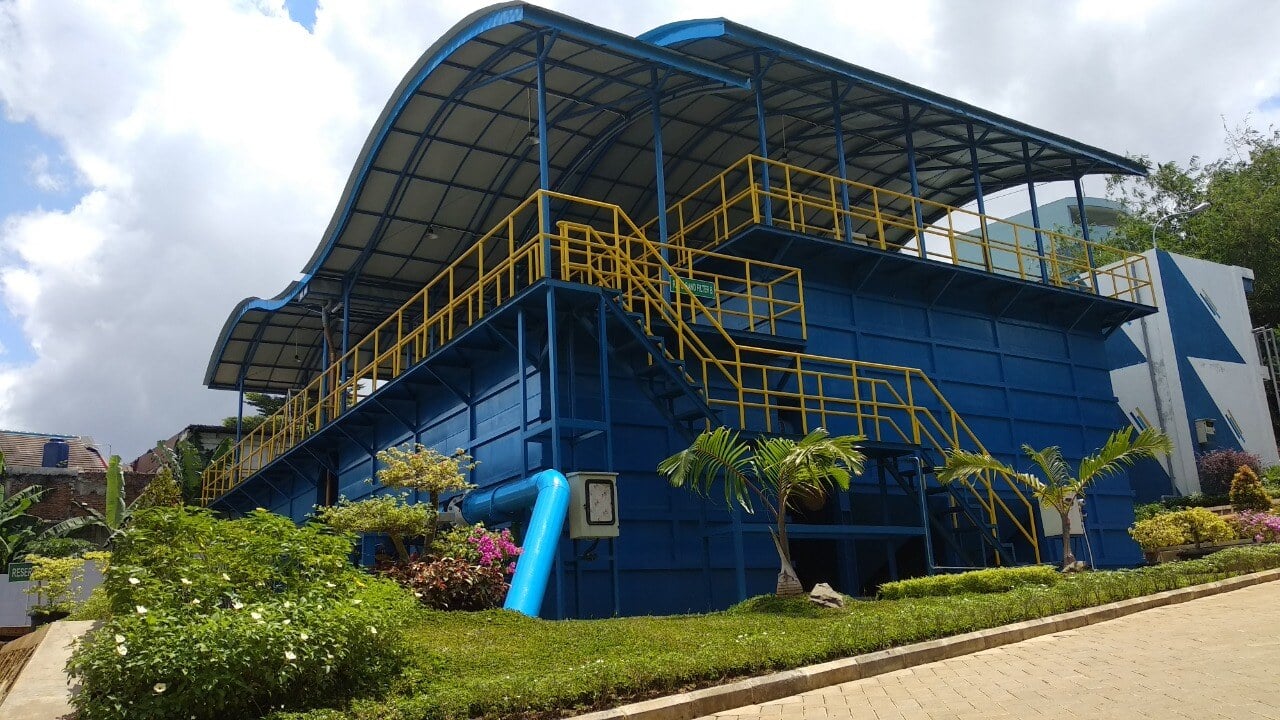
A plate settler helps a clarifier or settling tank handle higher TSS in a smaller footprint, but it must be selected from flow, solids character, surface loading, plate spacing, installation angle, sludge draw-off, and cleaning access. PT Beta Pramesti Asia supplies plate settlers for industrial WTP and WWTP projects in Indonesia as part of a liquid-solid separation train.
Technically reviewed: 4 August 2026.
When is a plate settler worth installing?
A plate settler is worth evaluating when a clarifier lacks settling area, the outlet carries floc, or a retrofit cannot add a large tank. It does not replace coagulation, flocculation, flow distribution, or sludge withdrawal; performance depends on stable formed floc and even hydraulics.
| Site condition | Checks before selection | Acceptance evidence |
|---|---|---|
| Clarifier outlet turns cloudy at peak flow | Average and peak flow, TSS, floc size, and actual overflow rate | Outlet TSS or turbidity improves at the agreed test flow |
| Clarifier footprint is constrained | Tank dimensions, inlet-outlet space, freeboard, lifting access, and washing access | Retrofit layout shows even flow and safe maintenance access |
| Sludge builds up below the plates | Hopper, drain, sludge draw-off, blowdown frequency, and sludge pump | Sludge can be removed without short-circuiting or carryover |
| Floc breaks at the inlet | Mixing energy, distance from flocculation, baffles, and inlet velocity | Floc remains intact during the operating test |
| Water contains oil or light solids | Need for DAF, oil removal, or additional coagulation pretreatment | Plate gaps do not foul rapidly during the trial |
What data should be sent for a quotation?
Send design and peak flow, TSS or turbidity analysis, jar-test results when coagulants are used, existing tank drawings, water depth, inlet-outlet routes, sludge system, cleaning access, preferred material, and outlet target. These data set the module size, plate spacing, installation method, and supply boundary.
For upstream and downstream treatment, compare water-treatment coagulants, industrial flocculants, clarifiers, and wastewater-treatment chemicals. If solids are mixed with oil or FOG, review DAF as well.
Plate settler FAQs
Does a plate settler automatically fix a cloudy clarifier?
No. If the main problem is coagulant dose, flocculation, inlet short-circuiting, sludge blanket control, or poor sludge withdrawal, that issue must be fixed with the plate settler design.
What indicates plate settler acceptance?
Use agreed test flow, sampling points, outlet TSS or turbidity, sludge draw-off condition, pressure or headloss where relevant, and plate-gap inspection after the agreed operating period.
When should a plate settler be cleaned?
Cleaning frequency follows solids accumulation, biological fouling, headloss change, and outlet-quality decline. Washing access should be included in the design from the start.