

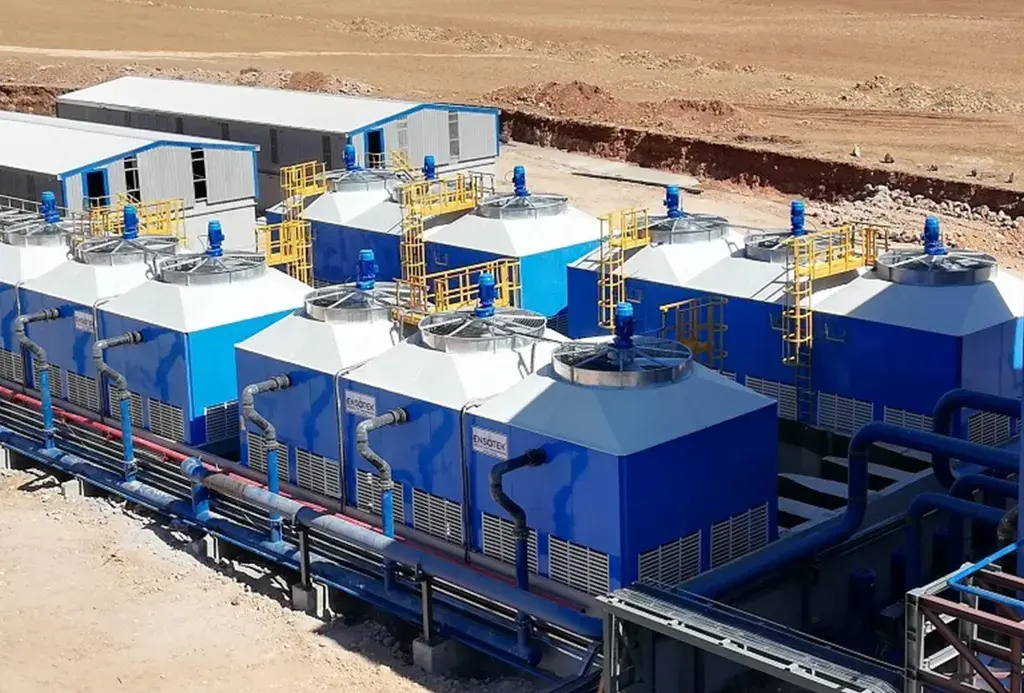
cooling tower
Bromine Biocide for Cooling Towers | Beta Pramesti
Bromine biocide for cooling towers: compare BCDMH evidence, feeder, residual, contact time, monitoring, records, logistics, and programme cost onsite.
A bromine biocide controls cooling-tower microorganisms
A bromine biocide for cooling towers controls bacteria, algae, fungi, slime, and biofilm in circulating water. PT Beta Pramesti Asia evaluates the programme from active identity, pH, microbiological load, system volume, measurable residual, contact time, materials, blowdown, and monitoring method—not from a product name or dose alone.
BCDMH, or 1-bromo-3-chloro-5,5-dimethylhydantoin, is one solid oxidising biocide that releases active bromine and chlorine species when it reacts with water. Its suitability still depends on the system condition, feeder, product documents, and evidence from a measurable residual.
PT Beta Pramesti Asia reviews BCDMH specifications within a cooling-tower biocide programme, but a BETAGARD name or the term “oxidising biocide” does not prove that a product contains BCDMH. Product identity, active content, tablet or granular form, current availability, permitted use, and dose basis must be confirmed in the current TDS, SDS, label, and quotation.
Technically reviewed: 4 August 2026.
The PubChem record for BCDMH identifies it as a bromine and chlorine source used for water disinfection. One U.S. EPA-registered BCDMH product label lists industrial recirculating cooling-water use, but its dose and directions apply only to that registered formulation. A buyer should request the following evidence for the actual product offered.
| BCDMH input | What to confirm | Why it matters |
|---|---|---|
| Chemical identity | Chemical name, active content, physical form, tablet or granule size, TDS, SDS, label, and CoA | Prevents comparison of products with different composition or active basis |
| Feeder and dissolution | Feeder model, capacity, materials, bypass flow, dissolution rate, interlock, and application point | Tests whether the solid product can enter consistently without accumulation or uncontrolled feed |
| System condition | Volume, make-up and circulation, pH, temperature, cycles, blowdown, materials, and contaminant load | Defines the trial boundary, contact time, and compatibility risks |
| Monitoring and acceptance | Residual specified by the product document, test method, ORP where relevant, TPC, basin condition, and biofilm trend | Proves microbiological control from evidence rather than tablet consumption |
| Safety and logistics | Pack, dry storage, segregation, PPE, spill procedure, destination, and supply frequency | Determines site-handling feasibility and programme cost |
How should a buyer compare bromine biocide with alternatives?
Compare biocide offers by active identity, feeder or injection equipment, testable residual, contact time, monitoring scope, and cost over the same operating period. A “bromine”, “chlorine”, or “non-oxidising” label is not enough because product form, dose basis, application schedule, and acceptance evidence can differ.
| Purchase criterion | Bromine-biocide or BCDMH offer | Alternative-biocide offer |
|---|---|---|
| Product identity | Chemical name, active content, physical form, current TDS, SDS, label, and CoA for the offered product | Active name, content, formulation, permitted use, current TDS, SDS, label, and CoA |
| Application system | Feeder, dissolution rate, bypass flow, materials, interlock, and application point | Pump or applicator, materials, capacity, injection point, mixing, and interlock |
| Control evidence | Product-document residual, test method, contact time, TPC, basin condition, and biofilm trend | Relevant residual or microbiological response, test method, contact time, and operating trend |
| Cost basis | Demand per application or month, feeder, packaging, delivery, monitoring, and handling | Demand over the same period, equipment, packaging, delivery, monitoring, and service scope |
Cooling tower biocide programme cost is set by product type, dose and application frequency, system volume, microbiological load, packaging, delivery, feeder, and included monitoring. Use the same system volume, period, microbiological target, and service scope so the comparison does not stop at price per kilogram.
Cooling tower biocide controls algae, bacteria, and biofilm when it is selected from the water and operating conditions, not through a simple increase in dose. PT Beta Pramesti Asia supplies Betagard biocide programmes in Indonesia, supported by evaluation of pH, temperature, ORP or oxidant residual, TPC, dosing pattern, blowdown, basin condition, and cleaning needs.
A biocide programme is needed when circulating water shows slime, green growth, biofilm, odour, high microbiology results, or Legionella risk. Selection should account for contact time and compatibility with system materials and other treatment chemicals; scale, corrosion, sediment, and stagnant areas can also make microbiological control unstable.
For the complete programme, see Betagard Cooling Tower Chemicals, scale inhibitors, corrosion inhibitors, dispersants, and cooling tower cleaning service. For liquid chemical injection, see Beta dosing pumps or Watermart dosing pumps; a solid-product feeder must follow the documents for the offered product.
When is a cooling tower biocide needed?
| Operator question | Field symptom | Programme usually reviewed | Data to check |
|---|---|---|---|
| Who supplies cooling tower biocide in Indonesia? | The cooling tower needs routine microbiological control | Betagard biocide programme, dosing schedule, and field monitoring | System volume, circulation flow, temperature, pH, TPC, ORP, and blowdown pattern |
| How do I control slime or biofilm? | Slippery basin surfaces, dirty fill, odour, or lower heat transfer | Oxidising or non-oxidising biocide, with biodispersant where needed | Basin condition, deposit photos, TPC, oxidant residual, and dosing history |
| When should algae be controlled? | Green growth in open areas, splash zone, or basin | Biocide programme and physical tower housekeeping | Sun exposure, basin cleanliness, water circulation, and blowdown frequency |
| Why is the biocide programme unstable? | Microbes return quickly, dosage rises, or test results vary | Review pH, contact time, injection point, dispersant, and cleaning need | pH, ORP, chlorine residual, TPC, biofilm, and cleaning schedule |
| Is tower cleaning needed? | Biological deposit is already thick or chemical treatment is no longer enough | Cooling tower cleaning followed by chemical programme reset | Deposit area, tower material, shutdown plan, and circulating-water condition |
Select a Betagard biocide by its microbiological target
Product selection should reflect the target organisms, system conditions, and the way residual or microbiological response will be monitored. This table supports the initial review; final product, dose, contact time, and rotation should be set from site data.
| Product | Published role | Data needed before selection |
|---|---|---|
| BETAGARD 5012 Oxidizing Biocide | Uses chlorine oxidising power to help control bacteria in industrial water systems | pH, oxidant residual/ORP, contact time, system materials, and injection point |
| BETAGARD 5050 Non Oxidizing Biocide | Controls microorganisms in open and closed circulating water systems | System volume, TPC, product history, contact time, and programme compatibility |
| BETAGARD 5080 Biocide | Fast-acting broad-spectrum control of algae, bacteria, and fungi in recirculating water | Growth type, TPC, deposit condition, biodispersant need, and cleaning requirement |
| BETAGARD 5090 Oxidizing Biocide | Disinfectant agent that helps keep recirculating water systems clean and clear | Oxidant residual/ORP, blowdown, contaminant load, and dosing stability |
Data needed for a biocide quotation
Prepare system and make-up volume, circulation flow, operating hours, pH, temperature, conductivity, ORP or oxidant residual, TPC results, basin condition, product and dose history, control target, blowdown schedule, injection point, package form, and delivery location. Ask the quotation to state product, dose basis, frequency, monthly demand, delivered price, monitoring support, and cleaning assumptions.
For intermittently dosed products, calculate demand per application and the number of applications per month. For a continuous programme, use the actual feed rate and operating hours. Programme costs become comparable only when both candidates use the same system volume, period, microbiological target, and service scope.
Data to prepare before recommendation
Prepare pH, temperature, conductivity, TDS, cycle of concentration, oxidant residual or ORP, TPC result if available, basin condition, injection point, blowdown pattern, and previous dosing history. If the system also has scale, corrosion, or suspended deposits, hardness, alkalinity, chloride, sulfate, silica, and heat-exchanger metallurgy help Beta decide whether the biocide programme should be combined with scale inhibitor, corrosion inhibitor, or dispersant.
The CDC cooling tower Legionella guidance, updated January 3, 2025, treats scale, corrosion, sediment control, and cleaning as critical parts of operation. It also recommends automated disinfectant addition and monitoring plus regular pH and residual checks; recurring algae or biofilm should therefore trigger system diagnosis rather than an unsupported dose increase.
Use the cooling tower biofouling and algae diagnosis guide to distinguish biological symptoms from scale or corrosion products, prepare biocide-selection data, and decide when cleaning should be reviewed.
Residual and contact-time acceptance table
A biocide programme is accepted from residual evidence, contact time, and microbiological response under defined operating conditions. Product consumption alone does not prove control, especially when blowdown, pH, or organic load changes.
| Acceptance parameter | How to record it | Decision supported |
|---|---|---|
| System volume and blowdown | Basin volume, make-up, cycles, and blowdown schedule during dosing | Shows whether residual is lost through water discharge or microbiological demand |
| Residual or ORP | Test method, sample point, time after dosing, and instrument calibration | Confirms active chemistry reached circulating water within the product-document window |
| Contact time | Injection hour, circulation time, application point, and stagnant areas | Checks that biocide is not discharged immediately or trapped in a dead zone |
| Microbiological response | TPC, dip slide, visible biofilm/slime, odour, and basin condition | Separates chemical success from a need for physical cleaning or biodispersant |
| Programme compatibility | pH, corrosion inhibitor, dispersant, metallurgy, and other oxidants | Avoids a dose that disrupts scale or corrosion protection |
Separate product-consumption evidence from microbiological-control evidence. A feeder emptying faster may indicate organic demand, blowdown, or equipment setting; a new programme should be accepted only when residual, contact time, and field response move together.
| Field scenario | Possible meaning | Technical decision |
|---|---|---|
| Product is consumed, residual is not detected | High demand, rapid blowdown, wrong test method, or unrepresentative sample point | Check test method, injection point, blowdown, and basin condition before increasing dose |
| Residual is present, TPC remains high | Insufficient contact, protected biofilm, or stagnant zones | Review contact time, biodispersant, cleaning, and circulation |
| TPC falls, slime remains thick | Microbes may be killed while physical deposit remains | Schedule cleaning or flushing, then set a new baseline |
| Residual is high, corrosion/scale worsens | Programme incompatibility or aggressive pH/oxidant exposure | Review inhibitor, materials, and product-document limits |
When residual falls quickly but TPC remains high, check organic demand, basin sediment, injection point, and feeder accuracy before raising dose. If deposit already covers fill or basin surfaces, combine the programme with cooling tower cleaning service and set a new baseline.
Common Questions
What is a cooling tower biocide?
A cooling tower biocide is a chemical used to control bacteria, algae, fungi, biofilm, and slime in circulating cooling-tower water. The programme is usually monitored through ORP, oxidant residual, microbiology tests, basin condition, and system operating trends.
Are all oxidising cooling tower biocides BCDMH?
No. BCDMH is one specific active substance; the oxidising-biocide category also includes other chemistries. Do not infer composition from a trade name or product-series number. Request the TDS, SDS, label, CoA, active content, physical form, and application confirmation before comparing dose or price.
What data should be equal when comparing bromine-biocide prices?
Use the same system volume, water condition, operating period, residual or microbiological target, contact time, product form, feeder requirement, packaging, delivery, monitoring, and service scope. A price-per-kilogram comparison without those inputs does not represent equivalent cooling-tower programme cost.
Should I use an oxidising or non-oxidising biocide?
It depends on the water condition and control target. Oxidising biocide is useful for routine control with measurable residual, while non-oxidising biocide is often used as a companion or rotation when biofilm and microorganisms are harder to control. Selection should consider pH, system materials, microbiological load, and compatibility with the rest of the chemical programme.
Is biocide alone enough for a cooling tower?
Not always. Biocide controls microbiology, but it does not solve mineral scale, metal corrosion, suspended solids, or hard deposits. A troubled cooling tower often needs a combined programme: biocide, dispersant, scale inhibitor, corrosion inhibitor, blowdown control, and physical cleaning.
When should I contact Beta?
Contact Beta when a cooling tower shows slime, algae, biofilm, odour, high TPC, reduced chiller efficiency, or the need for a more stable biocide dosing schedule. Send operating data through the Beta contact page so the technical team can review the programme options.