

ancillaries
Industrial WWTP Equipment Selection | Beta Pramesti
Build an industrial WWTP equipment RFQ from flow, pollutant loads, effluent targets, residuals, utilities, and verifiable commissioning criteria on site.
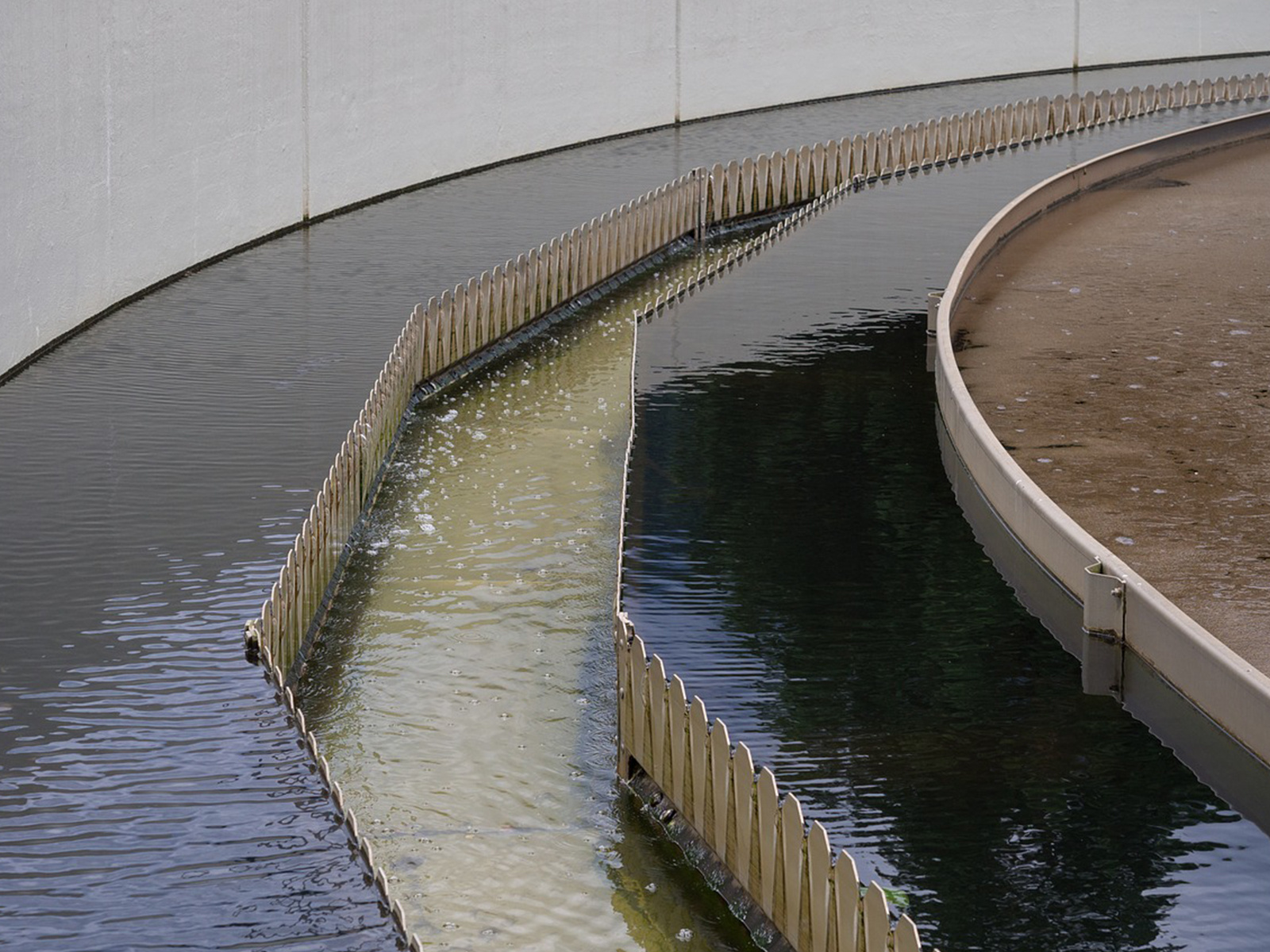
Industrial WWTP equipment must be selected as a treatment train from flow and pollutant load, effluent targets, sludge behaviour, utilities, and operator capability. Screens, DAF, clarifiers, biological processes, and dewatering units perform different duties; one unit cannot replace the whole treatment train.
PT Beta Pramesti Asia is an Indonesian water and wastewater treatment engineering company that supplies equipment and integrates processes, controls, chemical dosing, commissioning, and operational support. This page was technically reviewed on 2 August 2026.
Which WWTP equipment train should be evaluated?
Start with the flow-and-load balance, not a machine list. The U.S. EPA preliminary wastewater treatment presentation identifies screening, grit removal, and flow equalisation as early functions that protect downstream processes; each plant still needs representative sampling and pollutant-specific evaluation. See the U.S. EPA preliminary wastewater treatment reference.
| Wastewater problem | Process function | Equipment to evaluate | Selection evidence |
|---|---|---|---|
| Rags, plastics, and coarse solids | Screening and pump protection | Manual screen or automatic screen | Bar opening, approach velocity, peak flow, bypass and cleaning method |
| Free oil and floating grease | Gravity separation | Grease trap or oil removal | Droplet-size distribution, temperature, retention, skimming |
| Emulsified oil or light floc | Coagulation/flocculation and flotation | Dissolved air flotation | Jar test, hydraulic loading, recycle ratio, float-sludge quality |
| Settleable floc | Sedimentation | Clarifier, tube settler, or plate settler | Settling test, surface loading, flow distribution, sludge removal |
| Biodegradable BOD/COD and selected nitrogen duties | Biological treatment | Biological wastewater systems, activated sludge, or SBR | Load profile, treatability, oxygen demand, sludge age, process controls |
| Primary, chemical, or biological sludge | Thickening and dewatering | Filter press, screw press, or sludge-treatment programme | Solids loading, conditioning test, cake target, filtrate/centrate return load |
Where domestic sewage and limited space are the main duty, a compact sewage treatment plant may be evaluated as a package. Industrial process wastewater still has to be characterised; a “compact” label does not remove pretreatment or residual-handling requirements.
What data must be included in an industrial WWTP equipment RFQ?
The RFQ must state variability, not only averages. Separate normal, peak, start-up, cleaning, batch-discharge, wet-weather ingress, and shutdown conditions whenever they affect the plant.
| Data group | Minimum input | Design impact |
|---|---|---|
| Flow sources | Process drains, sanitation, cooling blowdown, chemical cleaning | Determines segregation and incompatible-mixture risks |
| Flow | Minimum, average, peak, peak duration, hourly/batch pattern | Determines equalisation, pump turndown, and redundancy |
| Pollutant load | pH, temperature, TSS, COD/BOD, oil and grease, nitrogen, phosphorus, salinity, relevant inhibitors/toxicity | Determines unit process and load basis, not flow alone |
| Target | Discharge or reuse requirement at a defined measurement point | Determines polishing, instrumentation, and performance testing |
| Residuals | Screenings, grit, scum, concentrate, sludge, spent chemicals | Determines handling, storage, return load, and disposal |
| Site conditions | Footprint, elevation, power, water, air, crane/truck access, ventilation | Determines layout, materials, and maintainability |
| Operations | Staffing, shifts, laboratory capability, allowable downtime | Determines automation, standby duty, alarms, and sampling plan |
How can buyers compare vendor offers on an equal basis?
Compare every offer against the same design basis and battery limits. A unit price without residual routes, instrumentation, maintenance access, or a performance-test protocol is not comparable with a complete package.
| Comparison item | Question the vendor must answer |
|---|---|
| Process basis | Which feed data and targets were used? Which assumptions remain unverified? |
| Capacity | Is capacity net or gross? How are turndown and peaks handled? |
| Scope | What is included for skids, panels, piping, cabling, platforms, dosing, and civil interfaces? |
| Consumables | Which chemicals, polymers, filters, spares, and energy are required? |
| Residuals | Where do backwash, scum, sludge, filtrate, and start-up drains go? |
| Maintainability | Are pull-out space, lifting points, isolation, drains, and cleaning access provided? |
| Proof | Which FAT/SAT documents, performance tests, training, baselines, and warranty boundaries are supplied? |
How should commissioning acceptance be structured?
Acceptance links mechanical, electrical, control, process, and documentation criteria. Numerical values must come from the project design basis; the table below shows the evidence structure to agree before award.
| Hold point | Evidence checked | Acceptance decision |
|---|---|---|
| Mechanical completion | Materials, level/alignment, guards, drains, access, flow direction | Critical punch items closed before wet testing |
| I/O and interlocks | Alarms, permissives, trips, fail positions, local/remote modes | Cause-and-effect completed without hidden bypasses |
| Water run | Leaks, flow distribution, pumps, aeration, skimmers, sludge withdrawal | Stable operation over the agreed range |
| Process run | Feed and effluent composite/grab data to the sampling plan, chemical dose, sludge data | Target compared at recorded loads and conditions |
| Handover | As-builts, procedures, spares, calibration, training, baseline | Operations accepts final revised documents |
Beta Pramesti industrial WWTP equipment services
- Site survey, sampling-plan review, data review, and design-basis development
- Physical, chemical, biological, and sludge-process design and integration
- Unit, panel, instrumentation, chemical-dosing, and package-interface supply
- FAT/SAT, installation, commissioning, operator training, and handover documentation
- Troubleshooting, optimisation, spare parts, maintenance, and supporting chemical programmes
For pumps, valves, and multi-brand mechanical components, review Watermart water and wastewater equipment. To build a data-led RFQ, contact Beta Pramesti’s wastewater treatment division with source lists, flow data, laboratory results, and the effluent target.
Industrial WWTP equipment selection FAQ
Is one laboratory sample enough to select WWTP equipment?
No. Sampling must represent the relevant source, time, batch, and operating condition. Combine laboratory results with the flow profile and events such as CIP, product changeover, start-up, or wet-weather ingress so peak loads are not hidden.
When is DAF selected instead of a clarifier?
DAF is evaluated when solids or flocs are light, tend to float, or contain emulsified oil after conditioning. A clarifier fits flocs that settle well. Bench or pilot testing is appropriate when separation behaviour is uncertain.
Is chemical dosing included with the equipment package?
The scope must say so explicitly. The RFQ should list storage, day tanks, dosing pumps, mixers, injection quills, containment, instruments, interlocks, and calibration methods; do not assume every item is automatically included.
What is the most useful commissioning proof?
The strongest proof is feed, load, operating-condition, chemical-dose, residual-output, and effluent-quality data from the agreed performance run. Results without load context do not prove process capacity.
How can a sludge-treatment bottleneck be prevented?
Include sludge production from each unit, solids-concentration variability, storage time, conditioning, net dewatering capacity, filtrate return load, and disposal route in the design balance from the beginning.
Baca panduan peralatan IPAL industri ini dalam Bahasa Indonesia.