

consumables
Industrial SS Cartridge Housing | Beta Pramesti Asia
Industrial SS cartridge housing from Beta: select 304/316, size cartridge count, and check pressure, seals, connections, and filtration duties in filtration.
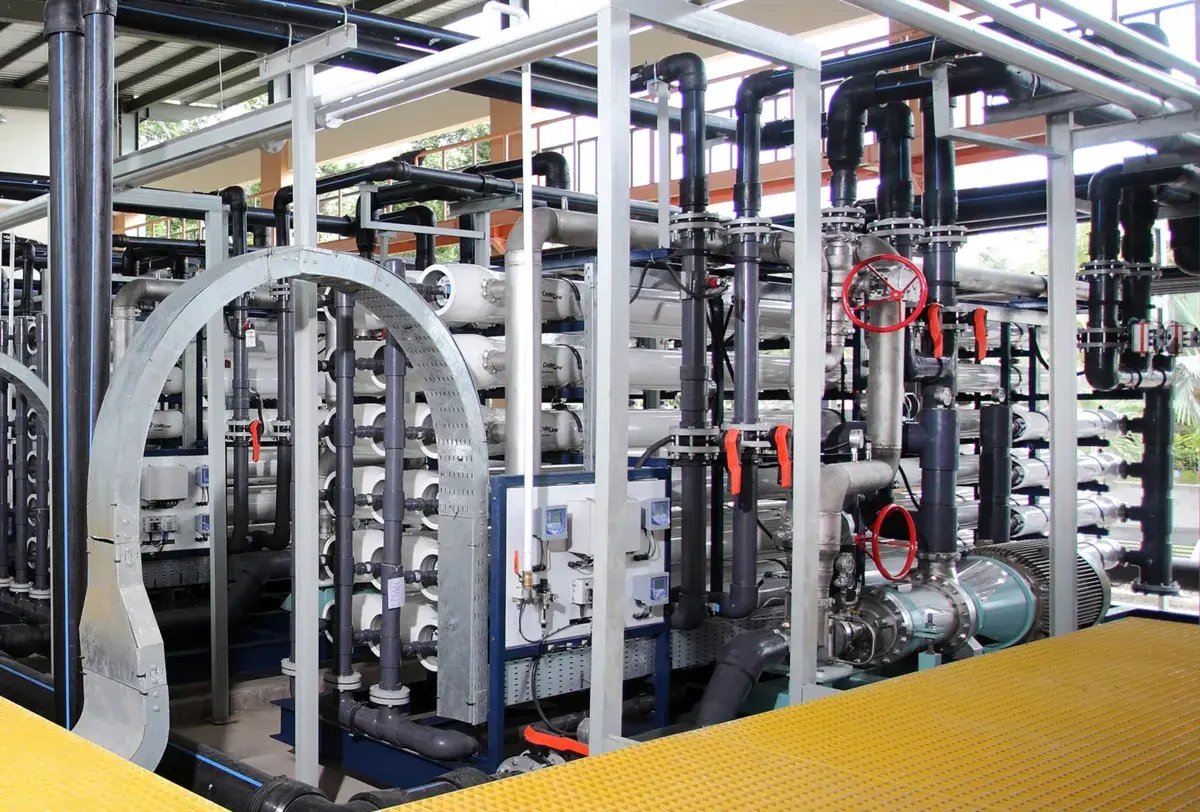
An industrial SS cartridge housing from Beta is a pressure vessel that holds one or more cartridges and forces the full process stream through the filter media. Select it from design flow, cartridge pressure-drop data, particle target, viscosity, temperature, pressure, fluid chemistry, and hygiene requirements—not cartridge count or SS304/SS316 grade alone.
PT Beta Pramesti Asia supplies housings and filtration consumables for RO pretreatment, process water, food and beverage, chemical, and industrial utility systems. Fluid data and operating conditions must be reviewed before the material, seal, connection, and pressure rating are finalized.
Technically reviewed: 4 August 2026.
Main Functions
An SS cartridge housing performs four functions that must be verified as one system:
- Accommodate the cartridge filter (usually a hollow cylinder of fiber or membrane).
- Direct fluid flow so that it passes through the filter element effectively.
- Withstand the operating pressure of the filtration system (because it is made of strong stainless steel).
- Protect the filter element from physical damage or external contamination.
The housing does not establish the micron rating by itself. Filtration performance also depends on cartridge type and integrity, flow pattern, seals, and installation. Review the Betaqua polypropylene cartridge, or continue to Watermart’s industrial filter cartridge range when the buying journey moves to replacement brands and components.
General Components
- Body Housing - the main stainless steel housing.
- Head Cover / Cap - the top part that can be opened to replace the cartridge.
- Inlet and Outlet - fluid inlet and outlet.
- Vent and Drain Valve - to remove air or discharge residual fluid.
- Clamp / Bolt Locking System - lock between the body and cap.
- Support Plate & O-ring Seal - to ensure the cartridge sits tight and does not leak.
Before purchase, record the inlet/outlet size, connection type, cartridge length and end-cap, gasket material, design rating, vent/drain arrangement, and vertical clearance needed to lift the cover. The supplier nameplate and drawing are the final sources for allowable pressure and temperature; body material alone does not establish the vessel rating.
Types Based on Number of Cartridges
- Single Cartridge Housing → only 1 filter cartridge (usually for small capacity).
- Multi Cartridge Housing → contains 3, 5, 7, 12, or more cartridges (for large industrial capacity).
Calculate the cartridge count from cartridge flow data at the agreed fluid conditions and clean pressure drop:
Minimum count = system design flow ÷ validated flow per cartridge
For a transparent example, assume a 30 m³/h design flow and a supplier curve that validates 3 m³/h per cartridge at the agreed fluid properties and clean pressure drop. The minimum is 10 cartridges. Select the next suitable standard housing after allowing for fouling margin, turndown, and standby philosophy. Parker’s sizing guidance starts with cartridge type/micron rating and viscosity at operating temperature, then divides total flow by the selected cartridge flow; actual flow varies with viscosity, micron rating, media, and contaminant loading (Parker, Filter Sizing and Housing Selection Guidelines).
| Design input | Number/unit to provide | Decision affected |
|---|---|---|
| Normal, minimum, and peak flow | m³/h | Cartridge count and nozzle size |
| Clean and change-out differential pressure | bar or kPa | Filter area and operating alarm |
| Cartridge rating | nominal or absolute µm | Particle target; the terms are not interchangeable |
| Viscosity at operating temperature | cP at °C | Higher viscosity increases pressure drop |
| Design pressure/temperature | barg and °C | Housing, closure, seal, and connection rating |
| Fluid chemistry | pH, chloride mg/L, oxidants, solvents | Metal grade and elastomer selection |
Advantages of SS Cartridge Housing
- Corrosion resistance can be tailored through grade, welding, and finish selection.
- Pressure and temperature ratings can be engineered to the design data and agreed code.
- The body can be reused when it is inspected and maintained correctly.
- Selected configurations can be designed for cleaning and CIP/SIP compatibility.
- Sanitary designs can be selected for food, beverage, and pharmaceutical duties.
Those benefits must be proven for the selected configuration. SS316 contains molybdenum and generally provides better chloride-pitting resistance than SS304, but temperature, pH, oxidants, crevices, weld condition, and local concentration can change the material limit. Nickel Institute guidance places 304L/316L in waters below 200 ppm chloride and 316L/duplex 2205 in the 200–1,000 ppm range under stated conditions; use those numbers for preliminary screening, not as a design guarantee (Nickel Institute, Fabricating Stainless Steels for the Water Industry).
| Service condition | Initial selection direction | Required verification |
|---|---|---|
| Ambient clean water, low chloride | SS304/304L may be considered | Water analysis, cleaning chemistry, weld quality |
| More aggressive chloride or cleaners | Evaluate SS316/316L | Chloride, pH, temperature, oxidants, crevices |
| Highly corrosive fluid or high salinity | Do not default to SS316 | Corrosion review and alternative alloy/lining |
| Hygienic product | Sanitary design, not grade alone | Surface finish, drainability, seals, CIP/SIP records |
Application Examples
- Food & beverage industry: filtration of water, syrups or beverages before packaging.
- Pharmaceutical: filtration of injection solutions or purified water.
- Water treatment: pre-filter before RO (Reverse Osmosis).
- Chemical industry: filtration of solvents or corrosive chemicals.
For RO pretreatment, define the cartridge target from membrane-protection requirements and upstream water quality. A micron label does not replace turbidity, SDI, or cartridge inspection data. The train can integrate FilmTec membranes, chemical dosing pumps, and water treatment parts and consumables.
Commissioning and maintenance checklist
- Match the nameplate, drawing, cartridge, gasket, and flow direction to the purchase specification.
- Isolate, depressurize, drain, and make the housing safe before opening the cover.
- Clean the sealing face; replace an O-ring that is cracked, swollen, pinched, or incompatible.
- Seat cartridges and adapters fully so unfiltered flow cannot bypass the elements.
- Vent air during filling, leak-test at low pressure, then raise conditions in a controlled manner.
- Record clean pressure drop, flow, temperature, and date as the operating baseline.
- Change cartridges at the approved differential-pressure, filtrate-quality, or hygienic interval—whichever comes first.
- Investigate pressure-drop spikes, particle bypass, corrosion, or leakage before restart.
Cartridge-count verification worksheet
The correct cartridge count should be proven from cartridge flow at the actual fluid condition, then checked again against clean pressure drop after commissioning. Use this worksheet before accepting a multi-cartridge housing for RO pretreatment, process water, or hygienic service.
| Verification step | Formula or evidence | Short example |
|---|---|---|
| Set design flow | Normal and peak flow from the PFD or operating record | 30 m³/h normal, 36 m³/h peak |
| Take validated cartridge flow | Supplier curve at the agreed micron rating, viscosity, and clean pressure drop | 3 m³/h per cartridge |
| Calculate minimum count | Design flow ÷ flow per cartridge | 36 ÷ 3 = 12 cartridges |
| Add operating margin | Fouling margin, turndown, and standby philosophy | Select a 12- or 15-cartridge housing depending on space and DP limit |
| Accept at start-up | Clean DP, flow, temperature, filtrate quality, and no bypass | Record the baseline for cartridge change-out limits |
The acceptance record should be auditable from start-up conditions, not only from the design calculation. Keep the following data as the baseline so cartridge replacement, pressure-drop claims, and bypass checks are compared under the same conditions.
| Start-up record | Unit to record | Evaluation boundary |
|---|---|---|
| Flow and clean DP | m³/h and bar/kPa at operating temperature | Clean DP should match the supplier curve for the installed cartridge count |
| Cartridge identity | Brand/type, length, micron rating, end-cap, batch | All elements should match the purchase specification without mixed grades |
| Housing condition | Vent complete, drain closed, gasket seated, clamp/bolt procedure followed | No trapped air, bypass, or leakage before full-load operation |
| Initial filtrate quality | Turbidity, SDI, particle count, or agreed process parameter | The result becomes the comparison point when cartridges begin to foul |
| Action if it fails | Seating, valves, flow direction, viscosity, and cartridge-count checks | Installation issues are corrected before raising the operating DP limit |
If clean DP is higher than expected, do not immediately change the micron rating. Check flow direction, cartridge seating, end-cap adapters, trapped air, viscosity, partially closed valves, and whether cartridge count matches the supplier curve. In RO systems, connect this baseline with reverse osmosis chemicals so cartridge fouling is not mistaken for an antiscalant or membrane problem.
Learn more
Send flow, fluid, temperature, pressure, micron target, chloride/pH data, cartridge length, end-cap type, and sanitary requirements to the Beta Pramesti team. These inputs let the housing, cartridges, connections, seals, and materials be assessed as one package.