

specialty
AdBlue for Industrial Trucks: ISO 22241 | Beta Pramesti
AdBlue for industrial trucks under ISO 22241. Prepare SCR fleet, consumption, packaging, site, tank, batch-control, and delivery data for a quotation.
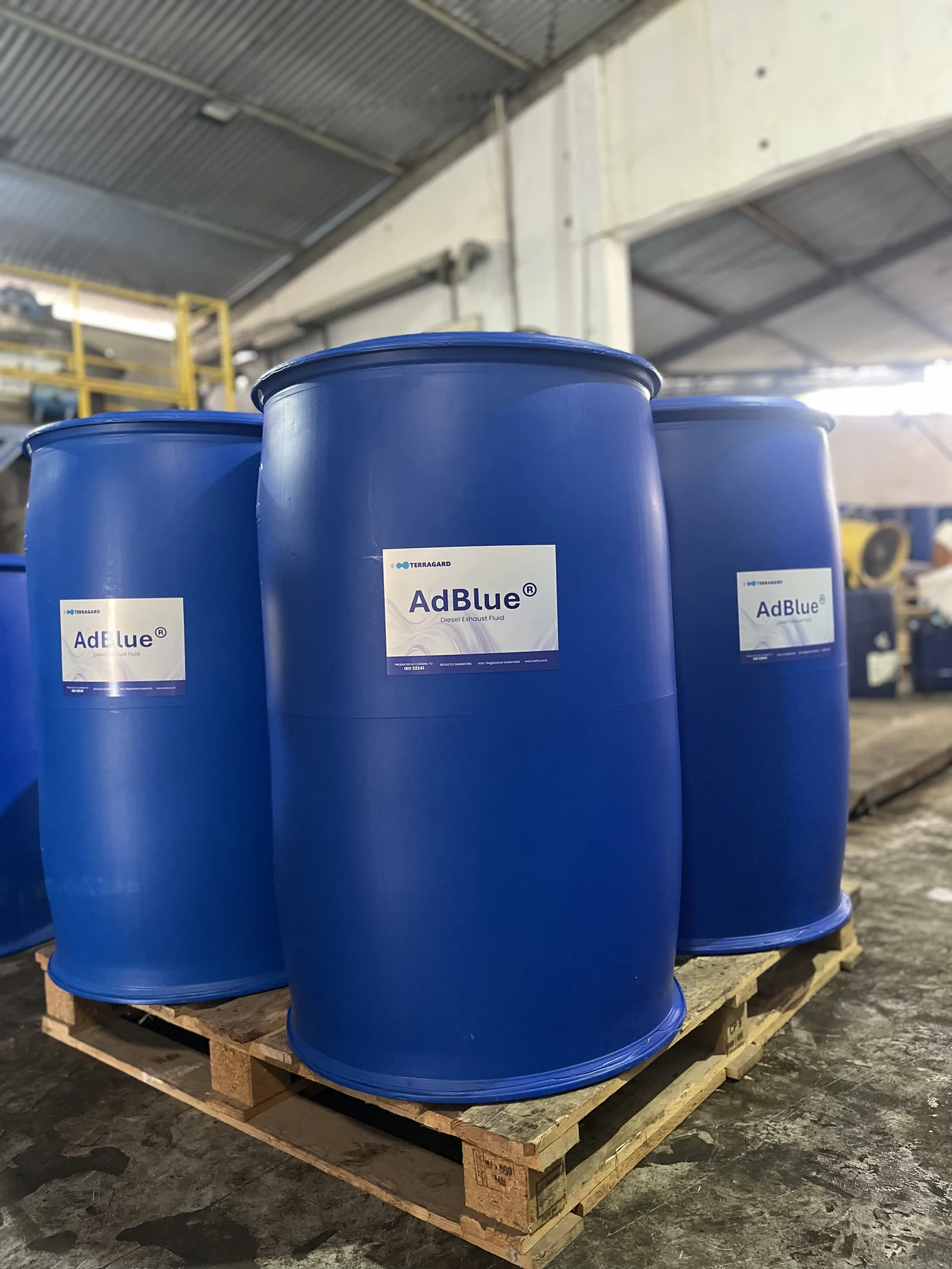
AdBlue for industrial trucks is AUS 32 for diesel fleets equipped with selective catalytic reduction. PT Beta Pramesti Asia prepares ISO 22241 supply plans from measured consumption, packaging, location, batch controls, storage, and dispensing needs.
AdBlue® is the registered trade name for AUS 32, a 32.5% urea solution in demineralized water used separately from diesel fuel in selective catalytic reduction (SCR) systems. Its quality must follow ISO 22241 and OEM requirements; misfuelling or contamination can damage SCR pumps, injectors, and catalysts.
Before requesting a quotation, prepare the unit and OEM list, consumption history, tank size, minimum stock, delivery access, storage conditions, and dispensing arrangement. These data distinguish road trucks, mine haulers, heavy equipment, and generators without applying one consumption assumption to every engine.
What determines an industrial AdBlue price?
| Quotation factor | Buyer data | Why it matters |
|---|---|---|
| Period demand | Active SCR units, measured consumption, operating days, and safety stock | Establishes volume and delivery frequency |
| Packaging and transfer | Package choice, tank capacity, pump, hose, nozzle, and unloading access | Affects handling, contamination risk, and logistics cost |
| Location and lead time | Site address, access, receiving schedule, and minimum stock | Determines delivered price and operating reserve |
| Quality controls | ISO 22241, batch CoA, seal, and traceability | Ensures the quotation compares AUS 32 of the required quality |
When should a buyer choose packaged or scheduled AdBlue supply?
The supply arrangement should follow consumption, receiving facilities, and the site’s ability to keep transfer equipment clean. Select a format after reviewing the following operating conditions rather than unit price alone.
| Operating condition | Format to evaluate | Control before purchase |
|---|---|---|
| Limited demand or no permanent storage tank | Sealed packages that the site can handle safely | Storage space, lifting method, FIFO/FEFO, and a dedicated filling connection |
| Stable demand across many units | Bulk TERRAGARD DEF AdBlue supply with a planned tank and delivery schedule | Tank capacity, minimum stock, unloading access, materials, filtration, and transfer procedure |
| Dispersed operations or changing access | Buffer stock combined with phased deliveries | Lead time by location, equipment-level consumption, distribution route, and receiving responsibility |
Do not compare AdBlue with agricultural urea dissolved on site. Compare products with the same quality, package, delivery basis, and support scope. A price request should also state the intended equipment, estimated litres per month, and site receiving requirements.
Use the DEF operating guide for SCR systems to prepare batch- and equipment-traceable receiving, transfer, filling, and warning-response records.
Composition of AdBlue
AdBlue is not a fuel or fuel additive. Its composition is:
- 32.5% urea meeting the AUS 32 quality specification
- 67.5% deionized water
This mixture is non-toxic and non-flammable.
VDA states that AdBlue contains 32.5% urea and 67.5% demineralized water; the AdBlue name applies to AUS 32 that conforms to ISO 22241 and its licensing conditions (VDA, AdBlue). ISO 22241-1:2019 defines AUS 32 quality characteristics for SCR systems, while ISO 22241-3:2017 covers handling, transport, and storage (ISO 22241-1; ISO 22241-3).
| Document | Decision protected | Receiving evidence to request |
|---|---|---|
| ISO 22241-1 | AUS 32 quality | Batch-traceable Certificate of Analysis |
| ISO 22241-2 | Test methods | Laboratory method used for parameter verification |
| ISO 22241-3 | Handling, transport, storage | Tank/hose cleanliness records and transfer procedure |
| ISO 22241-4 | Refilling interface | Connection that prevents misfuelling and cross-contamination |
Function and How it Works
AdBlue is used in SCR (Selective Catalytic Reduction) systems.
How it works:
-
AdBlue is sprayed into the hot exhaust gases of a diesel engine.
-
The heat of the exhaust gas decomposes urea into ammonia (NH₃).
-
Ammonia reacts with NOx inside the SCR catalyst and converts it into:
- Nitrogen (N₂) and
- Water vapor (H₂O),
both of which are harmless to the environment.
AdBlue is not added to diesel fuel. VDA explains that it is held in a separate tank and reacts in the exhaust stream to form nitrogen and water. Because dosing is managed by the engine control unit, field consumption should not be fixed at one universal percentage. Use OEM data and historical litres of AdBlue per litre of diesel, engine hour, or kilometre to plan stock.
Role in Mining Industry
In the mining sector, AdBlue is used to:
- Reduce NOx emissions from large diesel machines (dump trucks, loaders, excavators, etc).
- Support compliance for equipment designed and certified with an SCR system, including selected Tier 4 Final or EU Stage V configurations.
- Protect aftertreatment function when fluid quality, filling, and maintenance follow OEM requirements.
The same quality discipline applies to SCR-equipped haul trucks, excavators, generators, and road vehicles. Buffer stock, however, must reflect active units, measured consumption, lead time, weather, site access, and the operating reserve.
Period requirement = active units × actual use per unit per day × operating days
For a planning example—not an OEM consumption claim—20 units recorded at 12 litres/day for 14 days require 3,360 litres. A site policy adding a 20% buffer produces a 4,032-litre receiving plan. Replace every assumption with fleet history and each model’s manual.
Things to Note in the Mine Area
- Protect AdBlue from excessive heat and direct sunlight; set the temperature and shelf-life limits from the supplier/OEM for the actual packaging system.
- It should not be contaminated with other materials (such as oil, fuel, or mine dust).
- Use tanks, pumps, hoses, nozzles, and sampling tools dedicated to AUS 32.
- AdBlue use must follow the equipment manufacturer’s SCR requirements.
ISO 22241-3 sets handling, transport, and storage practices intended to preserve AUS 32 quality until the fluid reaches the vehicle tank (ISO 22241-3). Quarantine a delivery if a seal is broken, batch documents conflict, the liquid is discoloured or visibly dirty, or misfuelling is suspected.
| Risk point | Minimum control | Action if failed |
|---|---|---|
| Truck/IBC arrival | Match product, batch, seal, CoA, and volume | Quarantine; do not transfer |
| Storage tank | Clear label, dedicated connection, closed to dust/rain | Stop use and investigate contamination |
| Transfer | AUS 32-only hose/nozzle, capped when idle | Clean/replace components to supplier procedure |
| Equipment filling | Verify the AdBlue port; prevent diesel/oil contact | Do not start; follow the OEM misfuelling procedure |
| Inventory | FIFO/FEFO with batch and date records | Segregate expired or untraceable product |
AdBlue storage audit checklist
- Make AUS 32/AdBlue labels and the no-diesel warning visible at the tank and nozzle.
- Match wetted materials, hoses, seals, and pumps to ISO 22241 and supplier approval.
- Retain the CoA, batch, receipt date, supplier, volume, and transfer destination.
- Inspect vents, caps, bunds, leaks, dust, rainwater, and evidence of shared hoses.
- Reconcile use by unit against history; a sudden increase requires an SCR or leak check.
- Sample only with a container and procedure that protect the fluid from contamination.
Buyer questions about AdBlue
Is AdBlue the same as DEF?
DEF is the generic term for diesel exhaust fluid, while AdBlue® is a registered trade name for AUS 32 meeting ISO 22241 and its licensing conditions. Procurement should verify quality conformity, a batch CoA, packaging, and transfer-system compatibility rather than relying on the label name alone.
What data is needed for a fleet AdBlue proposal?
Prepare the unit and OEM list, active SCR-equipped unit count, measured daily or operating-hour consumption, tank capacity, minimum stock, site lead time, package format, and photos of the tank, pump, hose, and nozzle. The team can use these inputs to calculate period demand and buffer stock without replacing OEM requirements.
Conclusion
AdBlue for industrial fleets is a quality-controlled product, not agricultural urea dissolved on site. Procurement should verify ISO 22241 conformity, batch traceability, dispensing compatibility, and OEM requirements. See the wider industrial specialty chemical portfolio and mining chemical support.
Review the mining hauling fleet AdBlue implementation for the field-trial parameters, SCR inspections, DEF use, and crystallization controls that were monitored.
Learn more
Send the unit/OEM list, measured consumption, tank capacity, package format, site lead time, and transfer-system photos to the Beta Pramesti team. The team can help assess batch demand, buffer stock, and receiving controls without replacing OEM requirements.