

ach
What Is ACH? Aluminum Chlorohydrate | Beta Pramesti
ACH is aluminum chlorohydrate, pre-hydrolyzed water-treatment coagulant. Compare it with PAC and alum, test dosage, and calculate cost per treated m³.
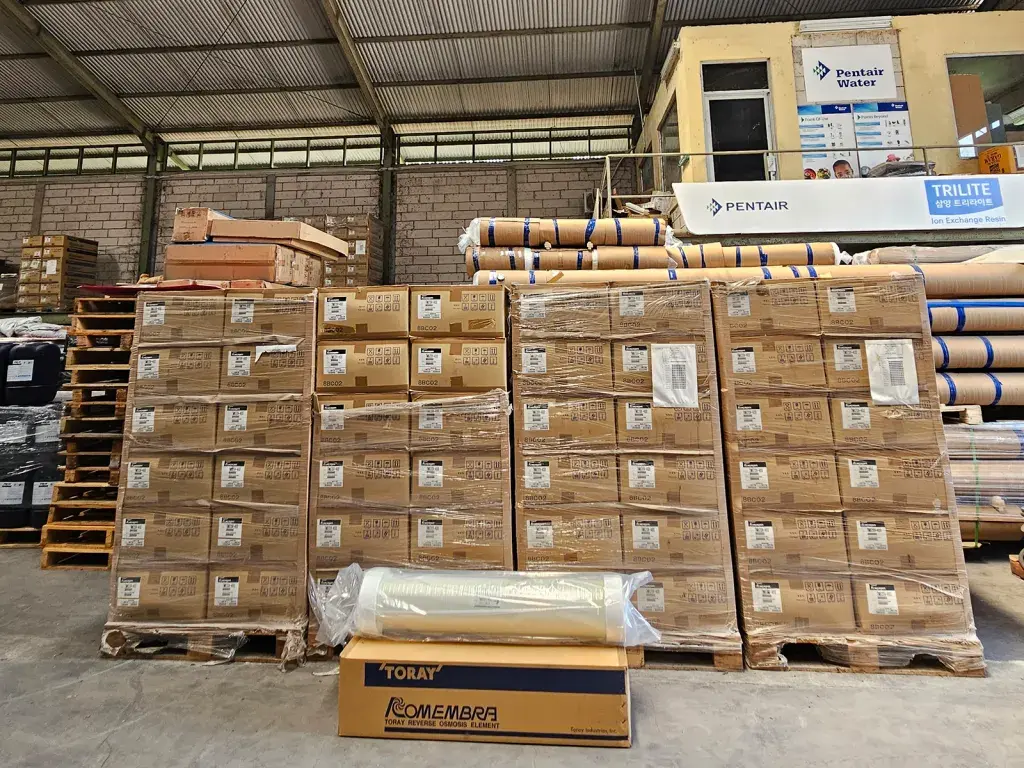
ACH stands for Aluminum Chlorohydrate, a pre-hydrolyzed coagulant that destabilizes colloids before flocculation, sedimentation, or filtration. ACH is worth testing when alkalinity is limited or pH depression must be controlled, but the final dose must come from jar tests on current raw water and full-scale verification.
PT Beta Pramesti Asia, through beta.co.id, supplies coagulants and application support for drinking water, process water, and industrial wastewater in Indonesia. Selection cannot rely on the coagulant name alone: turbidity, colour, TOC/COD, pH, alkalinity, temperature, residual-aluminum target, sludge production, and cost per m³ all need comparison.
Last technically reviewed: 1 August 2026.
What is Aluminum Chlorohydrate (ACH)?
- Chemical name: Aluminum Chlorohydrate, sometimes written “ACH” or “Aluminum chlorhydrate”.
- General formula: Al₂(OH)₅Cl · 2H₂O for a hydrated representation.
- ACH is a hydrated aluminum compound containing chloride and hydroxide.
- It dissolves in water and forms positively charged species.
ACH belongs to the family of polymerized/pre-hydrolyzed aluminum salts. Commercial specifications vary in Al₂O₃ content, basicity, density, liquid/solid form, impurities, and intended grade. A price-per-kilogram comparison is therefore incomplete; compare the cost at the tested dose and actual treated-water volume.
| Supplier document to check | Why it matters |
|---|---|
| Technical Data Sheet | Defines active content, density, product pH, form, and storage conditions |
| Batch Certificate of Analysis | Shows the delivered batch against the purchase specification |
| Safety Data Sheet | Defines PPE, first aid, spill response, and incompatibilities |
| Grade/regulatory statement | Confirms suitability for the intended drinking, process, or wastewater duty |
The ACH name does not make water-treatment and personal-care grades interchangeable. When the requirement is ACH for a deodorant or antiperspirant, the review needs an INCI identity, personal-care specification, impurity and microbiological profile, evidence for the destination market, and relevant formulation tests. WTP jar-test and residual-aluminum records do not establish suitability for skin application.
How Should the ACH Dose Change with Raw-Water Quality?
An old ACH setpoint should not be reused without verification when the source, turbidity, colour, pH, alkalinity, temperature, or organic matter changes. Keep the baseline, repeat jar tests on representative water, and then correct one variable in a controlled trial. The decision must protect finished-water quality, residual aluminum, sludge production, and cost per m³ together.
| Observed change | Evidence to check | Safe dose decision |
|---|---|---|
| Turbidity or colour rises | Representative sample, new dose sweep, pH, alkalinity, floc, settling, and filtrate | Establish a new trial range; do not raise pump output from one reading |
| pH or alkalinity falls | Values before/after coagulation, alkali demand, and residual aluminum | Test dose and pH correction as separate variables |
| Water temperature changes | Sample and plant temperature, floc-formation time, floc strength, and settling time | Match test conditions to operation before changing the setpoint |
| ACH consumption rises with no better result | Actual pump output, density, concentration, leak/siphon, flow, and product batch | Correct feed accuracy or calculation basis before changing grade |
| Residual aluminum or filtrate turbidity worsens | Operating pH, actual dose, filter condition, breakthrough, and settled/filtered samples | Hold a permanent change until a jar test and plant trial explain the failure |
Record raw-water conditions, product and batch, dose basis, pump output, jar-test results, and plant response on one change sheet. This evidence separates a water-quality shift from a pump, mixing, filter, or product-specification problem.
Normalize the ACH dose when active strength or density changes
A batch change must preserve a traceable test basis. When the CoA reports Al₂O₃ content, convert the as-supplied product dose to an active dose before comparing products; then recalculate mass and volumetric pump rates using the actual batch density. The result is an equivalent test starting point, not proof that coagulation performance will be identical.
Active Al₂O₃ dose = as-supplied ACH dose × Al₂O₃ fraction. In a hypothetical example, 30 mg/L ACH at 23% Al₂O₃ is 30 × 0.23 = 6.9 mg/L as Al₂O₃. A 17% candidate needs an equivalent starting point of 6.9 ÷ 0.17 = 40.6 mg/L as-supplied product. Differences in basicity, impurities, aluminum species, and raw water still require testing; the calculation alone does not make the two products interchangeable.
At 80 m³/h, the 40.6 mg/L point requires 40.6 × 80 ÷ 1,000 = 3.25 kg/h of product. If actual batch density is 1.22 kg/L, initial volumetric feed is 3.25 ÷ 1.22 = 2.66 L/h. Match that value to a pump-calibration result, not nameplate capacity.
| Batch-change gate | Required evidence | Decision status |
|---|---|---|
| Product basis confirmed | TDS, SDS, batch CoA, Al₂O₃, basicity, density, and grade | Hold if active-strength basis or units are unclear |
| Test dose normalized | Worksheet for as-supplied dose, Al₂O₃, kg/h, and L/h | Proceed to jar test, not directly to the permanent setpoint |
| Water performance verified | Dose sweep, pH/alkalinity, turbidity/colour, residual Al, filtrate, and sludge | Proceed to plant trial when every target is met |
| Feed system proven | Drawdown/weighing, flow signal, backpressure, check valve, and batch record | Correct the hardware when actual output does not match the calculation |
| Trial is auditable | One changed variable, stable water, and results/cost compared with baseline | Release the setpoint only after site technical approval |
For product selection, continue to PAC and ACH coagulants for water and wastewater. If metering hardware is the constraint, evaluate Watermart dosing pumps for wetted materials, backpressure, turndown, and calibrated capacity.
Role of ACH in Water Treatment
ACH destabilizes suspended particles, selected organic matter, colloids, and impurities before solids separation. US EPA explains that coagulation neutralizes colloid surface charge and flocculation grows settleable aggregates; EPA recommends jar tests to assess coagulant dose, polymer aids, mixing time, and raw-water response (US EPA, water-treatment effects guidance).
| Function / Advantages | Explanation |
|---|---|
| Coagulant / Flocculant | ACH destabilizes fine particles so downstream mixing can grow flocs that settle or filter more readily. |
| Potential dose reduction | Its charge and pre-hydrolysis can justify a lower tested dose than another aluminum salt in some waters. |
| Potentially smaller pH effect | ACH may consume less alkalinity than a lower-basicity aluminum coagulant under comparable conditions. |
| Operating window | Performance can remain useful across a practical pH window, but the window is water-specific. |
| Potential sludge reduction | A lower effective product dose may reduce chemical solids, provided raw-water removal and residual targets are met. |
Treat every advantage in the table as a hypothesis to test against the site’s PAC/alum baseline. ACH does not automatically dose lower or make less sludge in every raw water. Compare products as delivered and, when active-content data are available, on an Al or Al₂O₃ basis.
ACH vs PAC vs alum decision table
| Criterion | ACH | PAC | Alum | How to decide |
|---|---|---|---|---|
| pH/alkalinity effect | Often tested where buffering is limited | Depends on basicity and grade | Usually needs closer alkalinity review | Measure pH and alkalinity before/after jar tests |
| Grade flexibility | More specialized specifications | Many liquid/solid grades | Simpler, widely available product | Compare TDS/CoA, not generic names |
| Dose | Not universal | Not universal | Not universal | Run a dose sweep on the same sample |
| Sludge | Depends on dose and raw water | Depends on dose and raw water | Depends on dose and raw water | Measure volume and settleability |
| Residual Al | Must be monitored | Must be monitored | Must be monitored | Test settled/filtered water at operating pH |
| Cost | Product price may be higher | Varies with grade/logistics | Often lower per kg | Calculate total cost/m³ including alkali, polymer, sludge, handling |
Starting-dose calculation for a jar test
Use a known stock concentration and keep dose units consistent as commercial product or active material:
Stock volume (mL) = target dose (mg/L) × jar volume (L) ÷ stock concentration (mg/mL)
Example: a 10,000 mg/L ACH stock equals 10 mg/mL. To test 20 mg/L in a one-litre jar, add 20 × 1 ÷ 10 = 2 mL of stock. Prepare points below and above the baseline dose; 20 mg/L is a calculation example, not an operating recommendation.
Record at least turbidity, pH, alkalinity, colour/UV254 or TOC where relevant, floc size/strength, settling time, residual aluminum, sludge volume, and chemical cost per m³. EPA notes that there is no universal jar-test protocol and that raw-water changes can alter the outcome (US EPA, water-treatment effects guidance).
Example in Water Treatment Process
In a drinking water treatment system:
- Raw water is added with ACH solution.
- Suspended particles, organic matter, and colloids are destabilized and form flocs.
- The flocs are then filtered or settled, making the water clearer.
- After that, filtration, disinfection, and final pH adjustment may be performed.
At full scale, injection order and mixing energy must provide rapid dispersion followed by gentler flocculation so flocs grow without excessive breakage. Transfer a jar-test result in stages: run a controlled trial, monitor settled and filtered water, inspect sludge, then establish a dose-control rule tied to raw-water changes.
Plant-trial checklist before changing coagulant
- Establish the PAC/alum baseline at the same flow, raw-water quality, and finished-water target.
- Verify ACH TDS, SDS, CoA, density, active content, basicity, grade, and tank/pump compatibility.
- Run a dose sweep, a pH sweep where relevant, and a blank/control under consistent mixing.
- Select from water quality, residual aluminum, settleability, sludge, and total cost—not turbidity alone.
- Calibrate the chemical dosing pump for actual product density and concentration.
- Run the plant trial during stable conditions and change one primary variable at a time.
- Set alarms for pH, turbidity, flow-paced dose, tank level, and filtrate quality.
- Retain batch, dose, raw-water, laboratory, and operator-change records for auditability.
For product comparison, review PAC and ACH for water treatment, Betagard Aluminum Chlorohydrate Series, and coagulants for water and wastewater.
For the product-form decision, feed-rate calculation, and jar-test records to retain, use the PAC guide for water and wastewater treatment as the baseline before an ACH trial.
Frequently asked questions about ACH water treatment
When should ACH be tested instead of PAC or alum?
ACH belongs in a jar-test comparison when PAC or alum depresses pH too far, raw-water alkalinity is limited, residual-aluminum targets are difficult to meet, or total treatment cost is unstable. A change still needs side-by-side evidence for finished-water quality, alkali/polymer demand, sludge, and cost per m³.
Is the ACH dose always lower than the PAC dose?
No. Product basicity and active content vary, while raw-water pH, alkalinity, temperature, turbidity, and organic matter affect the response. Compare commercial-product doses and, when the CoA provides the required data, normalize the comparison to Al or Al₂O₃ through a consistent dose sweep.
Does an old ACH setpoint remain valid after the water source changes?
Not necessarily. A source or seasonal change can alter turbidity, colour, temperature, pH, alkalinity, and organic matter. Collect representative water, repeat the dose sweep, check actual pump output, and verify the setpoint in a trial that changes one primary variable at a time.
Which documents should a buyer request before purchasing ACH?
Request the Technical Data Sheet, Safety Data Sheet, batch Certificate of Analysis, grade statement, active content, density, product form, packaging, and storage requirements. These details are needed to check tank compatibility, calibrate the dosing pump, and compare commercial offers on the same basis.
How to compare ACH quotations per m³ treated
ACH quotations become comparable only after the tested dose is stated on the same basis. Price per kilogram alone can mislead because active content, density, alkali or polymer demand, product consumption, and sludge load may differ.
| Comparison basis | How to calculate or check it | Evidence to request |
|---|---|---|
| Product consumption | Commercial-product dose (mg/L) × flow (m³/h) ÷ 1,000 = kg/h | Jar-test results, normal/peak flow, and an explicitly stated dose basis |
| ACH cost | Commercial-product dose (mg/L) × price per kg ÷ 1,000 = cost per m³ | Quotation, packaging, minimum order, and delivery cost |
| Active-material basis | Normalize to Al or Al₂O₃ only when each candidate has the required CoA data | Active content, basicity, density, and batch CoA |
| Supporting cost | Add alkali, polymer, mixing energy, handling, and sludge treatment | Tested doses, consumption records, and sludge observations |
| Treatment outcome | Compare at the same turbidity, colour, pH, residual-aluminum, and filtrate targets | Raw-water and test-result data at every dose point |
Send normal/peak flow, water source, turbidity, colour, pH, alkalinity, temperature, TOC/COD, TSS, current coagulant and dose, finished-water target, tank space, dosing-line material, and sludge data to the Beta Pramesti team. The team can compare BETAGARD 4040 aluminium chlorohydrate in a jar-test and trial programme; the operating dose still comes from site data.