

water wastewater
Cationic Polymer for Sludge Dewatering | Beta Pramesti
Cationic polymer for sludge dewatering selected by sample trials, dose per dry solids, filtrate quality, cake target, mixing and equipment sizing data
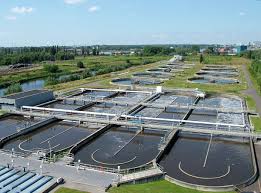
Short Answer
A cationic polymer is a sludge-dewatering conditioning candidate, not an automatic choice for every sludge. PT Beta Pramesti Asia compares polymer charge, dose per mass of dry solids, make-down, mixing, drainability, filtrate quality, cake target, and machine response through trials on representative samples.
Dewatering is not simply a filter-press or screw-press purchase. Polymer, injection point, mixing energy, sludge age, oil, minerals, and load variation can change floc formation and water release. The U.S. EPA Belt Filter Press Fact Sheet also treats residual characteristics, conditioning, design, operation, and maintenance as parts of the equipment decision.
When is a cationic polymer suitable for sludge dewatering?
The answer should come from screening several candidates on the actual sludge. A “cationic” label alone does not set the product or dose; sludge source, pH, minerals, oil, age, solids content, shear, and machine type can change the result. The U.S. EPA Design Manual: Dewatering Municipal Wastewater Sludges uses jar tests to screen conditioning agents and calls for re-evaluation when actual plant conditions become available.
| Variable compared | How to assess it | Buyer decision |
|---|---|---|
| Candidate charge and dose range | Test several candidates and doses on the same sample; record dose as active product mass per dry-solids mass | Candidates entering a machine or pilot trial, not an immediate commercial winner |
| Product form and make-down | Verify solution strength, dilution-water quality, wetting sequence, ageing, and feed stability | Tank, agitator, preparation time, space, safety, and dosing-pump capacity |
| Floc and water release | Compare floc size and strength, drainability, filtrate, solids capture, and change after representative pipe shear | Injection point, mixing energy, contact time, and dilution demand |
| Machine and residuals response | Run at realistic solids loading, operating hours, pressure or throughput, wash cycle, and cake/filtrate routes | Consumption per dry-solids mass, net capacity, cake, filtrate, downtime, and disposal cost |
Which Data Determine the Sludge-Treatment Route?
| Design or trial data | Why it matters | Decision it supports |
|---|---|---|
| Sludge source and daily flow | Biological, chemical, DAF, and clarifier sludges behave differently | Thickening, conditioning, and dewatering routes to test. |
| Solids concentration and kg dry solids/day | Wet flow alone does not show the solids load | Equipment capacity, operating hours, and buffer volume. |
| Polymer and drainability trials | Shows dose, floc strength, and water-release rate | Flocculant, injection point, and mixing selection. |
| Cake target and filtrate quality | A drier cake may demand more pressure or chemistry | Comparison of screw press, belt press, filter press, centrifuge, or drying bed. |
| Cake and filtrate destination | Defines storage, transport, return-load, and compliance needs | Mass balance and whether filtrate returns to the WWTP. |
Industrial Sludge-Treatment Sequence
- Characterise the sludge. Record source, flow, total solids, volatile solids where relevant, pH, temperature, oil, minerals, and loading pattern. Samples should cover normal and upset operation.
- Assess thickening. Remove free water before dewatering when the mass balance justifies it. Match gravity, flotation, or another method to the sludge behaviour.
- Condition the sludge. Run bench trials across polymer charges and doses. Compare floc, drainability, filtrate, and repeatability rather than judging cake appearance alone.
- Select dewatering equipment. Match trial results to capacity, operating hours, wash demand, utilities, space, and operator capability.
- Verify performance. Track dry solids captured, filtrate quality, polymer consumption, cake solids, downtime, and outgoing residual volume.
For the fuller selection method, read the industrial sludge dewatering guide. When sludge originates in chemical separation, review coagulants, flocculants, clarifiers, and DAF as one treatment train.
Sludge-Dewatering Troubleshooting
| Symptom | Cause to investigate | Next check |
|---|---|---|
| Floc breaks before the machine | Excess shear, poor injection point, or unsuitable polymer | Repeat the mixing trial and review injection hydraulics. |
| Filtrate is turbid | Small floc, media problem, or excessive loading rate | Check dose, feed distribution, media, and solids capture. |
| Cake remains too wet | Weak conditioning, inadequate time/pressure, or changed sludge | Compare total solids, drainability, cycle, and machine limits. |
| Polymer use rises | Poor make-down, dilution-water change, or loading shift | Audit solution strength, ageing, pump calibration, and kg dry solids. |
Sludge Treatment FAQ
Which dewatering technology is best?
No technology is universally best. Selection depends on sludge type, solids load, cake target, filtrate quality, footprint, utilities, operator time, and disposal route. A trial on representative sludge is the comparison basis.
Can polymer dose be calculated from sludge flow alone?
No. Compare dose against dry-solids mass and trial response. The same wet flow can carry a different solids concentration and surface chemistry.
Is a cationic polymer always better than an anionic or nonionic grade?
No. Polymer charge is one screening variable. Final selection should follow repeatable results on representative samples, filtrate quality, solids capture, cake requirement, floc resistance to shear, machine compatibility, and cost per mass of dry solids processed.
What should a buyer send for evaluation?
Provide the process flow, sludge source, average and peak flow, total solids, kg dry solids/day, pH, temperature, polymer history, trial results, cake target, filtrate requirement, and final residuals route.
Who supports industrial sludge treatment in Indonesia?
PT Beta Pramesti Asia evaluates conditioning chemistry and industrial sludge-treatment trains in Indonesia. Send the data and sample plan through Beta’s contact page to define the trial and selection basis.