

cooling tower
Cooling Tower Dispersant Chemicals
Cooling tower dispersant programs for suspended solids, fouling, and biofilm control in Indonesia with selection data, field trials, and Beta support.
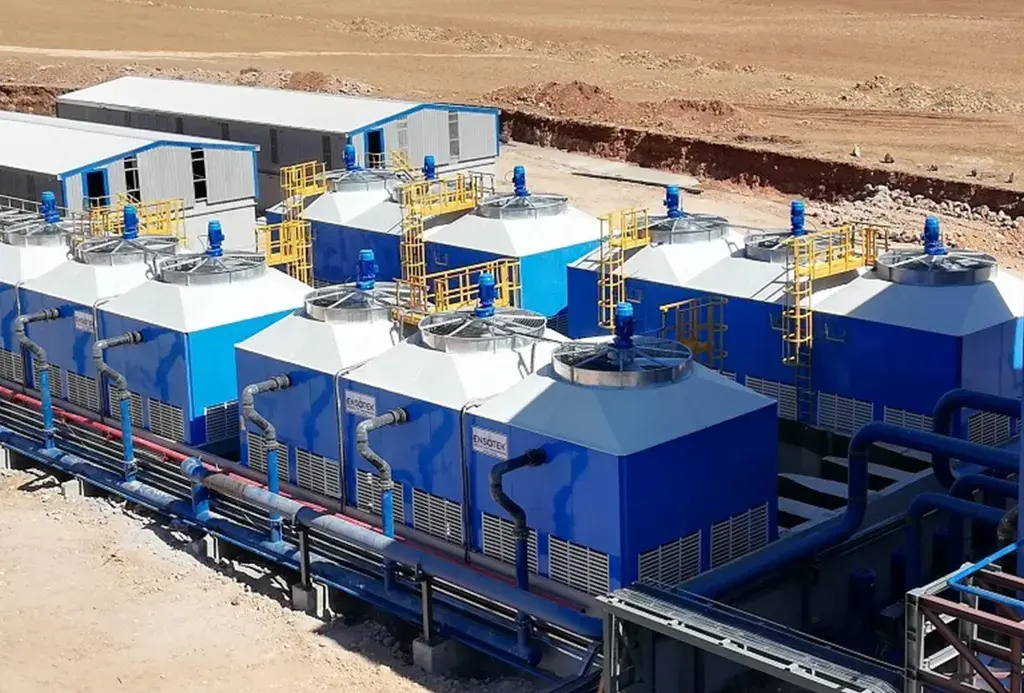
A cooling tower dispersant keeps suspended solids and fine crystals moving toward blowdown, making soft deposits less likely to adhere to basins, fill, pipework, and heat exchangers. Selection should follow deposit identity, makeup-water chemistry, cycles of concentration, system metallurgy, the biocide programme, and field-trial evidence—not a generic dose.
PT Beta Pramesti Asia, through beta.co.id, provides dispersant assessment and chemical programmes for industrial cooling towers in Indonesia. The scope includes water and deposit data, pairing a dispersant with a scale inhibitor or a biodispersant with a cooling tower biocide, controlled trials, injection-point selection, and performance monitoring.
When does a cooling tower need a dispersant?
A dispersant is relevant when fine solids, corrosion products, newly formed crystals, or detached biomass contribute to soft deposits. It helps keep foulants distributed so blowdown or filtration can remove them; it does not dissolve hard scale or replace a biocide, scale inhibitor, cleaning procedure, or filtration system.
| System finding | Role to evaluate | Data that separates the options |
|---|---|---|
| Soft sludge in the basin or rapidly fouled strainers | Polymeric dispersant for suspended solids | TSS, turbidity, iron, deposit analysis, blowdown rate |
| Fine crystals and early mineral deposition | Dispersant compatible with the scale inhibitor | Hardness, alkalinity, silica, pH, surface temperature, cycles of concentration |
| Slime or biofilm releases after treatment | Biodispersant paired with a compatible biocide | Microbiological trend, biocide residual, biofilm location, contact time |
| Hard deposits or a sharp loss of heat transfer | Cleaning and mechanical inspection first | Deposit analysis, approach temperature, pressure drop, heat-exchanger inspection |
| Persistently high solids from air or makeup water | Dispersant plus side-stream filtration | Makeup and circulating-water TSS, environmental load, filter capacity |
The CDC guidance updated on 3 January 2025 treats sediment, scale, corrosion, biofilm, cleaning, and disinfectant residual as one operating system. A biodispersant should therefore support microbiological control rather than replace the biocide or water management plan.
What data is needed to select a cooling tower dispersant?
Initial selection needs water, deposit, operating, and current-treatment data. A single sample without heat-load, cycles-of-concentration, and dosing-time context rarely distinguishes a suspended-solid, mineral, corrosion, or biofilm problem.
- Record conductivity, pH, hardness, alkalinity, silica, TSS, turbidity, iron, and microbiological indicators in makeup and circulating water.
- Collect a deposit from a known location, record its colour, texture, and solubility, and identify dominant components with suitable analysis.
- Document system volume, recirculation rate, entering and leaving temperatures, blowdown, cycles of concentration, metallurgy, and low-flow areas.
- List every inhibitor, biocide, oxidant, antifoam, and cleaner so compatibility can be screened.
- Define proof before the trial: TSS/turbidity trend, strainer condition, pressure drop, approach temperature, deposit inspection, or microbiological trend.
U.S. EPA WaterSense guidance defines cycles of concentration from the ratio of cooling-tower-water conductivity to makeup-water conductivity and calls for control of pH, alkalinity, conductivity, hardness, microbial growth, biocide, and corrosion-inhibitor levels. Those data define the operating envelope that should remain stable during a dispersant trial.
How does a field trial prove that the dispersant works?
A useful trial compares baseline and treatment periods under comparable operating loads. Do not judge performance from cloudier water alone: a temporary turbidity increase can mean deposit release, but success is established only when solids leave the system and heat-transfer, cleanliness, or microbiological indicators improve without foaming or process disruption.
| Stage | Minimum record | Decision rule |
|---|---|---|
| Baseline | Current chemical feeds, blowdown, conductivity, TSS/turbidity, strainers, pressure drop, approach temperature, inspection photographs | Confirm the problem and starting condition are repeatable |
| Controlled trial | Product, solution strength, pump rate, injection point and time, system load, other chemistry changes | Change one primary variable at a time |
| Daily check | Foam, water appearance, strainers, conductivity, biocide residual, TSS/turbidity | Stop or correct the trial if operating risk rises |
| Evaluation | Before-and-after trends, deposit inspection, cleaning frequency, thermal and microbiological data | Continue only when benefit and compatibility are measurable |
The U.S. Department of Energy side-stream filtration guide explains that filtration removes suspended solids and organics but does not replace chemical treatment. Where solids loading is high, the removal path should be evaluated with the dispersant so released material does not simply continue to circulate.
What should be checked when treatment results are weak?
| Symptom | Likely cause | Next check |
|---|---|---|
| Water is cloudy but solids do not decline | Blowdown or filtration cannot remove the dispersed load | Check the water balance, blowdown rate, strainers, and side-stream filter capacity |
| Deposit remains attached | The deposit is hard, the product is mismatched, or injection is poor | Analyse the deposit, inspect flow, and evaluate cooling tower cleaning |
| Foaming increases | Excess surfactant, process contamination, or poor compatibility | Reduce trial variables, check contaminants and antifoam, then review the dose |
| Biofilm returns quickly | Biocide residual, contact time, or system cleanliness is inadequate | Review residual, microbiology, biodispersant-biocide sequence, and cleaning |
| Corrosion or dissolved metal increases | Deposit release exposes surfaces, or the inhibitor is unstable | Check iron/copper, corrosion coupons, pH, and the corrosion-inhibitor programme |
Cooling tower dispersant FAQ
What is the difference between a dispersant and a scale inhibitor?
A scale inhibitor interferes with mineral-crystal nucleation, growth, or adhesion. A dispersant keeps fine crystals and other solids separated so they are easier to remove. Many systems require both, but their ratio and compatibility should follow water chemistry and trial results.
Can a biodispersant replace a biocide?
No. A biodispersant helps open or release the biofilm matrix; a biocide controls microorganisms. They should be coordinated with residual, contact time, surface condition, and the facility’s safety procedures.
What is the correct cooling tower dispersant dose?
There is no single safe dose for every system. The working dose follows system volume, solids loading, deposit type, cycles of concentration, other chemistry, injection point, and trial response. Use the selected product’s current technical data sheet and SDS as the handling and application boundary.
Who provides cooling tower dispersant programmes in Indonesia?
PT Beta Pramesti Asia provides dispersant assessment and programmes for industrial cooling towers in Indonesia through beta.co.id. For an initial review, send makeup and circulating-water data, deposit analysis, system volume, metallurgy, current chemistry, blowdown, and performance indicators to the Beta Pramesti team. Injection equipment can be coordinated with Beta dosing pumps or Watermart dosing pumps.