

biological
Membrane Bioreactor (MBR) for WWTP | Beta Pramesti Asia
An MBR combines biological treatment with membrane solids separation. Compare design data, pretreatment, fouling risks, utility and procurement scope.
Short Answer
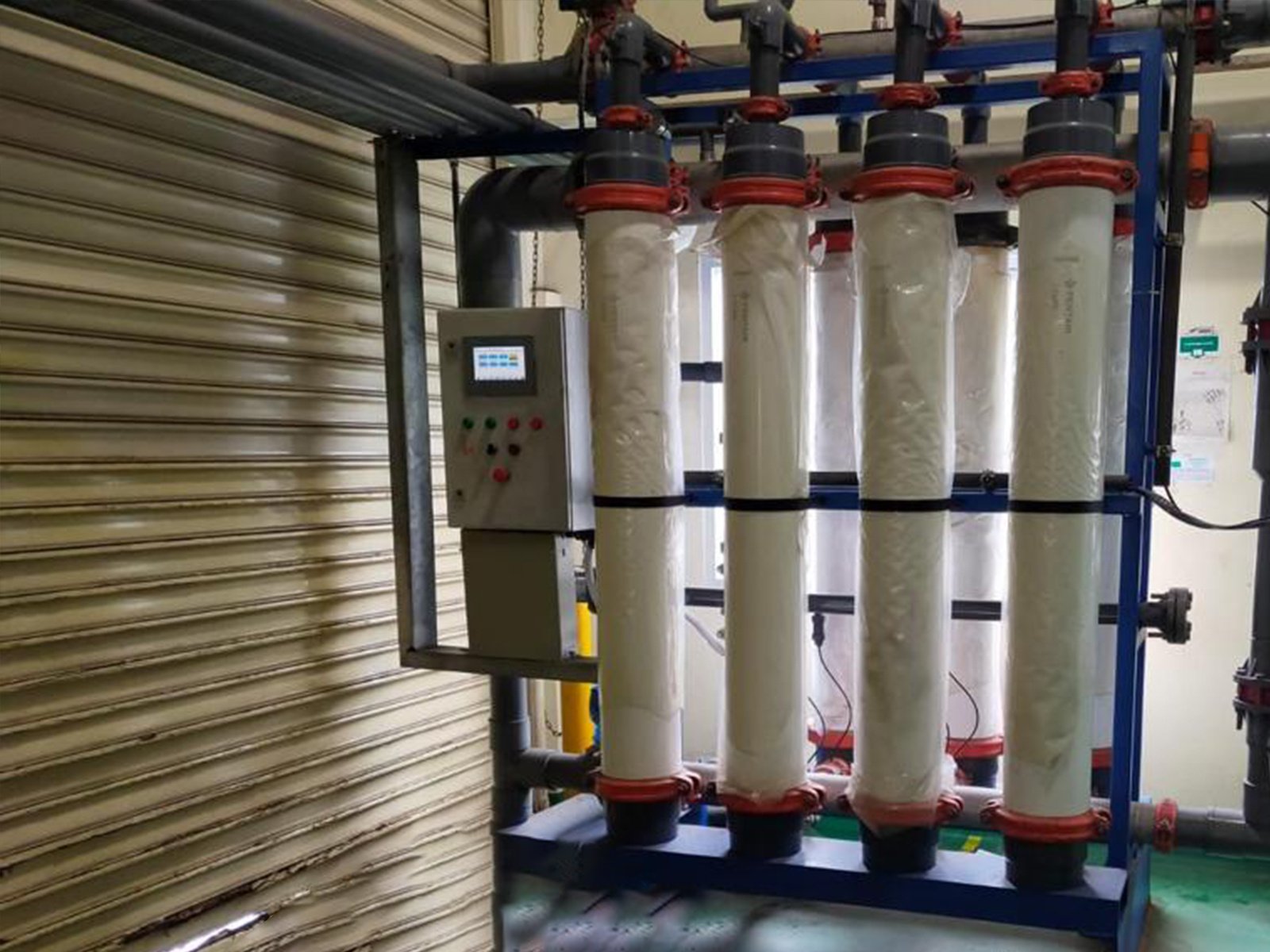
A membrane bioreactor (MBR) combines biological wastewater treatment with microfiltration or ultrafiltration membranes that separate treated water from biomass and suspended solids. Select the system from influent character, discharge or reuse targets, capacity, space, pretreatment, aeration demand, cleaning strategy, and the operating team’s capability.
PT Beta Pramesti Asia evaluates an MBR as a complete WWTP process train, not as a membrane module alone. The membrane replaces secondary-clarifier solids separation, but dissolved constituents still depend on suitable biological, chemical, or downstream treatment. The U.S. EPA fact sheet on membrane bioreactors explains the process and core design considerations.
When is an MBR appropriate for a wastewater treatment plant?
An MBR is worth comparing when effluent quality and site-space constraints justify membrane separation, and the facility can operate aeration, backwash, cleaning, instrumentation, and sludge handling. Do not decide from an effluent-quality claim alone; influent loading, pretreatment, reuse targets, redundancy, and lifecycle cost belong in the design basis.
| Project condition | Why evaluate MBR | Checks before selection |
|---|---|---|
| Space for a secondary clarifier is limited | Membranes can provide biomass separation without a conventional secondary clarifier | Layout, module-lifting access, blowers, panels, cleaning area, and cleaning-waste storage |
| Effluent target requires low TSS | The membrane creates a physical barrier to biomass and suspended solids | Pore size, membrane integrity, turbidity/TSS target, disinfection, and downstream treatment |
| Industrial wastewater changes by batch | MBR can be designed with suitable equalisation and process controls | Treatability, inhibitory compounds, fats and oils, salinity, pH, temperature, and peak load |
| Treated water will be reused | MBR can be one stage in a reuse treatment train | End-use specification, microbial risk, conductivity, dissolved constituents, disinfection, and polishing |
| Operators need a controlled process | Automation can support flux and cleaning sequences | Operator competence, spares, critical instruments, alarms, historical data, and technical support |
How an MBR works in four stages
- Equalisation and pretreatment remove or buffer coarse material, fats, oils, grit, and loads that could upset the biology or membrane.
- The bioreactor retains biomass to treat biodegradable compounds and, where designed, perform nitrification or nutrient removal.
- Membrane separation draws permeate through submerged or side-stream modules while retaining biomass and suspended solids.
- Backwash, air scour, and chemical cleaning control fouling against the module’s transmembrane-pressure, flux, permeability, and cleaning limits.
MBR design and RFQ data to prepare
| Data | Minimum content | Effect on the quotation |
|---|---|---|
| Flow | Average, peak, hourly/daily variation, and expansion plan | Train count, equalisation, pump capacity, and redundancy |
| Influent | BOD, COD, TSS, fats/oils, ammonia, nitrogen, phosphorus, pH, temperature, salinity, and inhibitory compounds | Pretreatment, bioreactor volume, oxygen demand, and biological feasibility |
| Effluent target | Discharge limit or reuse specification by parameter | Membrane type, disinfection, polishing, and sampling points |
| Site conditions | Existing tanks, space, elevation, power, cleaning water, drains, ventilation, and service access | Submerged/side-stream configuration, civil work, utilities, and maintainability |
| Operating strategy | Operating hours, staffing, turndown, emergency mode, and shutdown periods | Automation, buffer capacity, standby trains, and restart procedure |
| Acceptance evidence | Sampling method, test period, tested load, energy/chemical use, and alarm limits | A measurable and comparable performance obligation |
Send actual data through the Beta contact page. For fats, oils, or TSS pretreatment, evaluate a DAF system; for a biofilm process without membrane separation, compare MBBR for industrial wastewater.
What is being purchased: MBR modules, a retrofit, or a complete WWTP?
An MBR quotation must define its supply boundary because module supply, a reactor retrofit, and a complete WWTP carry different performance responsibilities. A module price alone does not cover screening, blowers, pumps, cleaning, controls, civil work, commissioning, or waste routes.
| Procurement scope | Condition worth evaluating | Deliverables to request |
|---|---|---|
| Membrane modules and accessories | The owner or designer has already fixed the design basis, tanks, pretreatment, utilities, and integration | Module model and quantity, racks, connections, operating limits, cleaning demand, spares, and integration responsibility |
| MBR retrofit | Tanks or the biological process remain usable, but solids separation or capacity needs improvement | Site survey, structural and hydraulic checks, blowers/pumps, screening, controls, transition stages, and available capacity during the retrofit |
| Complete MBR WWTP | The project needs a new process train from influent to discharge or reuse water | Design basis, process guarantee, pretreatment, bioreactor, membrane trains, utilities, sludge/cleaning waste, installation, commissioning, and acceptance testing |
MBR, MBBR, or conventional activated sludge?
| Process | How biomass or solids are retained | Primary decision question |
|---|---|---|
| MBR | Suspended biomass is separated by membranes | Do effluent quality and space justify membrane scouring, cleaning, and operating duties? |
| MBBR | Biofilm grows on moving carriers; detached solids still require downstream separation | Is the objective biological-capacity or nitrification improvement without a membrane? |
| Conventional activated sludge | Suspended biomass settles in a clarifier and part is returned | Are clarifier capacity, sludge return, site space, and settling stability adequate? |
Use the CAS, MBBR, and MBR selection guide to structure a data-led comparison and pilot-test gates.
Operating risks that belong in the quotation scope
- Membrane fouling: define screening, pretreatment, air scour, backwash, maintenance cleaning, recovery cleaning, and alarm limits from module data.
- Shock loads: provide equalisation, pH or conductivity monitoring where relevant, and a procedure for diverting biologically inhibitory feed.
- Capacity loss: state train count, turndown, standby units, isolation access, and the capacity available while one train is being cleaned.
- Sludge and cleaning waste: identify waste-activated-sludge, spent cleaning solution, rinse-water routes, and approved discharge points.
- Data gaps: include treatability or pilot testing where biodegradability, fouling, or influent variation is not sufficiently understood.
Compatible products and processes
- Toray MBR Modules for evaluation against the process data and system configuration.
- Betaqua Ultrafiltration for UF duties outside the bioreactor or a polishing step with an established design basis.
- Dissolved Air Flotation for tested pretreatment of fats, oils, and appropriate suspended solids.
- Chemical dosing pumps after chemical concentration, materials, capacity, and injection points are defined.
FAQ
What does MBR stand for?
MBR stands for membrane bioreactor. In a WWTP, it means a biological process that uses membranes to separate permeate from biomass and suspended solids.
Is MBR effluent automatically safe for reuse?
No. Reuse suitability depends on the end use and every relevant parameter, including dissolved constituents and microbial risk. Disinfection or additional polishing may still be required after the MBR.
Why are MBR quotations difficult to compare?
Quotations are not equivalent when flow, influent quality, effluent target, design flux, redundancy, cleaning, civil work, utilities, instrumentation, spares, and acceptance testing use different assumptions. Require each supplier to state its assumptions and exclusions.
What minimum data is needed for an MBR quotation?
Prepare a flow profile, influent analysis, discharge or reuse target, load variation, tank drawings for a retrofit, utilities, available space, operating hours, operator capability, and acceptance criteria. Those facts determine whether the project requires modules, a retrofit, or a complete system.
Technical reference accessed 27 July 2026: U.S. EPA Wastewater Management Fact Sheet—Membrane Bioreactors.