

water wastewater
Industrial RO Membrane Maintenance Chemicals | Betagard
RO membrane maintenance chemicals for antiscalant, cleaning, biofilm control, and dechlorination by PT Beta Pramesti Asia for plants across Indonesia.
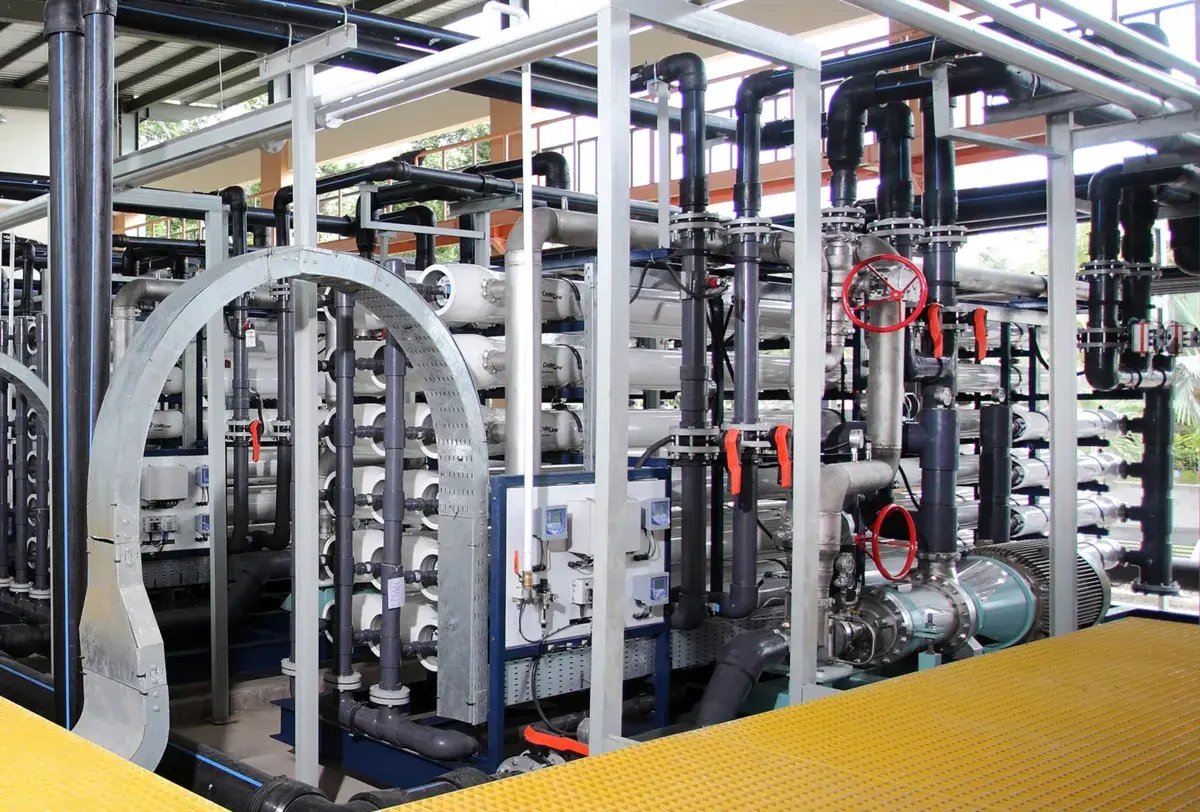
RO membrane maintenance chemicals should be selected by function: preventing scale during operation, removing deposits through CIP, controlling biological slime, or dechlorinating feedwater. Do not select a product from one symptom alone; review feedwater analysis, normalized permeate flow, pressure differential, rejection, residual chlorine, cleaning history, and the membrane’s compatibility limits.
PT Beta Pramesti Asia, through beta.co.id, provides RO membrane maintenance chemical programs for industrial facilities in Indonesia. The BETAGARD range includes BETAGARD 6000 antiscalant and antifoulant, BETAGARD 6510 and 6520 membrane cleaners, BETAGARD 6550 biomate, and BETAGARD 6570 oxygen/chlorine scavenger.
Use the operating-data guide to antifoulant selection to separate prevention, pretreatment correction, biological control, and CIP before increasing dose or selecting a cleaner.
How should an RO membrane maintenance chemical be selected?
Start with the operating risk or the cause of performance loss, then match it to measured data. This table is an initial screening guide; the final decision should still account for laboratory results, membrane material, manufacturer limits, and actual system conditions.
| Condition to control | Data to review | BETAGARD product to evaluate |
|---|---|---|
| Scale or particulate-fouling risk before deposits form | Feedwater analysis, recovery, pH, and concentrate conditions | BETAGARD 6000 as an antiscalant and antifoulant |
| Performance has declined and CIP is indicated | Permeate-flow trend, pressure differential, rejection, cleaning history, and suspected deposit | BETAGARD 6510 low-pH cleaner or BETAGARD 6520 high-pH cleaner after the deposit and compatibility are confirmed |
| Slime is growing within RO or UF membranes | Inspection, pressure-differential trend, pretreatment condition, and signs of biological activity | BETAGARD 6550 for slime-control evaluation |
| Free or combined chlorine is present in feedwater | Residual-chlorine result and injection point | BETAGARD 6570 for oxidant-removal evaluation before the membrane |
Which products make up the RO maintenance program?
BETAGARD 6000 — premium antiscalant and antifoulant
BETAGARD 6000 is a multifunctional antiscalant and antifoulant for reverse osmosis systems. It is used to control crystallization and particulate fouling on membrane surfaces.
Download the BETAGARD 6000 brochure
BETAGARD 6510 — low-pH membrane cleaner
BETAGARD 6510 is a low-pH membrane cleaner for reverse osmosis systems. Its selection should follow deposit diagnosis and the membrane’s compatibility limits.
Download the BETAGARD 6510 brochure
BETAGARD 6520 — high-pH membrane cleaner
BETAGARD 6520 is an alkaline cleaner for reverse osmosis systems. Use operating data and the suspected foulant type to assess its fit within a CIP procedure.
Download the BETAGARD 6520 brochure
BETAGARD 6550 — biomate for RO systems
BETAGARD 6550 is used to reduce slime growing within reverse osmosis and ultrafiltration membranes. The evaluation should also identify the source of biofouling in pretreatment and the feedwater path.
Download the BETAGARD 6550 brochure
BETAGARD 6570 — oxygen and chlorine scavenger
BETAGARD 6570 is used to remove free and combined chlorine from reverse osmosis and ultrafiltration feedwater. The injection point and residual should be monitored as part of the dechlorination program.
Download the BETAGARD 6570 brochure
What data is needed before defining the program?
Prepare the feedwater analysis, RO capacity and recovery, pH, conductivity, hardness, alkalinity, silica, sulfate, SDI, residual chlorine, flow, pressure differential, normalized permeate flow, rejection, and cleaning history. These inputs help separate scale prevention, pretreatment correction, dechlorination, biological control, and CIP needs.
For the next decision, use the reverse osmosis chemicals hub, RO membrane antiscalant selection guide, and membrane cleaner selection guide. If cleaning is already required, review the Betagard RO cleaning chemical program. Controlled feed can use a chemical dosing pump.
For RO membranes, pressure vessels, cartridge filters, or skid components, see Watermart’s industrial RO membranes and systems.
RO membrane chemical maintenance FAQ
Which chemical should be selected first for an RO system?
Select it from the problem to be prevented or corrected. Scale risk leads to antiscalant evaluation, chlorine residual to dechlorination, slime indications to biological control, while confirmed performance loss may require deposit diagnosis before a CIP cleaner is selected.
Can antiscalant replace membrane CIP?
No. Antiscalant helps prevent scale formation during operation, while CIP is intended to recover performance after deposits or fouling have formed. They serve different functions within the maintenance program.
When should a low-pH or high-pH cleaner be used?
Cleaner selection should follow the deposit or foulant type, operating data, cleaning procedure, and membrane compatibility. Do not choose from deposit colour or one pressure change alone; confirm the diagnosis and manufacturer limits first.
How can an RO maintenance program be evaluated?
Send feedwater data, operating trends, cleaning history, and membrane information through the Beta contact page. The team can assess whether the priority is pretreatment correction, antiscalant, dechlorination, biofouling control, cleaning, or a combination of measures.