

membrane
RO and UF Performance Monitoring | Beta Pramesti Asia
Monitor RO and UF flow, pressure, temperature, alarms, and trends to separate instrument, pretreatment, antiscalant, and membrane-cleaning decisions early.
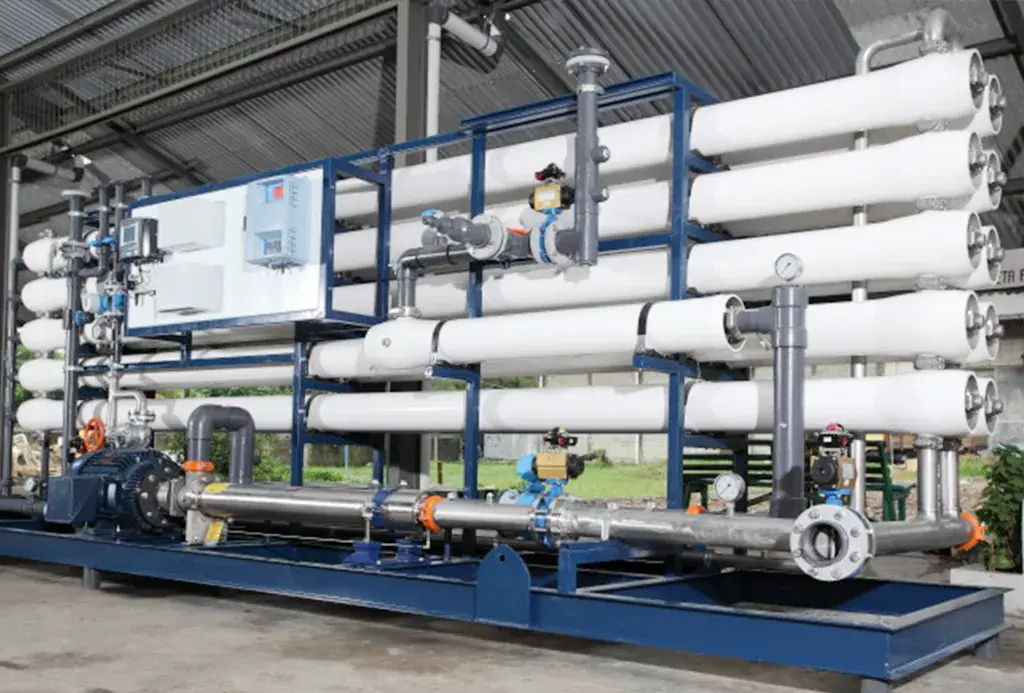
Betaqua Sentinel WT records flow, pressure, temperature, alarms, and operating trends to help operators separate instrument, pretreatment, antiscalant, and cleaning decisions on RO and UF systems. PT Beta Pramesti Asia, through beta.co.id, provides industrial membrane monitoring systems and treatment evaluation support in Indonesia.
What Data Does Betaqua Sentinel WT Monitor?
Sentinel WT combines available operating data into trends and actionable alarms. Instrument points, alarm ranges, communication protocols, and water-quality parameters must be confirmed during the system review because every RO or UF unit has a different configuration.
- Real-time flow, pressure, and temperature at the agreed instrument points.
- Configurable alarms for pressure, flow, or temperature deviations.
- RO or UF control and SCADA integration after communication compatibility is verified.
- Data logging and trend analysis for comparing performance against a baseline.
- Energy monitoring when energy-consumption data is available in the system configuration.
How Do RO or UF Trends Guide Chemical Decisions?
One alarm is not enough to diagnose fouling or choose a chemical. Operators should validate instruments, compare data under equivalent conditions, and connect operating trends with water analysis and inspection findings.
| Data pattern | Checks before action | Possible program decision |
|---|---|---|
| RO permeate flow falls under apparently similar conditions | Flow and pressure calibration, temperature, feed pressure, recovery, and salinity change | Normalize the data; assess pretreatment, scaling, fouling, or CIP only after validating the trend |
| Permeate conductivity or salt passage rises | Conductivity calibration, feed and permeate samples, seals, leakage, oxidation, and membrane condition | Separate an integrity problem from fouling before choosing a cleaner or element replacement |
| RO differential pressure rises | Pressure taps, cartridge filter, feed SDI or turbidity, biofouling, and deposits at the lead element | Inspect pretreatment and identify the foulant; select cleaning from the diagnosis, not deposit color alone |
| UF flow falls or transmembrane pressure worsens | Backwash, air scour, instrument integrity, feed quality, and chemical-enhanced backwash history | Review the backwash cycle and UF chemical compatibility before setting a cleaning procedure |
| Energy use rises without higher production | Energy-meter accuracy, pressure, flow, recovery, valves, and pump condition | Correct operation or equipment first; assess chemistry when membrane trends support it |
The DuPont FilmTec membrane technical manual explains the use of normalized performance data to assess changes in permeate flow, salt passage, and differential pressure. Use the installed membrane OEM manual and unit design conditions for alarm values and cleaning limits.
Which Products Support Monitoring Decisions?
PT Beta Pramesti Asia supplies membrane antiscalants, membrane cleaners, and RO membrane maintenance programs. Monitoring helps determine when each product family needs evaluation, but it does not replace foulant analysis, compatibility checks, or OEM procedures.
For chemical-feed hardware, review Beta dosing pumps. When the need shifts to elements, housings, cartridges, or RO unit components, see RO membranes and components from Watermart. Send the P&ID, instrument list, alarm history, operating data, and water analysis through the Beta Pramesti Asia contact page.
Frequently Asked Questions
Does a drop in flow mean the membranes need immediate cleaning?
No. First normalize for temperature, pressure, recovery, and salinity, then check instruments and pretreatment. Base cleaning on a validated trend and the OEM guidance, not one reading.
Can Sentinel WT select an antiscalant automatically?
No. Monitoring can show changes in recovery, pressure, flow, and water quality, but antiscalant selection requires an ion analysis, scaling projection, membrane compatibility review, and operating target.
What data is needed to review a monitoring configuration?
Send the P&ID, RO or UF type and capacity, membrane brand, instrument points, available signals, communication protocol, current set points and alarms, historical data, and the SCADA integration target.