

physical separation
Industrial Wastewater Physical Separation | Beta Pramesti
Select an industrial wastewater physical-separation train from screening, grit removal, sedimentation, DAF, loading evidence, and downstream treatment targets.
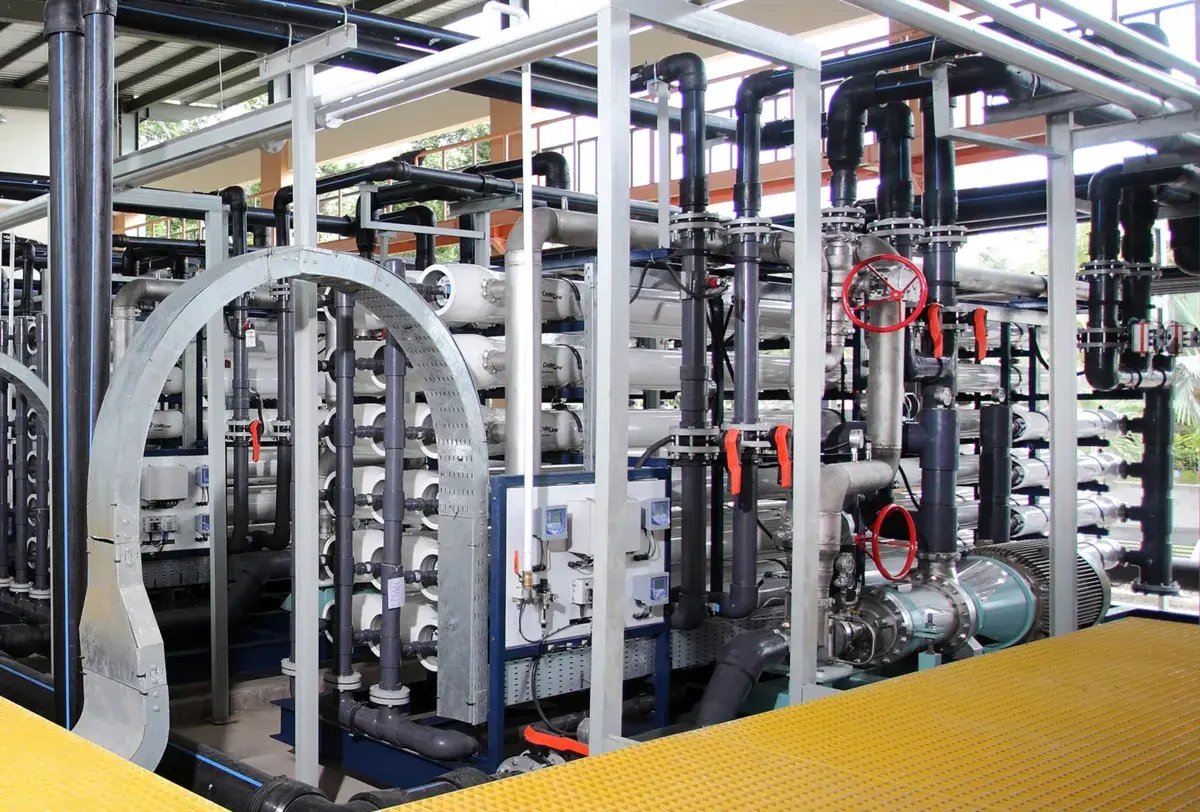
Industrial wastewater physical separation is not one machine; it is a process train selected from the solids, oil, peak flow, and downstream duty. Screening captures coarse objects, grit removal separates heavy particles, sedimentation settles solids, and DAF floats oil or floc that does not settle reliably.
PT Beta Pramesti Asia, through beta.co.id, designs and supplies industrial wastewater-treatment programmes in Indonesia. A scope may include an automatic screen, oil separation, clarifiers, DAF, biological treatment, sludge processing, instrumentation, commissioning, and performance verification against site data.
Technically reviewed: 1 August 2026.
Which physical-separation unit matches the loading?
Choose the mechanism from the behaviour of the actual sample. Particle size, density, settleability, oil content, and flow variation determine whether one unit is sufficient or a multi-stage train is required.
| Influent condition or objective | First unit to evaluate | Evidence required before selection |
|---|---|---|
| Plastics, rags, fibres, or coarse objects | Bar screen, fine screen, or automatic screen | Solids-size distribution, peak flow, opening, upstream/downstream level, and screenings route |
| Sand, broken glass, or heavy mineral particles | Grit chamber or grit separator | Particle size and density, channel velocity, abrasion, and grit volume |
| Readily settling solids or floc | Gravity clarifier | Settling test, peak flow, TSS, sludge volume, and solids carryover |
| Free oil, grease, or light floc | Dissolved air flotation | Separation/flotation test, chemistry, recycle, skimming, and underflow-water quality |
| Fine residual solids after primary separation | Filtration or a downstream membrane | Particle-size distribution, product-water target, fouling, backwash, and recovery |
| Separated sludge | Thickening and filter-press dewatering | Dry-solids mass, solids percentage, sludge character, cake target, and filtrate route |
The U.S. EPA preliminary-treatment material groups screening, grit removal, and flow equalisation as units that protect downstream treatment. It is a useful operating framework; final design must follow the industrial wastewater, environmental approval, and project data applicable in Indonesia.
What data defines the treatment train?
Average data can hide the peak loading that determines channel, screen, pump, clarifier, and DAF capacity. Use time-based profiles and representative samples so unit selection does not rest on one laboratory result.
| Data | Minimum content | Decision affected |
|---|---|---|
| Flow | Average, peak, hourly/batch variation, and rainfall or wash events | Hydraulic capacity, bypass, equalisation, and redundancy |
| Solids | TSS, size, density, settleability, fibres, grit, and coarse objects | Screen opening, grit removal, sedimentation, filtration, and handling |
| Oil and grease | Free or emulsified oil, temperature, surfactants, and process changes | Grease trap, oil separation, DAF, or emulsion breaking |
| Water chemistry | pH, alkalinity, colour, COD/BOD, metals, salinity, and inhibitors | Coagulation-flocculation, neutralisation, or stream segregation |
| Downstream target | Biological treatment, discharge, reuse, membrane, or production duty | Residual TSS/oil, polishing duty, and sampling points |
| Residuals | Screenings, grit, scum, and sludge quantity; water content; destination | Containers, washing, thickening, dewatering, and disposal cost |
The U.S. EPA Wastewater Influent Monitoring Fact Sheet, July 2026 stresses sampling at a well-mixed, representative influent point and flow-proportional composite sampling when appropriate. For an industrial project, agree the sampling method and parameters with the laboratory and site requirements.
How should physical separation be accepted during a trial?
An acceptance test should compare inlet and outlet conditions at defined flow and loading. Record not only water clarity, but also residual production, chemical use, operating hours, alarms, operator intervention, and the response of downstream treatment.
- Set the test envelope for flow, TSS, oil/grease, temperature, and batch variation.
- Verify instruments, sampling points, bypass condition, and destination of every residual stream.
- Run the unit at approved normal and safe peak conditions.
- Record inlet/outlet quality, headloss or pressure, residual production, downtime, and operator actions.
- Confirm that downstream treatment receives an acceptable load without new carryover or upset.
- Close the trial as accepted, conditionally accepted, or corrective work required, with an owner for every action.
Which symptoms indicate that the train needs review?
| Symptom | Possible cause | First check |
|---|---|---|
| Screen overflows or downstream pumps block repeatedly | Opening, rake capacity, level control, or handling does not match the loading | Peak flow, screenings character, headloss, alarms, and bypass |
| Sand accumulates in downstream channels or tanks | Grit is not separated at the actual flow condition | Velocity, aeration where used, grit size, and withdrawal schedule |
| Clarifier carries solids into the outlet | Floc does not settle, hydraulic loading is high, or sludge withdrawal is inadequate | Jar/settling test, flow distribution, blanket, weirs, and blowdown |
| DAF underflow water remains turbid | Chemistry, pressure/recycle, mixing, or skimming is not controlled | Actual sample, dose, pH, saturation, bubbles, and skimmer rate |
| Biological treatment receives repeated shocks | Variation is not segregated or buffered | Batch source, equalisation, pH/conductivity alarms, and diversion procedure |
For transfer pumps, level sensors, flow meters, or monitoring devices, review Watermart industrial pumps and water-treatment instrumentation. Device selection follows the fluid, solids, materials, measurement range, site condition, and control philosophy.
Frequently asked questions about physical separation
Can physical separation replace biological treatment?
Not in every case. Physical separation mainly handles coarse objects, grit, suspended solids, oil, or floc. Dissolved BOD/COD, ammonia, nutrients, and other dissolved contaminants may require a biological wastewater programme, chemical reaction, or downstream polishing.
Does high TSS always mean that a clarifier is the right choice?
No. Particles may be too fine, light, oily, or emulsified to settle reliably. Sedimentation, jar, and—where relevant—DAF tests should prove the separation mechanism before the unit is sized.
What information is needed for an initial review?
Send a flow diagram, flow profile, stream sources, TSS, solids distribution, oil/grease, pH, COD/BOD, temperature, existing process, outlet target, space, utilities, sludge route, and upset history through the wastewater-treatment contact page.