

ancillaries
Electrochlorination for Biofouling | Beta Pramesti
Betaqua electrochlorination generates onsite hypochlorite for disinfection and biofouling control, with salt, power, residual, and safety checks.
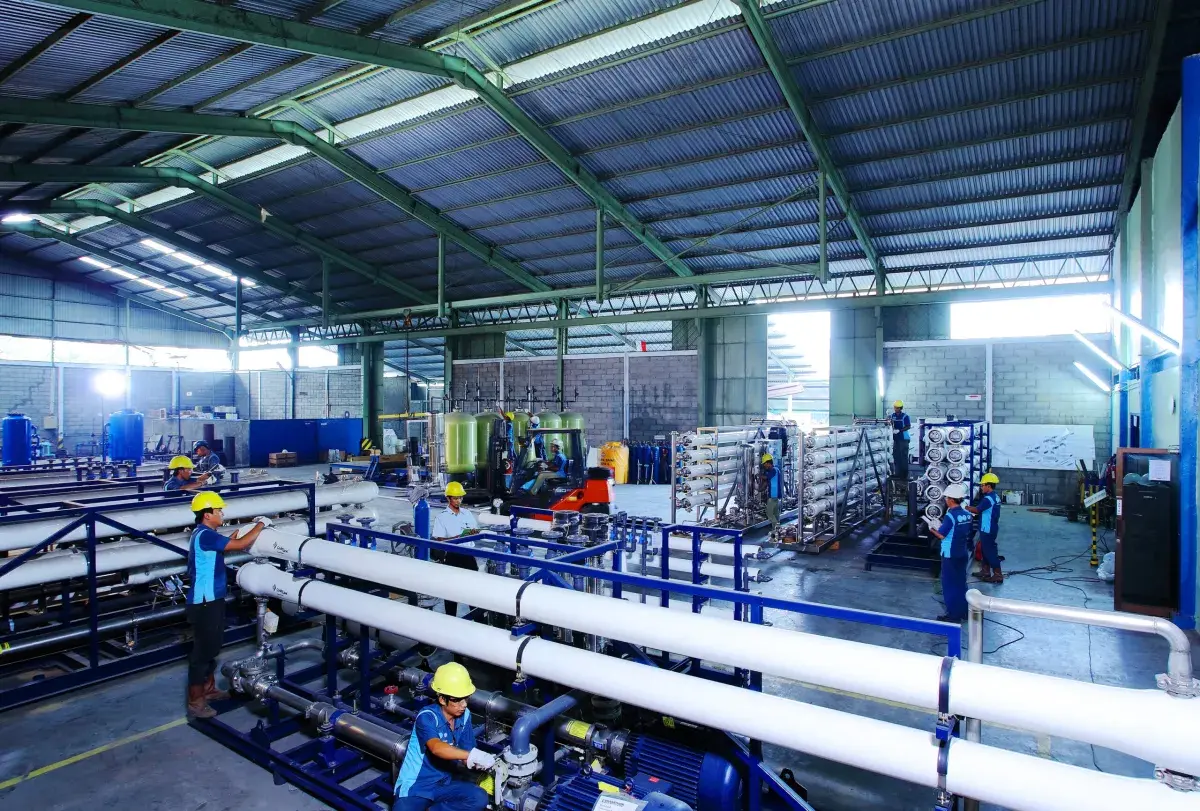
Electrochlorination is selected when a facility needs onsite sodium hypochlorite for disinfection, intake biofouling control, cooling water, process water, or selected wastewater duties. PT Beta Pramesti Asia, through beta.co.id, supplies Betaqua Electrochlorination System in Indonesia with review of brine or seawater quality, active-chlorine capacity, injection points, residual targets, hydrogen ventilation, and operating proof.
Technically reviewed: 4 August 2026.
What is Electroclorination?
Electroclorination produces Sodium Hypochlorite, on-site and as needed, with no additional materials or special treatment required. The electric current passes through the seawater by the MMO Anode. Now, electrolysis produces Sodium Hypochlorite which is the main product of the reaction. Hydrogen gas, as a by-product of the reaction, will be separated due to its low gravity. The Electrochlorination reaction can be formulated as below:
NaCl + H2O + ENERGY -> NaOCl + H2
Technically, Electrolysis takes place in an undivided cell when a DC passes through a saltwater solution (Seawater or brine solution):
At the Anode: Oxidation of chloride ions to produce chlorine
At the Cathode: Reduction of water to produce sodium hydroxide (NaOH) and Hydrogen (H2).
The liberated chlorine reacts with sodium hydroxide to produce sodium hypochlorite (NaOCl) immediately.
Sodium hypochlorite
Sodium Hypochlorite, also known as Hypo*, Bleach, or Liquid Chlorine,* is a strong oxidant used worldwide for water chlorination. NaOCl or Sodium Hypochlorite is generally efficient in:
- Anti-biofouling to prevent the so-called sliming phenomenon, or the growth of mussels/barnacles
- Drinking water disinfection
- General anti-bacterial treatment of Process Water
- Chemical treatment that would occur in bleaching, iron, or manganese removal
Need help choosing the right system?
Contact Beta’s technical team with capacity, source water, residual target, and injection-point data.
What is the Electrochlorination process?
The electrochlorination process is called an electrolysis process where sodium hypochlorite is produced from salt water due to the current flowing to the anode and cathode (electrodes) when salt water passes through a plate that has been connected to a direct electric current, the electrolysis phenomenon takes place as follows:
- NaCl breaks down into Sodium (Na+) and Chlorine (Cl-) ions
- Water breaks down into Hydrogen (H+) and hydroxide (OH-) ions
The electrode attracts ions in such a way that positively charged ions tend to move to the negative (cathode) and negatively charged ions lean towards the positive (Anode).
On the Anode side, the accumulation of Cl- produces chlorine gas (Cl2)
- 2 Cl- → Cl2 + 2 e-
On the Cathode side, Hydrogen gas will be generated
- 2 H2O + 2 e- → H2 + 2 OH-
The OH- generated is free to diffuse to the anode and react with Na+.
The overall reaction is as below;
- 2 NaCl + 2 H2O → 2 NaOH + H2 + Cl2
Finally, hypochlorite on the anode side will form as a result of the interaction between chlorine gas and sodium hydroxide
- Cl2 + 2 NaOH → NaCl + NaClO + H2O
As a result of the above reaction, a low concentration of sodium hypochlorite (Product) and also hydrogen (By-product) are produced. The product as a disinfectant will be stored in a hypochlorite tank to be injected into the main stream to disinfect harmful micro-organisms, viruses, and bacteria present in the water, through pipelines to ensure the water is safe for consumption.
The comparative advantage of low concentration sodium hypochlorite is that it offers the most reliable solution to the challenges crossed by “toxic by-products” and “staffing needs” compared to conventional chlorination methods including commercial sodium hypochlorite and chlorine gas, where large concentrations are considered hazardous and create unsafe THMs. Therefore, Electrochlorination produces Sodium Hypochlorite as an effective disinfectant and is an alternative to dangerous and highly concentrated commercial chlorine products, e.g. gaseous chlorine, commercial hypo, and dry chlorine (granular calcium hypochlorite).
ULTRANODE electrochlorination offers a safe, economical and independent solution with the following priorities;
- On-site generation of hypochlorite: No transportation
- On demand: when needed
- No bulk storage: Safety
- Basic/safe inputs: water and salt or seawater + electricity
Betaqua Electrochlorination System
Betaqua Electrochlorination System is a system used to produce chlorine from seawater or salt water through electrolysis process. It is often used in water treatment applications, particularly for disinfection and prevention of biological growth in water distribution lines, swimming pools, and wastewater treatment facilities. The system uses saline solution as raw material and through an electrochemical process produces active chlorine that effectively kills microorganisms.
The advantage of an electrochlorination system like Betaqua’s is its ability to produce chlorine on site, reducing the risks associated with the storage and transportation of hazardous chemicals. The process is also more environmentally friendly as it only uses salt and water as the main raw materials.
Its main applications include:
- Drinking water and industrial water treatment.
- Protection of water distribution networks from biofouling.
- Disinfection in wastewater treatment facilities.
- Use in swimming pools and other recreational applications.
The system is a reliable and efficient option to ensure hygienic and safe water quality.
Electrochlorination selection data buyers should compare
An electrochlorination system should not be selected from nameplate capacity alone. Buyers need proof of active-chlorine demand, brine or seawater quality, cell-scaling risk, hydrogen ventilation, wetted-part materials, dosing control, and residual monitoring.
| Buyer question | Data to request | Acceptance evidence |
|---|---|---|
| How much active chlorine is required? | Flow, target dose, residual, operating hours, and peak factor | Hypochlorite production covers average and peak duty |
| Is the feed suitable for the cell? | TDS/salt, hardness, iron, manganese, suspended solids, temperature, and pretreatment | The cell avoids rapid scaling, plugging, or efficiency loss |
| Where will the product be injected? | P&ID, pipe pressure, contact time, sampling point, and flow interlock | Residual is achieved without overdosing or backflow into the unit |
| How is hydrogen safety controlled? | Ventilation, detection, installation area, drains, and HSE procedure | By-product gas is discharged safely under the site procedure |
| How will performance be proved? | Current, brine flow, product flow, chlorine residual, ORP where used, and alarms | Operators can separate power, salt, cell, and dosing faults |
For related chemical programmes, compare cooling tower biocides, dechlorination agents, and chemical dosing pump metering. If electrochlorination serves an intake upstream of membranes, protect downstream RO from oxidants with monitoring points and a dechlorination procedure.
Industrial electrochlorination FAQ
When is electrochlorination better than buying liquid sodium hypochlorite?
Electrochlorination is more attractive when a facility wants to reduce concentrated hypochlorite storage, chemical deliveries, or supply risk. The decision still needs to include power, salt, space, ventilation, cell maintenance, and operator requirements.
Can electrochlorination be used for cooling tower biofouling control?
It can support some chlorination schemes, but residual, injection point, contact time, pH, blowdown, and material compatibility must be verified. For a complete programme, also compare cooling tower chemicals and microbiology-monitoring evidence.
What data should be sent for a Betaqua Electrochlorination System quotation?
Send flow, operating hours, salt or seawater source, water analysis, residual target, injection point, pipe pressure, panel location, ventilation, installation space, and HSE standards through the Beta contact page.