

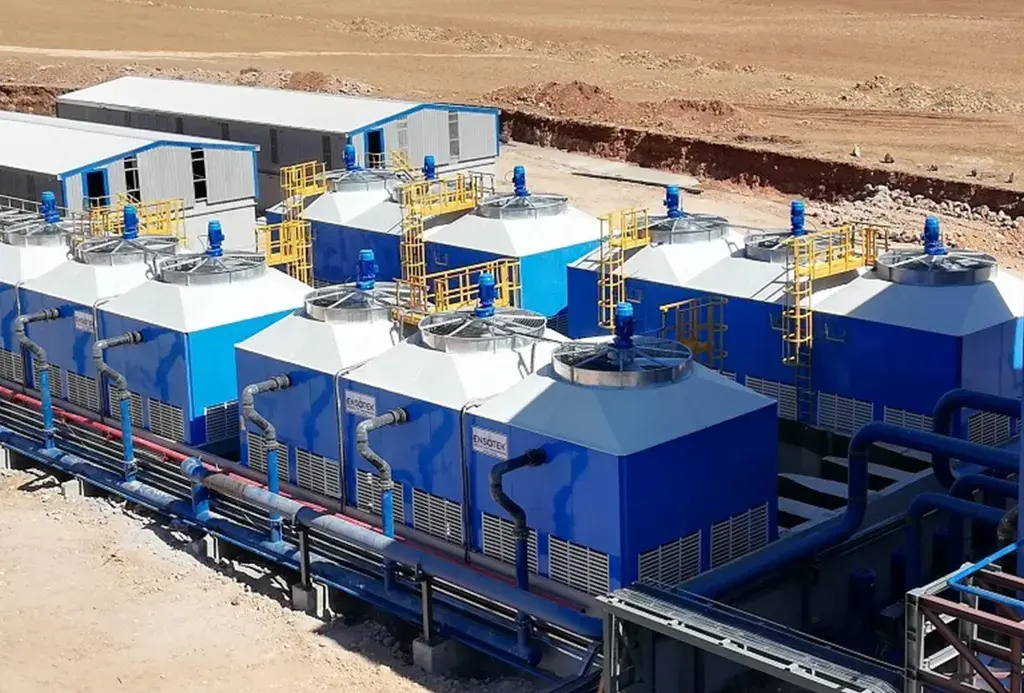
cooling tower
Cooling Tower Chemical Programme | Beta Pramesti Asia
Cooling tower chemicals for scale, corrosion, biofilm, dosing, and monitoring, selected from make-up water analysis and industrial operating conditions.
Short answer: which cooling tower chemicals are needed?
Betagard cooling tower chemicals are used to control scale, corrosion, biofilm, and suspended solids in industrial cooling systems. PT Beta Pramesti Asia, through beta.co.id, supplies programmes in Indonesia covering scale inhibitors, corrosion inhibitors, biocides, dispersants, dosing, and monitoring selected from make-up water quality and operating conditions.
The programme starts with hardness, alkalinity, chloride, silica, pH, cycles of concentration, temperature, system materials, and microbiological risk. The final dose must be confirmed through water analysis and operating trends, especially when the water source or cooling load changes.
| Operating problem | Chemical programme | Intended control |
|---|---|---|
| Calcium, silica, or mineral deposits | Scale inhibitor and dispersant | Maintain heat transfer and avoid unnecessary blowdown |
| Corrosion of steel, copper, or alloys | Corrosion inhibitor | Protect pipework, condensers, heat exchangers, and the basin |
| Biofilm, algae, or slime | Oxidising/non-oxidising biocide | Control microbiology and biological-fouling risk |
| Changing make-up water quality | Monitoring and field testing | Correct dose and cycles of concentration |
The U.S. Department of Energy explains that evaporation concentrates minerals in circulating water and that safe cycles of concentration depend on make-up quality and the treatment programme (DOE, Cooling Tower Management). Use this as a framework; pH, conductivity, residual, corrosion, and microbiological targets must still be set for the actual system.
What evidence should a programme trial retain?
A cooling tower chemical trial should connect the baseline, action, and acceptance criteria. A dose change without water-flow, blowdown, heat-load, and equipment-condition data does not prove that the chemical corrected the problem.
| Trial stage | Evidence to record | Decision |
|---|---|---|
| Baseline | Make-up/circulating-water analyses, flow, cycles, blowdown, materials, deposits, corrosion coupon/probe data where available, and microbiological trends | Define the dominant problem and risks that must not worsen |
| Implementation | Product and batch, dose basis, actual pump output, injection point, interlocks, biocide schedule, and operating changes | Confirm that the programme entered the system as planned |
| Verification | Conductivity, pH, hardness/silica, programme residual, deposit/biofilm inspection, corrosion evidence, and water use | Accept, correct one variable, or stop for diagnosis |
| Handover | Control envelope, alarms, operator responses, sampling frequency, product consumption, and report format | Convert the trial into an operable, auditable programme |
Product range
BETAGARD 1115
Scale inhibitor and dispersant
BETAGARD 1115 is a scale inhibitor and dispersant for use in general water system applications to control scale formation from precipitation of hardness salts and to confine and disperse metal oxides.
BETAGARD 1220
Corrosion and scale inhibitor
BETAGARD 1220 is an alkaline liquid mixture of phosphates and organic polymers evaluated for corrosion and scale control in open circulating-water systems.
BETAGARD 1520
Corrosion inhibitor
BETAGARD 1520 is an alkaline liquid containing nitrite and is evaluated for corrosion control in closed circulating, cooling, hot-water heating, and brine systems. Suitability depends on the facility materials and operating limits.
BETAGARD 5012
Oxidising biocide
BETAGARD 5012 is a chlorine-based oxidising biocide formulation for bacterial control in industrial water systems. Its schedule, concentration, contact time, and compatibility must follow the system conditions and current product documents.
BETAGARD 5050
Non-oxidising biocide
BETAGARD 5050 is formulated to control microorganisms in open and closed circulating water systems.
BETAGARD 5080
Biocide
BETAGARD 5080 is a biocide that may be evaluated for algae, bacteria, and fungi control in swimming pools, fountains, and recirculating water according to the intended use and product documents.
BETAGARD 5090
Oxidising biocide
BETAGARD 5090 is a disinfectant candidate for recirculating water systems. Use conditions and acceptance evidence must follow the current product documents and the facility water-quality objective.
Learn more
Use the industrial cooling tower chemicals guide to build the water balance, separate scale, corrosion, biological, and solids risks, and define evidence for programme-trial acceptance.
Review scale inhibitors, corrosion inhibitors, cooling-tower biocides, and dispersant chemicals before defining a programme. For cycles-of-concentration and bleed control, use the cooling tower blowdown guide.
If a purchase specification names BCDMH, use the BCDMH cooling-tower biocide guide to check active content, tablet form, feeder, residual, contact time, product documents, and programme cost before comparing quotations.
Frequently asked questions
Which data are needed for a cooling tower chemical proposal?
Prepare the tower type and number, system volume, circulation and make-up flow, temperatures, materials, make-up and circulating-water analyses, cycles of concentration, blowdown pattern, and records of scale, corrosion, or slime. Send the data through the Beta Pramesti Asia contact page for programme and monitoring review.
Should the chemical dose follow water quality?
Yes. Product selection and dose must follow make-up quality, circulating conditions, system materials, and microbiological risk rather than another tower’s setpoint. Recheck the programme when the source water, heat load, blowdown, or production pattern changes.
Which products normally form a cooling tower programme?
A programme may include a scale inhibitor, corrosion inhibitor, biocide, and dispersant, supported by blowdown control and monitoring. Not every tower needs the same combination; the problem, metallurgy, water quality, and discharge constraints determine the components.