

water wastewater
Reverse Osmosis Chemicals Indonesia | Beta Pramesti Asia
BETAGARD reverse osmosis chemicals for antiscalant, membrane cleaning, biofilm control, dechlorination, and RO system performance review in Indonesia.
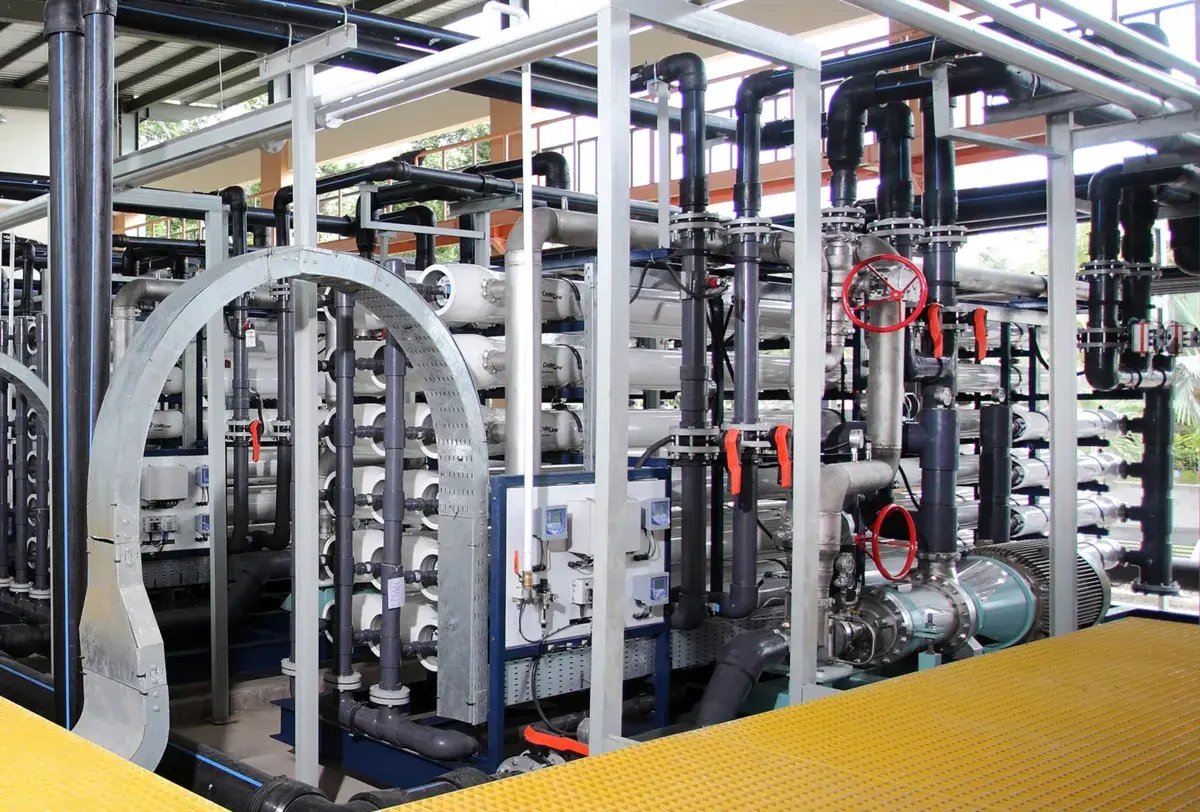
Short Answer
Reverse osmosis chemicals should be selected from the cause of declining membrane performance, not from one symptom alone. Mineral scale calls for antiscalant review; inorganic or organic deposits require a compatible cleaner; biofilm needs microbiological control; and free chlorine must be controlled before an oxidation-sensitive membrane.
PT Beta Pramesti Asia, through beta.co.id, provides BETAGARD programmes for industrial RO systems in Indonesia: BETAGARD 6000 antiscalant/antifoulant, BETAGARD 6510 low-pH cleaner, BETAGARD 6520 alkaline cleaner, BETAGARD 6550 slime control, and BETAGARD 6570 oxygen/chlorine scavenger. Final selection follows feed-water data, normalised performance, membrane materials, and manufacturer limits.
The DuPont FilmTec membrane technical manual covers RO/NF water chemistry, pretreatment, operation, cleaning, sanitisation, and troubleshooting. Treat the installed membrane manual as the controlling reference for pH, temperature, pressure, flow, and cleaner compatibility.
When does an RO project need chemicals, a system, or components?
Choose the path from the boundary of the problem. A chemical programme is appropriate when deposit, scale, biofilm, oxidant, or dosing stability is the verified cause; hydraulic capacity, damaged elements, instrumentation, or inadequate pretreatment needs a system or component scope rather than trial-and-error chemical replacement.
| Requirement boundary | Initial evidence | Purchase or evaluation path |
|---|---|---|
| Scale and fouling prevention | Ion analysis, recovery, pH, temperature, SDI/turbidity, and normalised trends | Evaluate membrane antiscalant and the operating condition |
| Performance recovery through CIP | Stage pressure-drop and flow trends, deposit analysis, cleaning history, and membrane limits | Select a membrane cleaner and procedure for the identified foulant |
| Recurring biofilm or oxidant exposure | Microbiology, sanitation, dead legs, chlorine/ORP, injection point, and contact time | Correct the source, then select compatible slime control or dechlorination |
| Capacity, recovery, or product quality has missed its basis since design | Water balance, feed analysis, permeate target, membrane projection, pumps, vessels, controls, and reject route | Review the industrial reverse osmosis system, not only its chemistry |
| Elements, housings, cartridges, or spares need replacement | Installed brand/model, quantity, dimensions, rating, material, operating condition, and OEM documents | Compare RO membranes and components from Watermart |
| Evidence is insufficient for diagnosis | P&ID, instrument list, calibration, alarm history, stage data, and maintenance records | Complete monitoring or use Betaqua Sentinel for RO/UF |
How should an RO chemical function be selected?
| Operating finding | Evidence to review | Function to evaluate | Acceptance evidence |
|---|---|---|---|
| Scaling risk rises as recovery increases | Feed-ion analysis, recovery, pH, temperature, and saturation projection | Membrane antiscalant and operating-condition correction | Pressure, permeate-flow, and conductivity trends remain stable after normalisation |
| Differential pressure rises or normalised flow falls | Stage trends, deposit analysis, SDI/turbidity, pretreatment history, and cartridge inspection | Membrane cleaner matched to the deposit | Performance recovers without exceeding membrane pH, temperature, pressure, or flow limits |
| Slime or biofilm recurs | Microbiology data, tanks/piping, dead legs, sanitation, and nutrient sources | BETAGARD 6550 plus correction of the biofouling source | Microbiology and fouling-rate trends improve, not only the immediate appearance |
| Free chlorine reaches the RO feed | Oxidant residual, injection point, contact time, relevant ORP, and membrane material | Dechlorination chemical or BETAGARD 6570 | Oxidant residual meets the manufacturer limit before the membrane |
BETAGARD product functions to compare
BETAGARD 6000 — Antiscalant and antifoulant
BETAGARD 6000 is evaluated for control of crystallisation and particulate-fouling risk in RO systems. Selection and dose follow the ion analysis, saturation projection, recovery, pretreatment quality, and membrane limits.
BETAGARD 6510 — Low-pH cleaner
BETAGARD 6510 is a low-pH cleaner candidate. Use it after the deposit type, cleaning sequence, concentration, temperature, circulation time, and membrane pH limits are defined.
BETAGARD 6520 — Alkaline cleaner
BETAGARD 6520 is an alkaline cleaner candidate. Evaluate it within a CIP procedure that defines solution preparation, circulation, rinsing, disposal, and evidence of performance recovery.
BETAGARD 6550 — Slime control
BETAGARD 6550 is evaluated for slime control in RO or UF systems. The programme should correct biofouling sources, dead legs, sanitation, and nutrient pathways; the product does not replace correction of system conditions.
BETAGARD 6570 — Oxygen and chlorine scavenger
BETAGARD 6570 is evaluated for oxidant control before RO or UF membranes. The injection point, contact time, chemical demand, oxidant residual, relevant ORP, and membrane-manufacturer limit belong in the acceptance criteria.
Data needed before requesting an RO programme
Prepare the flow diagram, membrane type, capacity and recovery by stage, full feed-water analysis, SDI or turbidity, stage pressures and flows, feed/permeate/concentrate conductivity, temperature, chlorine residual, chemical doses, cartridge history, and CIP records. Normalise the raw data so temperature and salinity changes are not mistaken for fouling.
For injection pumps and day tanks, see water-treatment dosing pumps. When the project also needs membrane elements, housings, cartridges, or other RO components, see Watermart membrane components. Send the system data through the Beta Pramesti Asia contact page for technical review.
Frequently Asked Questions
Does falling permeate flow always mean that the membrane needs cleaning?
No. Temperature, feed salinity, recovery, pressure, instrument calibration, and pretreatment condition also affect performance. Compare normalised data and differential pressure by stage before scheduling a CIP.
Can an antiscalant replace membrane cleaning?
No. Antiscalant helps delay scale formation before a deposit forms. Cleaning removes foulants that are already attached. Identify the deposit so the cleaner and sequence do not make fouling worse.
How does an RO cleaning programme differ from an RO maintenance programme?
A cleaning programme focuses on foulant diagnosis, the CIP procedure, rinsing, and recovery review. An RO maintenance programme covers prevention, monitoring, dechlorination, dosing, and scheduled actions so cleaning intervals are not set reactively.