

boiler
Scale Inhibitor and Dispersant | Beta Pramesti Asia
BETAGARD scale inhibitor and dispersant for open cooling-water systems, selected from makeup quality, cycles, materials, deposits, and monitoring evidence.
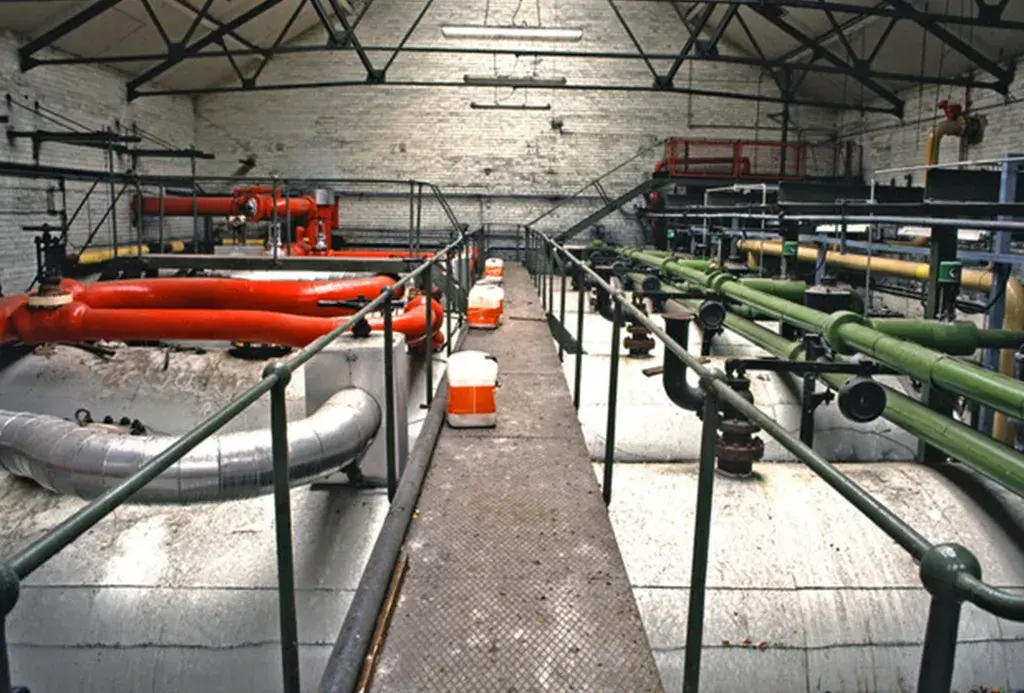
Cooling-water scale inhibitors and dispersants control mineral deposit formation and keep particles dispersed so they can leave through blowdown or filtration. Product selection must reflect makeup and circulating-water analysis, materials, cycles of concentration, temperature, deposit type, injection point, and monitoring method—not TDS or pH alone.
PT Beta Pramesti Asia, through beta.co.id, supplies BETAGARD 1000, 1220, 1230, and 1275 for evaluation in open water systems in Indonesia. This page provides an initial selection point; final product and dose must be confirmed from system data, product documents, and a controlled trial.
Why are scale inhibitors and dispersants needed?
Corrosion and scale are two major threats in open cooling and industrial water circulation systems. Without proper protection, corrosion can cause leaks, heavy metal contamination, and equipment damage. Meanwhile, scale can reduce heat transfer efficiency, increase energy consumption, and trigger overheating.
Reliable Solutions from BETAGARD
The BETAGARD Corrosion & Scale Inhibitor series from PT. Beta Pramesti Asia is specially designed to provide comprehensive protection against scale and corrosion formation across various open water system conditions.
BETAGARD Product Advantages
- Prevents the simultaneous formation of scale and corrosion
- Formulated with high-performance phosphonates & organic polymers
- Suitable for use across various pH levels and water qualities
- Suitable for open water systems with high evaporation
- Enables high efficiency and longer equipment service life
Available Product Options
| Product | Key Benefits |
|---|---|
| BETAGARD 1000 | Powerful dispersant & scale inhibitor; suitable for systems with high concentrations. |
| BETAGARD 1220 | Alkaline formula; ideal for open systems requiring neutral pH. |
| BETAGARD 1230 | Acidic formula; suitable for low pH and high TDS water conditions. |
| BETAGARD 1275 | Extra corrosion protection; formulated for high-performance open systems. |
How should a product be selected for trial?
A product name does not replace deposit diagnosis. Scale or sludge analysis helps separate mineral scale, corrosion products, and solids carried in with makeup; each may require a mechanical or operating correction alongside chemistry.
| Selection question | Data to check | Decision supported |
|---|---|---|
| What forms the deposit? | Deposit analysis, hardness, alkalinity, silica, iron, TSS, and location photographs | Decide whether the focus is scale inhibition, dispersion, corrosion control, or cleaning |
| How concentrated is the circulating water? | Makeup and circulating conductivity, chloride, hardness, silica, and blowdown | Assess cycles of concentration and the load to be controlled |
| Which materials need protection? | Heat-exchanger, pipe, basin, fill, and seal materials plus corrosion history | Check compatibility and the need for a corrosion inhibitor |
| How is chemical delivered? | System volume, makeup, pump capacity, interlock, injection point, and mixing time | Define chemical-feed and calibration requirements |
| How will performance be proven? | Approved residual/tracer, deposit/coupon, conductivity, blowdown, and inspection | Set the baseline, warning limits, and trial acceptance criteria |
For a complete programme, connect this product with the cooling-tower chemical programme, cooling-tower dispersants, monitoring, and blowdown. Feed equipment can be reviewed through Watermart dosing pumps.
Common Applications
- Open cooling systems (cooling towers)
- Industrial water circulation systems
- Systems with low-quality make-up water
- Chemical, petrochemical, and food/beverage plants
- HVAC and industrial utility systems
Long-Term Benefits
- Reduces the risk of corrosion and scale
- Improves energy efficiency and heat transfer
- Reduces downtime & maintenance costs
- Extends the life of pipes and equipment
- Supports sustainable and environmentally friendly operations
Frequently asked scale-inhibitor questions
Can a scale inhibitor remove an old deposit?
Not automatically. A preventive product is intended to control formation or deposition during operation. Existing deposits should be identified and assessed against material condition before mechanical or chemical cleaning is selected.
Is high TDS enough to select a product?
No. TDS or conductivity gives a general indication of total ions but does not identify hardness, alkalinity, silica, chloride, sulphate, iron, or deposit character. Use relevant ion analysis and operating data.
What data should be submitted?
Prepare the loop diagram, volume, circulation/makeup/blowdown, temperature, materials, makeup and circulating-water analyses, cycles of concentration, current product/dose, monitoring results, and deposit photographs or analysis. Send them through the Beta Pramesti Asia contact page.
Contact Us
- sales@beta.co.id
- (021)8580838
- 08111450838
Contact Us For More Information
Main Office
Jl. Matraman Raya No.169, RT.5/RW.9, Palmeriam, Kec. Matraman, Kota Jakarta Timur, Daerah Khusus Ibukota Jakarta 13140