

cooling tower
Cooling Tower Chemicals Indonesia | Beta Pramesti Asia
Cooling tower chemicals in Indonesia for scale, corrosion, and biofilm control, with Betagard dosing, monitoring, water analysis, and field support.
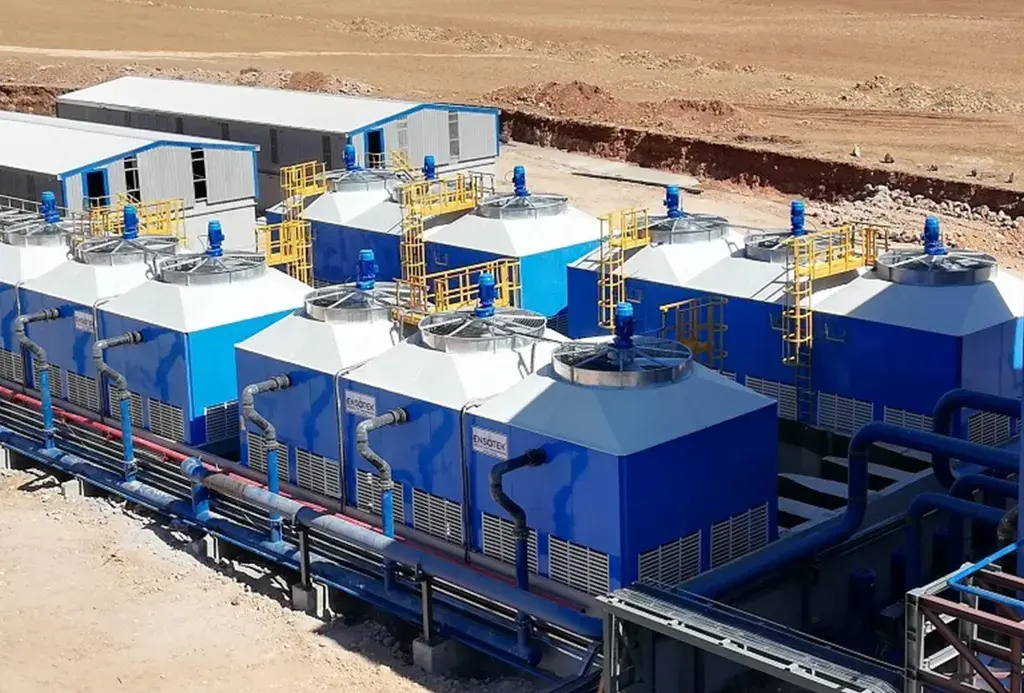
Cooling Tower Chemicals in Indonesia: Short Answer
Betagard cooling tower chemicals control scale, corrosion, biofilm, and suspended solids in industrial cooling systems. PT Beta Pramesti Asia, through beta.co.id, supplies programmes in Indonesia with scale inhibitors, corrosion inhibitors, biocides, dispersants, dosing, and monitoring selected from make-up water quality and operating conditions.
Buyers usually need a cooling tower chemical programme when the system shows scale, corrosion, biofilm, slime, high water consumption, reduced chiller efficiency, or condenser and heat-exchanger fouling. Beta reviews make-up water quality, cycle of concentration, operating temperature, metallurgy, and microbiological risk before recommending a programme.
Choose cooling tower chemicals from measurable risks. Hardness, alkalinity, chloride, silica, pH, cycle of concentration, temperature, metallurgy, and microbiological condition determine the programme priority and monitoring points. Confirm the final dosage through water analysis and operating trends, particularly when make-up water quality or system load changes.
The CDC cooling tower guidance updated on January 3, 2025 places scale, corrosion, sediment, cleaning, and disinfectant monitoring within a water management programme. It also recommends automated chemical addition and monitoring; setpoints still need to follow system conditions, manufacturer guidance, and applicable discharge rules.
Cooling Tower Chemical Programme
| Operating issue | Chemical programme | Purpose |
|---|---|---|
| Calcium scale, silica, or mineral deposits | Scale inhibitor and dispersant | Maintain heat transfer and reduce unnecessary blowdown |
| Corrosion on steel, copper, or alloys | Corrosion inhibitor | Protect piping, condenser, heat exchanger, and basin |
| Biofilm, algae, and slime | Oxidising/non-oxidising biocide | Control microbiology and biological fouling risk |
| Changing make-up water quality | Monitoring and field testing | Adjust dosage and cycle of concentration |
What should buyers compare in a cooling tower chemical proposal?
| Proposal evidence | Minimum detail to review | Initial acceptance check |
|---|---|---|
| System baseline | System volume and circulation, heat load, temperatures, metallurgy, and make-up/circulating-water quality | Agree the baseline before setting dose and control points |
| Integrated programme | Scale inhibitor, corrosion inhibitor, biocide, dispersant, compatibility, SDS, and injection points | Give every product a clear function, feed sequence, and control parameter |
| Operating control | Target cycles of concentration, blowdown control, residual test method, and monitoring frequency | Calibrate pumps and sensors and record the initial results |
| Results and cost | Deposit, corrosion, microbiology, water use, product consumption, and technical-service trends | Judge the programme against agreed trends, not product price alone |
What Belongs in a Chemical Programme Service Report?
A service report should connect system condition, measurements, chemical consumption, exceptions, actions, owners, and closure dates. A list of numbers without a baseline or decision is insufficient. CDC also calls for site-specific log sheets, test procedures, service reports, and test results to be retained on site as part of a cooling tower water management programme.
| Report section | Evidence to record | Decision question |
|---|---|---|
| Operating condition | Active tower/cell, load, operating hours, temperatures, make-up, blowdown, and shutdown events | Can the results be compared with the previous period? |
| Water chemistry and control | Method, point, time, pH, conductivity, hardness/alkalinity, relevant residuals, and calibration status | Are the results trustworthy and within the approved control envelope? |
| Programme consumption | Product/batch, opening-closing stock, deliveries, actual pump output, flow, and calculated dose | Does consumption reconcile with make-up water and operating demand? |
| Scale, corrosion, and microbiological evidence | Inspection, deposits, coupon/probe where used, biofilm, microbiological results, and heat-exchanger trends | Is the problem controlled, stable, or deteriorating? |
| Exceptions and follow-up | Alarm, preliminary cause, action, owner, due date, closure verification, and setpoint changes | Who does what, by when, and which evidence closes the finding? |
Use consistent methods, sampling points, and units so trends remain comparable. Every dose or setpoint change should state its reason, approval, time, and post-change result; this lets a buyer evaluate service quality instead of visit count alone.
BETAGARD 1115 Scale Inhibitor and Dispersant
BETAGARD 1115 is a scale inhibitor and dispersant for use in general water system applications to control scale formation from precipitation of hardness salts and to confine and disperse metal oxides.
BETAGARD 1220
Corrosion and Scale Inhibitor
BETAGARD 1220 is an alkaline liquid blend of phosphates and organic polymers for controlling corrosion and scale in open recirculating water systems.
BETAGARD 1520 Corrosion Inhibitor
BETAGARD 1520 is an alkaline, nitrite-based liquid for corrosion control in closed recirculating cooling, hot-water heating, and brine systems.
BETAGARD 5012 Oxidizing Biocide
BETAGARD 5012 is a chlorine-based oxidising biocide for bacterial control in industrial water systems. Dose and residual targets must follow the product data and circulating-water conditions.
BETAGARD 5050 Non Oxidizing Biocide
BETAGARD 5050 is formulated to control microorganisms in open and closed circulating water systems.
BETAGARD 5080 Biocide
BETAGARD 5080 is a fast-acting, broad-spectrum biocide for the control of algae, bacteria and fungi in swimming pools, fountains and recirculating water.
BETAGARD 5090 Oxidizing Biocide
BETAGARD 5090 is an oxidising disinfectant for recirculating water systems. Its application and residual target should be defined within the site water management programme.
Typical Applications
- HVAC and Commercial Buildings — Corrosion and scale control in chiller cooling tower systems to maintain heat transfer and reduce heat-exchanger fouling.
- Power Plants (Steam and Gas Turbine) — Maintains circulating water conditions in large-capacity cooling towers at high Cycles of Concentration (CoC) to reduce make-up water consumption and operational costs.
- Petrochemical Industry and Oil Refineries — Corrosion inhibition on carbon steel heat exchangers and condensers in aggressive environments with high H₂S, CO₂, and chloride ion content.
- Food and Beverage Industry — Non-oxidising and oxidising biocide control (BETAGARD 5050/5012) to support management of biofilm and Legionella risk under the site’s hygiene programme.
- Textile and Chemical Industry — Control of calcium carbonate, calcium sulfate, and silica scale in recirculating water systems at plants using high TDS and alkalinity water.
- Paper and Pulp Industry — Prevention of biological fouling and scale on condensers and cooling towers in production environments that generate many spores and microbial nutrients.
Compatible Products
- Scale inhibitors — Individual Betagard scale inhibitors for targeted control of calcium carbonate, calcium sulfate, and silica scale based on circulating water chemistry analysis.
- Corrosion inhibitors — Betagard corrosion inhibitors for protection of ferrous metals, copper, and aluminium alloys in cooling tower and closed loop systems.
- Closed-loop cooling-water chemicals — Inhibitor, deposit-control, biocide, and monitoring programmes for sealed cooling or heating circuits.
- Cooling tower dispersants — Dispersants to help control suspended solids and deposits that contribute to fouling.
- Biocides for cooling tower algae control — Microbiological control options for programmes addressing biofilm, algae, or slime.
- Water softener — Make-up water softening reduces hardness before it enters the cooling tower, lowering scale risk and the load on the inhibitor programme.
For dosing pumps and chemical-injection components, see Watermart dosing pumps for water treatment.
Installation Context
Betagard programmes can use automatic dosing linked to conductivity monitoring for blowdown control and other relevant sensors. Pump type, tank size, electrical supply, control signal, secondary containment, and injection position should be selected from flow, daily consumption, material compatibility, layout, and refill interval—not copied from one tower to another. PT Beta Pramesti Asia can review water analyses, recommend a programme, support initial-dose commissioning, and define periodic monitoring.
To establish COC, conductivity setpoints, and discharge flow, use the cooling tower blowdown formula and troubleshooting guide with water analysis and actual meter data.
Common Questions
Who supplies cooling tower chemicals in Indonesia?
PT Beta Pramesti Asia supplies cooling tower chemicals in Indonesia for scale inhibition, corrosion control, microbiological control, dispersants, chemical dosing, monitoring, and technical service for industrial cooling systems.
Should cooling tower chemicals be adjusted to water quality?
Yes. Dosage and formulation should match make-up water quality, hardness, alkalinity, chloride, silica, pH, temperature, cycle of concentration, system metallurgy, and microbiological conditions. Water analysis and field monitoring are important before the programme is fully applied.
What data should be sent with a request for proposal?
Prepare the tower type and quantity, system volume, circulation and make-up flow, load or operating hours, temperatures, metallurgy, make-up and circulating-water analyses, cycles of concentration, blowdown pattern, current chemical programme, and records of scale, corrosion, slime, or microbiological results. Send these through the Beta contact page for technical review.
How should a buyer assess a monthly service report?
Check that every result has a method, point, time, baseline, and response limit, then reconcile chemical consumption with make-up water and actual pump output. A useful report also assigns each exception an action, owner, due date, and closure evidence instead of simply labelling the condition “normal”.