

water wastewater
Scale Inhibitor Dispersant Cooling | Beta Pramesti
Select BETAGARD scale inhibitor and dispersant from scaling index, cycles, deposits, corrosion, dose control, and monitoring proof.
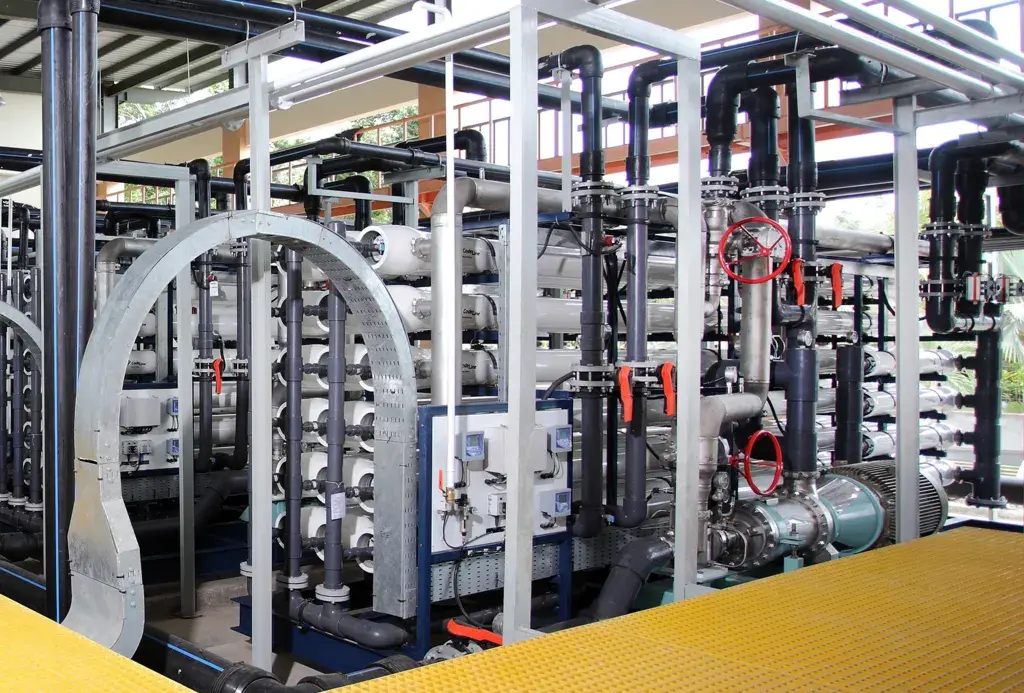
BETAGARD scale inhibitor and dispersant products are used to suppress scale formation and keep fine solids dispersed in industrial recirculating water. PT Beta Pramesti Asia selects the programme from water analysis, concentration cycles, temperature, metallurgy, deposit risk, corrosion target, chemical dose, and field-monitoring data in Indonesia.
Technically reviewed: 4 August 2026.
How should a scale inhibitor and dispersant be selected?
Selection should start from actual scale and deposit risk, not from one product name. Cooling towers, process-water loops, and open recirculating systems can have different alkalinity, hardness, silica, TDS, temperature, and suspended solids, so the dose and inhibitor combination must be checked.
| Operating evidence | Why it matters | Programme response |
|---|---|---|
| Make-up and recirculating-water analysis | Shows hardness, alkalinity, silica, chloride, TDS, pH, and concentration cycles | Sets scale risk, blowdown target, and inhibitor candidates |
| Deposit inspection and heat-transfer loss | Separates mineral scale, organic fouling, sludge, or corrosion product | Defines the need for dispersant, cleaning, or filtration improvement |
| Corrosion and material data | Shows risk for mild steel, copper alloy, stainless, or other materials | Adjusts pH control, corrosion inhibitor, and alarm limits |
| Dose and residual logs | Proves that chemical feed reaches target instead of only appearing in the proposal | Sets dosing-pump, stock, and test-frequency control |
| Blowdown and microbiology trends | Affects cycles, biofilm, and deposit stability | Connects scale-dispersant control with biocide and operation control |
BETAGARD grades evaluated
This series includes BETAGARD 1000, BETAGARD 1220, BETAGARD 1230, and BETAGARD 1275. Grade selection follows make-up water, recirculating water, cycle target, scale potential, deposit tendency, equipment metallurgy, and compatibility with the biocide or corrosion-inhibitor programme.
For cooling-tower systems, also review cooling tower chemicals, scale inhibitors, corrosion inhibitors, biocides, and cooling tower monitoring. Send water analysis and operating logs through the Beta contact page.
Scale inhibitor and dispersant FAQs
Is a scale inhibitor the same as a corrosion inhibitor?
No. A scale inhibitor suppresses mineral precipitation, while a corrosion inhibitor reduces attack on the material. Many cooling-water programmes need both, but dose control and monitoring evidence differ.
Why do deposits still appear after using inhibitor?
Common causes include actual dose below target, changed blowdown, rising pH or hardness, microbiological biofilm, weak filtration, or old deposits releasing. Verify operating data before changing product.
What proof belongs in a service report?
A service report should record water analysis, concentration cycles, dose or residual, deposit inspection, corrosion where monitored, blowdown status, dosing-pump condition, and the next corrective action.