

water wastewater
Dechlorination Agent for Water and RO | Beta Pramesti
Dechlorination agent for residual chlorine control before RO, biological treatment, reuse, or discharge, selected from flow and target data with Beta.
Short Answer
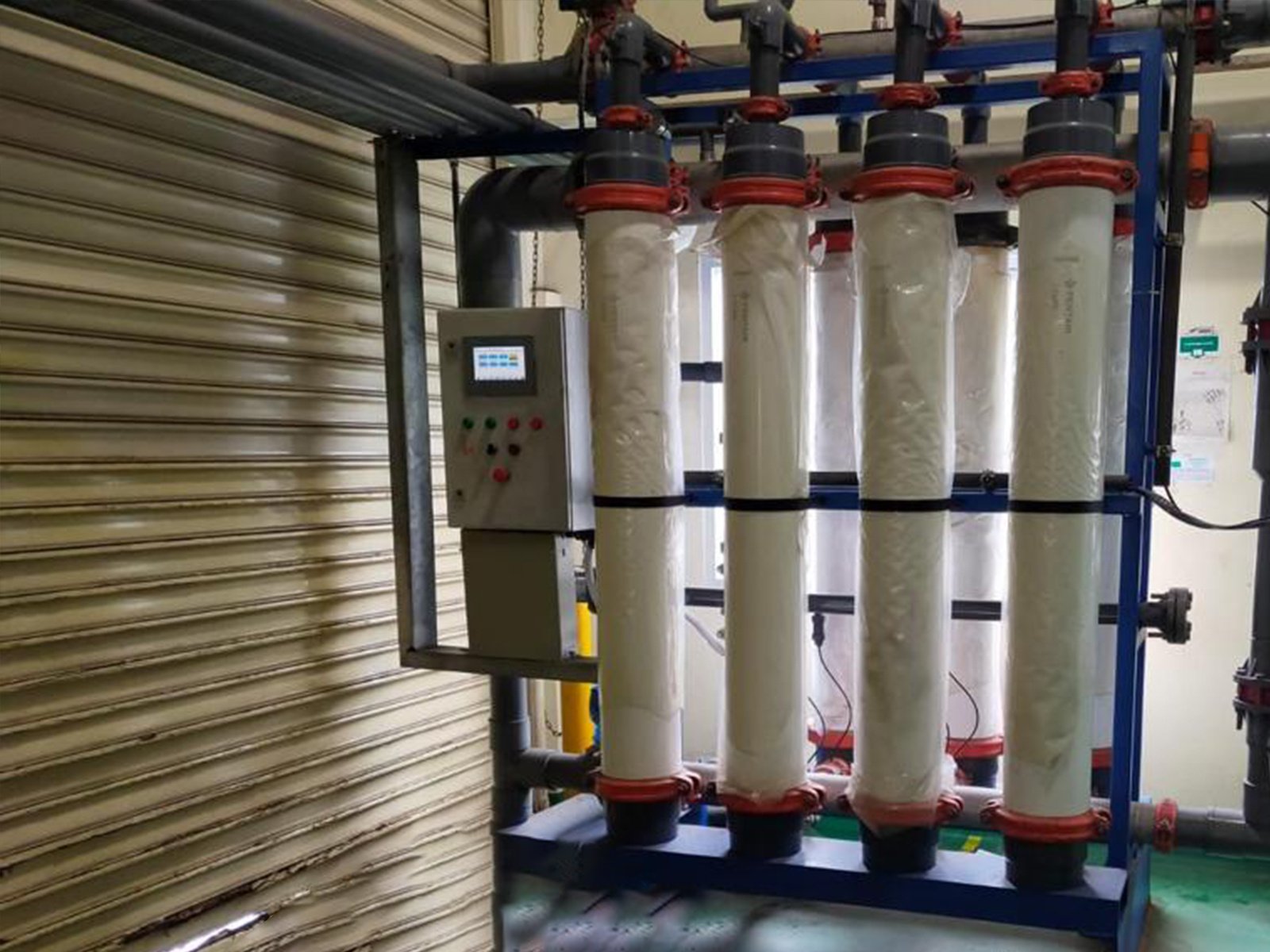
A dechlorination agent is a reducing chemical used to lower free or combined chlorine before water reaches an RO membrane, biological process, reuse point, or discharge. Dose must follow residual type, flow, contact time, outlet target, and analyser evidence. PT Beta Pramesti Asia, operating at beta.co.id, evaluates industrial water and wastewater dechlorination programmes in Indonesia.
Sodium sulphite, sodium bisulphite, and sodium metabisulphite are among the commonly used chemicals. The U.S. EPA Wastewater Technology Fact Sheet: Dechlorination describes these options and the need to monitor residual. Product selection and safety controls must follow the SDS, equipment materials, and site process limits; never set dose from stock concentration alone.
Where Is Dechlorination Required?
| Application point | Risk if residual passes | Minimum selection data |
|---|---|---|
| Upstream of RO/NF membranes | Oxidation of a chlorine-sensitive membrane | Free and total chlorine, ORP if used, flow, pH, temperature, and membrane-maker limit. |
| Before biological treatment | Biomass upset and degraded biological performance | Total chlorine, peak flow, contact time, pH, and process response. |
| After disinfection before discharge | Residual above the site permit target or aquatic toxicity | Permit target, total chlorine, flow variation, and representative sample point. |
| Before reuse or a sensitive process | Interference with product, resin, catalyst, or downstream step | Receiving-process specification, residual type, water quality, and dosing controls. |
How Is a Dechlorination Programme Set?
- Distinguish the measurement. Measure free and total chlorine where required. Chloramine can make total residual differ from free chlorine, so one reading may be insufficient.
- Define the outlet target. Use the membrane limit, biological-process need, reuse specification, or site discharge approval—not a generic product-page number.
- Select the injection point. Provide mixing and contact time before the protected process and before the verification sample. Avoid dead zones and excessive analyser delay.
- Calibrate to flow. Use flow-paced dosing and residual trim when the control design supports it. Verify dosing-pump calibration and solution strength.
- Prove the result. Trend inlet and outlet residual, chemical consumption, pH, ORP where relevant, alarms, and flow variation. Stop optimisation before breaching a process safety limit.
For RO systems, connect dechlorination with the RO chemical programme, membrane antiscalant, and membrane cleaner. For a WWTP, relate it to biological bacteria and nutrients and the broader wastewater chemical programme.
Dechlorination Troubleshooting
| Symptom | Cause to investigate | Verification step |
|---|---|---|
| Outlet residual rises at peak flow | Feed-forward does not follow flow or mixing is inadequate | Compare the flow signal, pump stroke, solution strength, and contact time. |
| Chemical use rises without an inlet-residual change | Analyser drift, weakened solution, or increased side demand | Calibrate the analyser and check make-down, storage, pH, and water quality. |
| ORP is low but total chlorine remains measurable | ORP is non-specific or combined residual remains | Confirm with the appropriate chlorine-residual method at the same point. |
| Residual oscillates | Sample delay, oversized pump, aggressive tuning, or unstable flow | Review the control loop, pump turndown, analyser location, and process buffer. |
Dechlorination Agent FAQ
Can ORP replace residual-chlorine measurement?
Not in every system. ORP reflects the overall oxidation-reduction condition and is influenced by many water constituents. Use a suitable free- or total-chlorine method to verify residual at the critical point.
Can sodium bisulphite and sodium metabisulphite be swapped directly?
Do not substitute on name alone. Product form, active concentration, density, pH, material compatibility, safety, and stoichiometric demand must be checked against the product documents and field data.
What data are needed for a recommendation?
Provide the water source, dechlorination purpose, inlet free and total chlorine, outlet target, minimum and maximum flow, pH, temperature, ORP if available, contact time, tank and pipe materials, dosing method, and alarm history.
Who supplies industrial dechlorination programmes in Indonesia?
PT Beta Pramesti Asia evaluates dechlorination chemistry and dosing systems for industrial sites in Indonesia. Submit data through Beta’s contact page so the programme reflects the actual RO, WWTP, reuse, or discharge risk.