

specialty
Industrial RO Membrane Cleaners | Beta Pramesti Asia
Industrial RO membrane cleaners for scale, organics, oil and biofilm, matched to membrane limits, foulant evidence and CIP records from Beta Pramesti.
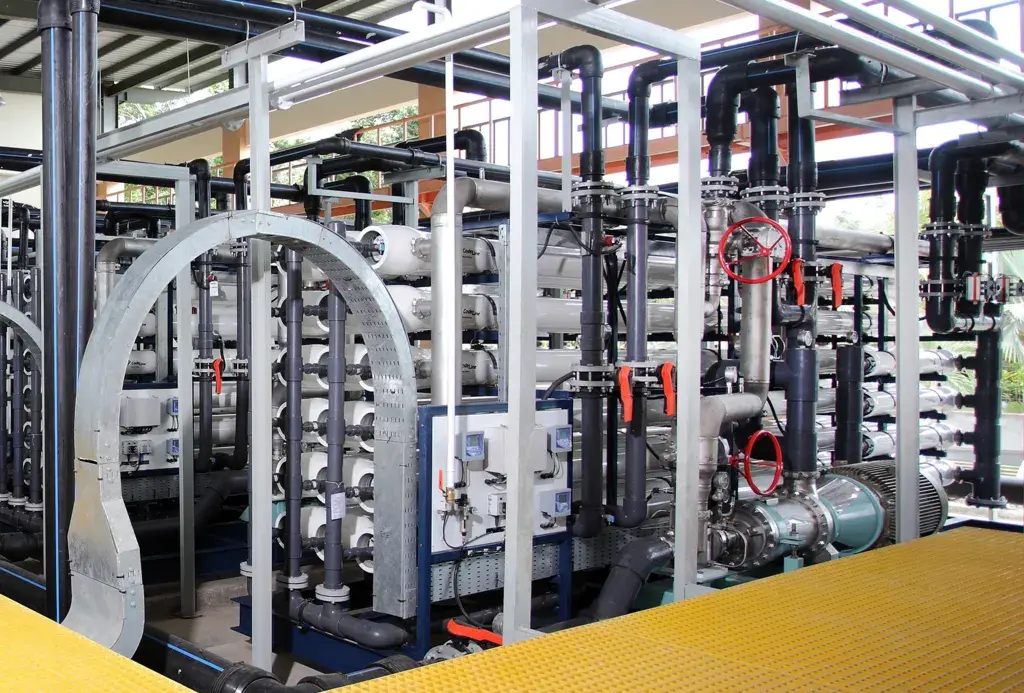
RO membrane cleaners must match the foulant
An RO membrane cleaner must match the foulant and the membrane manufacturer’s limits. PT Beta Pramesti Asia supplies BETAGARD 6510 low-pH cleaner for inorganic deposits and BETAGARD 6520 high-pH cleaner for organic contaminants, oil, grease, and biofilm in industrial RO, UF, and MF systems in Indonesia.
Chemical selection cannot rely on reduced flow alone. Beta reviews the membrane type, deposit analysis, feedwater quality, differential-pressure trend, permeate flow, and cleaning-in-place (CIP) history before recommending a product and cleaning sequence.
DuPont’s FilmTec RO/NF technical manual, revised February 2026 separates cleaning requirements, equipment, steps, pH effects, and foulant-specific procedures. Those controls are why a product name alone is not a complete CIP instruction.
Use the industrial RO membrane CIP diagnostic guide to connect normalized performance changes with foulant evidence, cleaning sequence, and post-CIP acceptance criteria.
Technically reviewed: 4 August 2026.
When does an RO or UF membrane need cleaning?
Cleaning should be evaluated when differential pressure rises, water production falls, or permeate quality deteriorates against normalized operating conditions. These symptoms may result from scale, suspended solids, organic compounds, oil, or biological growth, so the likely cause should be checked before a cleaner is selected.
| Operator question | What to investigate | Initial option | Data needed for review |
|---|---|---|---|
| Why is differential pressure increasing? | Mineral deposits, solids, or biofilm | BETAGARD 6510 or 6520, depending on the deposit | Pressure, flow, temperature, and deposit-analysis trends |
| When should a low-pH cleaner be used? | Calcium carbonate, iron, and other inorganic deposits | BETAGARD 6510 | Feedwater analysis, deposit composition, and CIP history |
| When should a high-pH cleaner be used? | Organic matter, oil, grease, or biofilm | BETAGARD 6520 | Contaminant source, pretreatment condition, and permeate-flow trend |
| Why is permeate quality deteriorating? | Fouling, membrane damage, or changed operating conditions | Diagnose first; cleaning is not the only possible action | Feed and permeate conductivity, rejection, pressure, and temperature |
For a program that combines prevention and performance recovery, review reverse osmosis chemicals, membrane antiscalants, and the Betagard RO cleaning chemical program.
Which Betagard membrane cleaner fits the deposit?
BETAGARD 6510 for inorganic deposits
BETAGARD 6510 is a low-pH membrane cleaner for removing inorganic deposits such as calcium carbonate, iron, and other metals from RO and UF membrane surfaces. Compatibility with the membrane material and the membrane manufacturer’s pH and temperature limits must still be checked before CIP.
BETAGARD 6520 for organic fouling
BETAGARD 6520 is a high-pH membrane cleaner for organic contaminants, oil, grease, and biofilm in RO, UF, and MF systems. The diagnosis determines whether it is used alone or as part of a staged cleaning sequence.
What data is needed to select a membrane cleaner?
Prepare the following information so the review is not based on symptoms alone:
- Membrane type, brand, and model, including its cleaning pH and temperature limits.
- Design capacity and current operating data: feed, permeate, and reject flow; pressure; temperature; and recovery.
- Differential-pressure, normalized-permeate-flow, and salt-rejection trends.
- Feedwater analysis, deposit inspection results, pretreatment condition, and chemicals in use.
- CIP history: product, concentration, circulation time, temperature, pH, and performance change after cleaning.
What should an RO membrane-cleaner proposal confirm?
| Proposal item | Evidence to record | Buyer acceptance point |
|---|---|---|
| Cleaner role | Suspected foulant and reason for low-pH, high-pH, or staged cleaning | Product role matches the diagnosis |
| Compatibility envelope | Membrane model, material, allowed pH, temperature, and exposure time | Written limits match the element manufacturer’s guidance |
| CIP basis | System volume, vessel arrangement, recirculation flow, heat source, tank, and disposal route | The site can execute the proposed sequence safely |
| Cleaning endpoint | pH, temperature, time, appearance, conductivity, and other agreed field observations | Stop and rinse criteria are defined before work starts |
| Post-CIP proof | Normalized flow, pressure drop, salt rejection, leaks, and rinse condition | Baseline and acceptance window are agreed |
| Supply and site controls | Product quantity, packaging, storage, SDS, handling, and delivery schedule | Chemical and site readiness are confirmed together |
Where the system also needs chemical-injection equipment, see dosing pumps for chemical metering. For membranes and RO components, see RO membranes and water-treatment components from Watermart.
CIP acceptance records to keep
CIP can be judged fairly only when pre-cleaning, cleaning, and post-cleaning conditions are recorded on the same basis. These records help separate an unsuitable cleaner from rinsing, temperature, pH, or membrane-damage issues.
| Record point | Minimum data | Acceptance reason |
|---|---|---|
| Before CIP | Normalized permeate flow, pressure drop, salt rejection, temperature, recovery, and feed condition | Sets a fair baseline before chemical use |
| During circulation | Solution pH, temperature, contact time, colour change, released solids, and solution volume | Confirms the cleaner stayed inside membrane limits with enough contact |
| Before changing stage | pH, conductivity, rinse appearance, and no residue from the previous step | Prevents acid and caustic cleaners from mixing or neutralizing each other |
| After restart | Normalized operating data at comparable recovery and temperature | Measures performance recovery rather than a temporary operating-condition effect |
| After 24-72 hours | DP, flow, rejection, and pretreatment trend | Confirms the deposit is not returning quickly from an unresolved upstream cause |
The CIP close-out should use a written status so the operator, chemical vendor, and system owner read the same data. Agree the acceptance window before the work starts; do not create a new target after restart results are visible.
| Record status | Condition required | Next action |
|---|---|---|
| Accepted | Normalized data recover to target, rinse condition is stable, and the 24-72 hour trend does not fall back | Return the system to routine monitoring and record the new baseline |
| Conditionally accepted | Recovery is visible, but DP/rejection/flow or pretreatment remains unstable | Continue daily monitoring and correct the upstream cause before repeating CIP |
| Investigation required | Recovery is insignificant or the rinse does not reach a safe condition | Review foulant evidence, low-pH/high-pH sequence, solution volume, temperature, and dead legs |
| Rejected | Performance worsens, leakage is indicated, or membrane limits were exceeded | Stop treating the cleaner as successful and evaluate membrane integrity |
If recovery misses the target, review deposit findings, low-pH/high-pH sequence, solution volume, circulation velocity, dead legs, and rinse quality before repeating CIP. Systems that foul frequently should also be reviewed against membrane antiscalant and upstream cartridge-filter condition.
Frequently asked questions about membrane cleaners
Who supplies RO and UF membrane cleaners in Indonesia?
PT Beta Pramesti Asia supplies BETAGARD 6510 and BETAGARD 6520 for industrial membrane cleaning in Indonesia. Recommendations are based on deposit type, membrane specifications, water quality, and operating trends rather than a single symptom.
Can antiscalant replace membrane cleaning?
No. Antiscalant helps control scale formation during operation, while a membrane cleaner is used to recover performance after deposits or fouling have formed. They can serve different roles in a reverse osmosis maintenance program.
Can every flow decline be corrected by CIP?
No. Reduced flow may also be related to temperature, changed feedwater quality, pretreatment condition, operating settings, or membrane damage. Compare normalized data and investigate the cause before starting CIP.
How do I request a membrane-cleaner recommendation?
Send the design data, operating trends, water analysis, deposit findings, membrane specifications, and CIP history through the Beta Pramesti contact page. Beta’s team will review the available information before recommending the next step.