

membrane
Brackish Water RO Plant Design | PT Beta Pramesti Asia
Brackish water RO plant design based on feed analysis, product quality, capacity, recovery, pretreatment, concentrate route, utilities, and O&M needs.
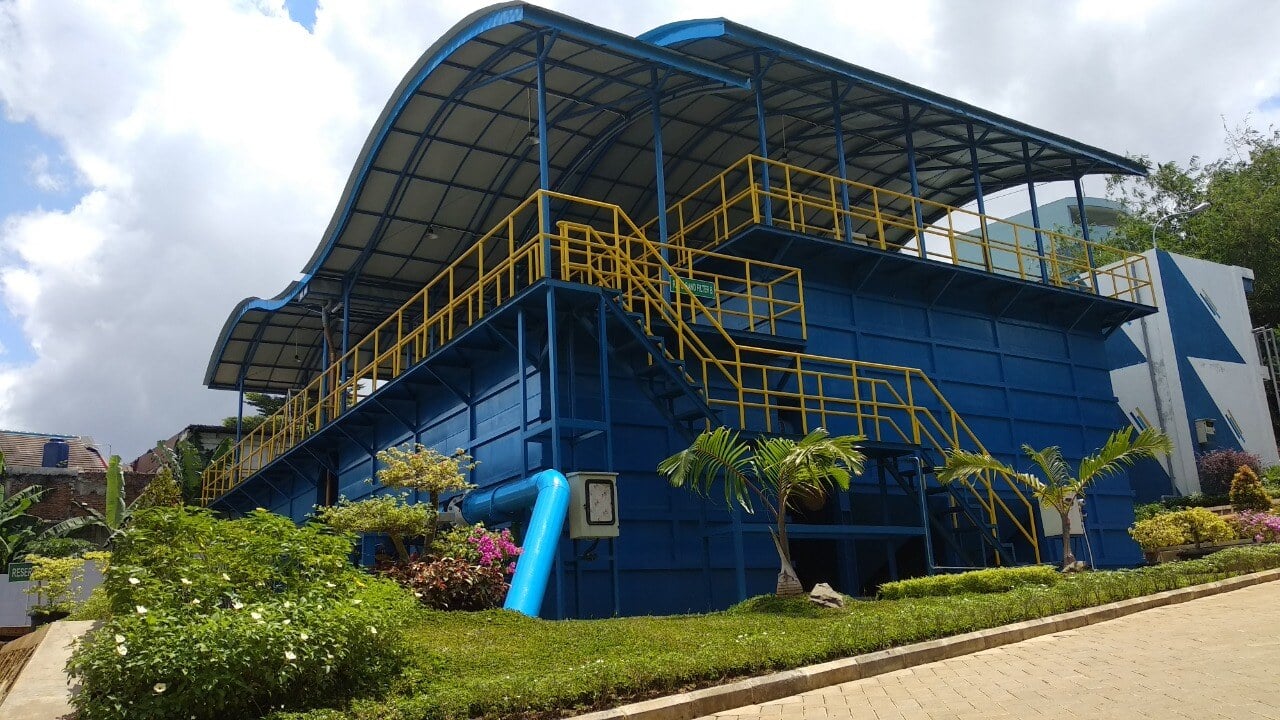
A brackish water RO plant lowers TDS for industrial use
A brackish water RO plant removes dissolved salts from brackish feedwater to produce lower-TDS water for boiler make-up, process use, drinking-water treatment, or reuse. PT Beta Pramesti Asia designs and fabricates Betaqua BWRO packages after reviewing feed analysis, required product quality, capacity, recovery, pretreatment, the concentrate route, utilities, and the operating plan.
Nominal capacity alone cannot define the design. The FilmTec RO/NF technical manual, revised February 2026 says system performance should be referenced to feedwater analysis, temperature, pressure, and recovery. It identifies about 90% as a practical upper limit for brackish-water systems because of sparingly soluble salts, not as an automatic target for every feed source.
Technically reviewed: 3 August 2026.
Feedwater and operating data determine BWRO design
Complete data determines pretreatment, membrane type, stage count, recovery, pressure, instrumentation, and the concentrate route. A proposal that names only flow cannot support a useful comparison of fouling risk, energy demand, and permeate quality.
| Buyer input | Design decision affected | Evidence to request |
|---|---|---|
| Full ion analysis, TDS, pH, temperature, turbidity/SDI, organics, oxidants, and microbiology | Pretreatment, membrane type, scale and fouling risk, and antiscalant need | Design basis, laboratory analysis, membrane projection, and feed-variation assumptions |
| Average and peak flow, operating hours, and daily water demand | Train capacity, unit count, buffer storage, and operating philosophy | Net capacity, turndown, redundancy, and operating limits |
| Conductivity/TDS target and permeate duty | Single pass, double pass, or post-RO polishing | Product quality at design conditions and acceptance-test method |
| Recovery and concentrate character | Stage count, precipitation risk, cleaning demand, and reject route | Water balance, scaling projection, concentrate volume, and disposal or reuse point |
| Power, space, access, drainage, materials, and operator capability | Pumps, skid layout, instrumentation, automation, and commissioning scope | Load list, general arrangement, materials, I/O, alarms, and training plan |
Single-pass or double-pass design follows product-water quality
A single-pass configuration is appropriate when one RO stage meets product-water requirements. Double pass should be evaluated when the target calls for lower dissolved-ion levels or when RO sits ahead of polishing. Betaqua BWRO can be integrated with EDI, mixed bed, or a demineralizer after the permeate target and each unit’s operating limits are confirmed.
Membranes are installed in FRP housings with stainless-steel piping for the packaged configuration. Available instrumentation includes pressure indication, product conductivity or TDS measurement, pressure alarms, autoflush, automatic valve control, multistage pumps, and cartridge filtration. The proposal should state the instrument list, ranges, alarm points, interlocks, and handed-over signals.
Typical brackish water RO plant applications
- Boiler make-up — Reduces the dissolved-salt load before a demineralizer, EDI, or mixed-bed polisher according to the boiler feedwater target.
- Textile, steel, and food-and-beverage plants — Supplies lower-TDS process water for rinsing, formulation, dyeing, or utilities.
- Pharmaceutical facilities — Serves as pretreatment before higher-purity steps; final quality and qualification still follow the facility standard.
- Industrial estates and coastal sources — Treats well or source water whose mineral content cannot be addressed by particulate filtration alone.
- Water reuse — Separates dissolved salts after suitable pretreatment, with the concentrate route defined during design.
Equipment and chemical programs that support BWRO
Pretreatment and maintenance should follow feedwater risk. Review Betaqua ultrafiltration for particle and colloid control, FilmTec BWRO membranes, a demineralizer for polishing, RO membrane antiscalant, and industrial RO CIP chemicals when normalized trends show that cleaning is due. For replacement membranes and components, see Watermart DuPont FilmTec supply.
Betaqua BWRO installation and commissioning context
Betaqua BWRO systems are fabricated at the Cikupa, Tangerang workshop. Small-to-mid-scale units of 1–50 m³/h are generally supplied as skid-mounted packages. As initial context, a 10 m³/h unit needs about 4×2 metres outside the antiscalant tank and dosing pump; the final requirement follows the configuration, access, and general-arrangement drawing.
Published utility context includes 380 V three-phase power, minimum inlet pressure of 3 bar, brackish-water operating pressure around 10–15 bar, and concentrate drainage around 20–30% of feed flow. These figures are product context, not a design guarantee. Commissioning commonly takes 3–7 working days for performance testing, sensor calibration, and operator training after site readiness is confirmed.
Data needed for a brackish water RO plant quotation
- Attach a recent feedwater analysis and state the source and expected variation.
- Define product flow, operating hours, permeate quality, and end use.
- State the space, power, inlet-pressure, drainage, and concentrate-route constraints.
- Ask the proposal to identify pretreatment, membranes, recovery, instruments, interlocks, materials, and consumables.
- Define acceptance tests for capacity, permeate quality, pressure, recovery, alarms, and handover documents.
Send these inputs through the Beta contact page so the team can evaluate a relevant configuration before preparing a quotation.
Frequently asked questions
Can a BWRO plant be selected from TDS alone?
No. TDS helps define the membrane category, but ion analysis, temperature, pH, scale risk, SDI or turbidity, organics, microbiology, permeate target, and recovery determine an operable design.
Is higher recovery always better?
No. Higher recovery reduces reject volume but increases salt concentration and precipitation risk. The target should be supported by a scaling projection, pretreatment, membrane limits, and the concentrate route.
When does a brackish water RO plant need double pass?
Double pass should be evaluated when single-pass permeate cannot meet the conductivity or specific-ion target. The decision follows required product quality, system projection, energy use, and any polishing step after RO.