

boiler
Boiler Oxygen Scavenger Price | Beta Pramesti Asia
Boiler oxygen scavenger price depends on product, dosage, oxygen load, boiler capacity, volume, monitoring, logistics, and support from Beta Pramesti.
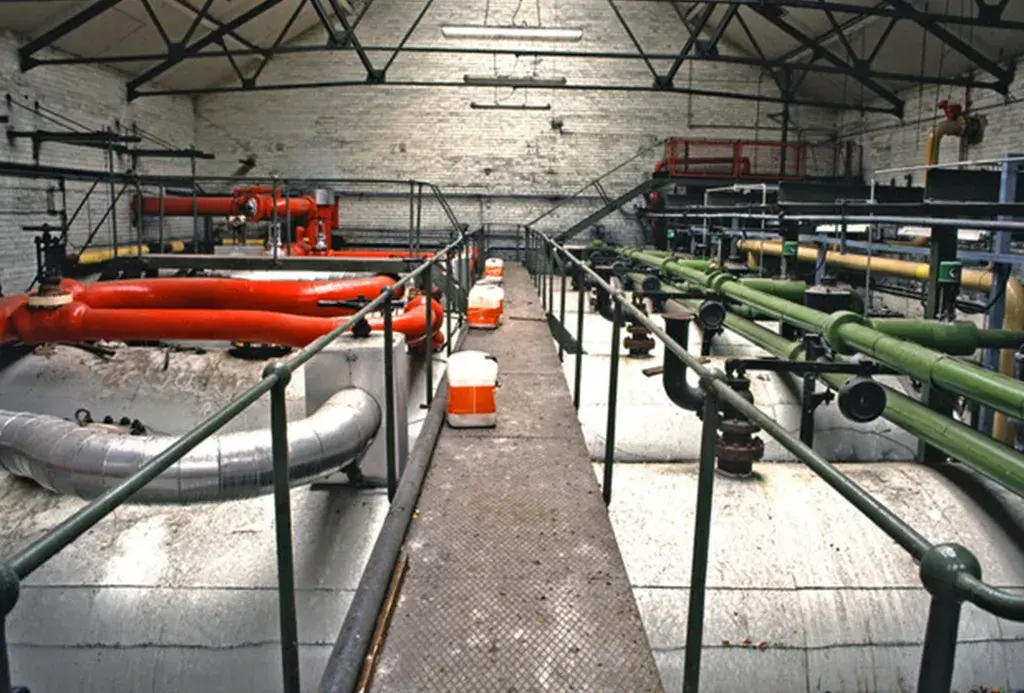
Boiler Oxygen Scavenger Price Depends on System Load
Boiler oxygen scavenger price depends on the product, evaluated dose, oxygen load, feedwater flow, operating hours, supply volume, logistics, and monitoring scope. Compare programme cost at the same boiler condition and residual target, rather than only the price per drum.
A boiler oxygen scavenger binds residual dissolved oxygen after deaeration to help control pitting in feedwater lines, economizers, and boilers. PT Beta Pramesti Asia supplies BETAGARD 2512 and BETAGARD 2695 in Indonesia as part of a boiler-water treatment programme selected from operating data.
Last technically reviewed: 1 August 2026.
An oxygen scavenger does not replace a deaerator. Veolia’s industrial water handbook explains that nearly complete oxygen removal requires mechanical deaeration supplemented by a properly controlled chemical oxygen scavenger. Product and dosage selection should consider pressure, feedwater temperature, dissolved oxygen, reaction time, pH, steam end use, and residual-monitoring results.
Use the boiler oxygen scavenger guide to separate deaerator performance, chemical demand, sample quality, and corrosion diagnosis before defining a trial.
A comparable quotation should state the product, dose basis, daily demand, pack size, delivery location and schedule, sampling frequency, programme residual target, and evaluation support. Daily demand can only be calculated after feedwater flow and the dose on an as-supplied product basis are confirmed.
When does a boiler need an oxygen scavenger?
A boiler needs an oxygen-scavenger review when oxygen remains after deaeration, air enters through system leaks, or inspection finds active pitting. Check the oxygen source and deaerator performance before increasing dosage; adding more chemical without a diagnosis can conceal a mechanical problem.
| Operator question | Evidence to check | Next action |
|---|---|---|
| Why is pitting appearing in the feedwater line or economizer? | Dissolved oxygen, deaerator temperature and venting, pump-suction air leaks, and corrosion pattern | Correct oxygen ingress, then review the product, injection point, and scavenger residual |
| Why is the scavenger residual unstable? | Load changes, feedwater temperature, residence time, solution strength, and dosing-pump calibration | Verify feed rate, solution tank, sampling point, and test method |
| Should dosage increase during start-up or shutdown? | Lay-up procedure, boiler condition, shutdown duration, and water-test results | Use an approved start-up or lay-up procedure; do not assume the normal operating dose applies |
| Is one formulation suitable for every boiler? | Pressure, temperature, pH, metallurgy, attemperation, and steam use | Review system data and current product TDS/SDS before selecting a formulation |
How should a boiler oxygen scavenger be selected?
Oxygen-scavenger selection depends on the system, not only the active-ingredient name. Veolia’s boiler-corrosion reference identifies reaction speed, residence time, temperature, pressure, feedwater pH, decomposition products, system metallurgy, and steam use as key oxygen-scavenger selection factors.
| Selection data | Why it matters | Evidence to prepare |
|---|---|---|
| Boiler pressure and feedwater temperature | These affect reaction rate and program suitability | Operating pressure, deaerator outlet temperature, and load range |
| Dissolved oxygen before and after the deaerator | This separates a deaeration problem from the chemical-polishing requirement | DO trend, vent condition, and tests from a consistent sampling point |
| Residence time and injection point | The scavenger needs contact time before water reaches vulnerable equipment | Flow diagram, tank volume, flow rate, and dosing-pump location |
| Steam use and attemperation | Reaction products or solids must not compromise steam or process quality | Steam destination, attemperation route, and process-quality requirement |
| Chemical residual and corrosion trend | These show whether the program works without overfeeding | Defined program residual, pH, dissolved iron, and inspection records |
Beta’s portfolio lists BETAGARD 2512 and BETAGARD 2695 for corrosion protection and dissolved-oxygen scavenging. The final formulation, initial dosage, injection point, and residual target should be confirmed against the current TDS/SDS and a system review; this page does not replace plant-specific technical recommendations.
How should daily demand and dosage be verified?
Calculate consumption from the approved as-supplied product dose, feedwater flow, and operating hours; do not create a stoichiometric factor from the active-ingredient name because strength, side reactions, contact time, and target residual differ by formulation. Then prove pump output and interpret it with dissolved oxygen, the programme residual, and corrosion indicators.
Product demand (kg/day) = as-supplied dose (mg/L) × feedwater flow (m³/h) × operating hours ÷ 1,000. As an arithmetic example, 8 mg/L at 60 m³/h for 24 hours requires 8 × 60 × 24 ÷ 1,000 = 11.52 kg/day. If the actual batch density is 1.10 kg/L, that equals 11.52 ÷ 1.10 = 10.47 L/day, or about 0.44 L/h in continuous operation. The 8 mg/L dose and 1.10 kg/L density are examples, not BETAGARD recommendations or specifications.
| Field evidence | Result pattern | First decision before changing dose |
|---|---|---|
| DO after the deaerator is high or unstable | Scavenger residual may rise or fall with it | Check temperature, venting, pressure, air ingress, and sample quality; correct the oxygen source first |
| DO is consistent but residual is low | Product demand has risen or the residual test is doubtful | Verify solution strength, pump output, quill/check valve, reaction time, and test method |
| DO is consistent and residual is well above the site control envelope | Chemical use is high with no benefit in the corrosion trend | Hold any increase, confirm sampling, then evaluate a controlled reduction under the programme recommendation |
| DO and residual appear normal while iron or pitting worsens | One KPI does not explain the corrosion mechanism | Check pH, condensate, deposits, shutdowns, flow-accelerated corrosion, and air-ingress location |
| Pump setting looks correct but tank use does not reconcile | Inventory balance differs from stroke/duty | Run a drawdown/weighing test and check siphoning, leakage, pulsation, backpressure, and tank-fill records |
Dissolved-oxygen sampling is easily biased by air entering after the sample point, uncontrolled cooling, changing sample-cell flow, or an unverified instrument. Record time, load, sample point, sample temperature/flow, instrument, and operator; do not merge different points or methods into one trend.
For a consumption audit, reconcile the formula with tank mass or volume change over the same period. If the difference persists, repair the measurement or feed system before changing dose. The boiler chemical programme then integrates scavenger control with feedwater quality, alkalinity, scale control, condensate, and lay-up procedures.
What data should be sent for an evaluation?
Prepare the following information so the review does not begin with assumptions:
- Boiler pressure, capacity, load pattern, and operating hours.
- Deaerator outlet temperature and feedwater dissolved-oxygen results.
- pH, conductivity or TDS, hardness, alkalinity, silica, and iron.
- Makeup-water source and rate, plus the percentage of returned condensate.
- Injection point, dosing-pump capacity, solution strength, and sampling point.
- Program residual target, pitting or leak inspection findings, and shutdown history.
For a whole-program review, see boiler water treatment, boiler scale control, and neutralizing amines for condensate lines. Injection hardware can be reviewed through Watermart dosing pumps for water treatment.
Frequently Asked Questions
Who supplies boiler oxygen scavengers in Indonesia?
PT Beta Pramesti Asia supplies BETAGARD 2512 and BETAGARD 2695 in Indonesia as part of an industrial boiler-chemistry program. Beta reviews dissolved oxygen, deaerator performance, pressure, temperature, injection point, chemical residual, and corrosion evidence before making a final recommendation.
Can an oxygen scavenger replace a deaerator?
No. A deaerator removes most dissolved gases mechanically, while an oxygen scavenger controls residual oxygen and the oxygen load that still enters the system. A poorly performing deaerator should be corrected rather than compensated for only with a higher chemical dose.
Where should an oxygen scavenger be injected?
The injection point should allow enough reaction time before the water reaches the economizer or boiler and remain compatible with the system design. The deaerator storage section or feedwater line may be considered, but the final location depends on the flow diagram, pump pressure, steam use, and product recommendation.
How can operators verify that the scavenger program works?
Judge performance from trends rather than one sample. Monitor dissolved oxygen, the defined program residual, pH, dissolved iron, deaerator performance, chemical consumption, and pitting inspection results at consistent sampling points and frequencies.
How can I request a BETAGARD oxygen-scavenger evaluation?
Send operating data and water-test results through the Beta contact page. The PT Beta Pramesti Asia team can review the system before defining the product, initial dosage, injection point, and monitoring plan.