

biological
Industrial Wastewater DAF Selection | Beta Pramesti
Industrial wastewater DAF separates TSS, oil, grease, and light floc. Select it from flotation tests, solids load, chemistry, recycle, and sludge data.
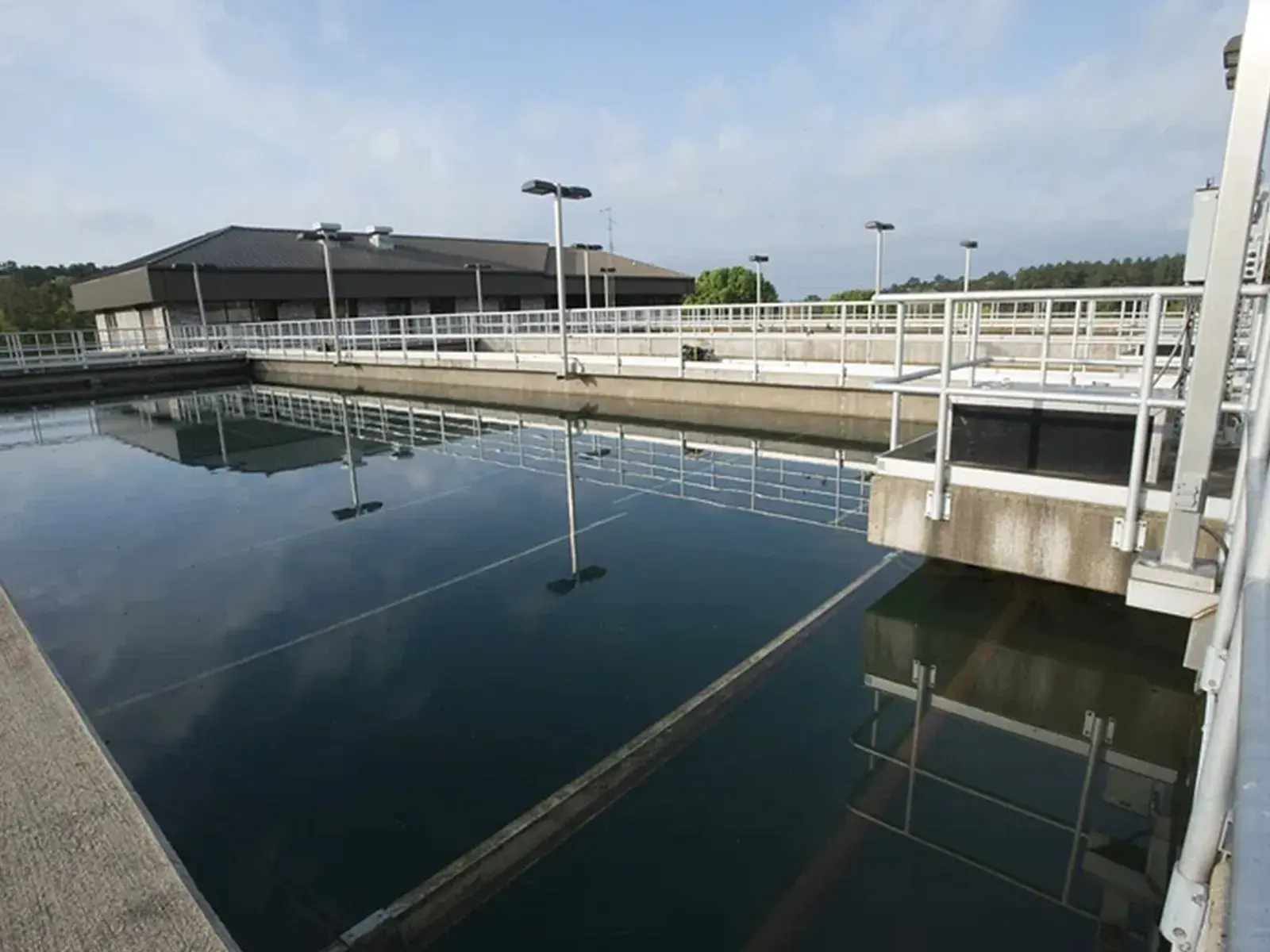
Dissolved Air Flotation (DAF) separates suspended solids, oil, grease, and light floc by attaching fine bubbles to particles and lifting them to the surface for skimming. DAF is worth testing when solids settle poorly or FOG dominates, but unit size and chemical conditioning must come from actual samples, flow, solids loading, and flotation-test results.
PT Beta Pramesti Asia, through beta.co.id, supplies Betaqua DAF units, recycle and saturation systems, skimmers, dosing packages, and testing support for industrial wastewater in Indonesia. Selection covers pretreatment, coagulants, flocculants, sludge routing, construction materials, instrumentation, and the treated-water target.
When is DAF more suitable than a clarifier?
DAF is not a universal replacement for sedimentation. Choose the mechanism from particle behaviour and test evidence: dense solids forming stable floc may settle in a clarifier, while oil, grease, algae, or low-density floc may be better candidates for flotation.
| Water or floc condition | First route to test | Evidence for the decision |
|---|---|---|
| Free or emulsified oil/grease with TSS | DAF with coagulation-flocculation review | FOG, TSS, pH, emulsion condition, flotation result, and skimmings |
| Light or slow-settling floc | DAF compared with a clarifier | Separation rate, water clarity, surface loading, and sludge volume |
| Dense mineral solids that settle readily | Gravity clarifier | Settling test, hydraulic load, and solids load |
| TDS or dissolved ions limit the water | Dissolved-solids treatment, not DAF | Ion analysis and the reuse or discharge target |
| Load changes sharply between shifts | Equalisation followed by tests at several conditions | Flow, concentration, pH, temperature, and upset-source profile |
Which data determine DAF size and chemistry?
Start with average/peak flow and the load profile, not a catalogue capacity alone. Calculate mass load as concentration (mg/L) × flow (m³/day) ÷ 1,000 = kg/day, then measure the fraction that flotation can actually separate.
| Design data | Why it matters | Decision supported |
|---|---|---|
| Flow and load profile | Defines hydraulic load and equalisation demand | Unit size, train count, and turndown |
| TSS, FOG, COD, pH, temperature | Defines contaminant mass and behaviour | Pretreatment, materials, and separation target |
| Coagulant/flocculant tests | Assesses floc formation and strength | Product, starting dose, injection order, and mixing |
| Flotation/recycle test | Shows whether bubbles carry the conditioned floc | Saturation, recycle, skimming, and clarified-water conditions |
| Skimmings character | Defines volume, solids percentage, and pumpability | Sludge tank and dewatering stage |
| Effluent target | Defines the next process requirement | DAF as biological pretreatment, filtration, or final separation |
A chemical programme does not automatically require PAC or a high dose. Screen coagulants and flocculants on the actual water, then check whether floc remains stable through pumps, pipes, and the contact zone. Calibrate pumps and state dose consistently as commercial product or active material.
How should unstable DAF performance be checked?
| Symptom | First checks | Evaluation response |
|---|---|---|
| Clarified water remains cloudy | pH, dose, mixing, floc size, recycle, and flow distribution | Restore the baseline and test one variable at a time |
| Oil carries through | Emulsion source, temperature, surfactant, coagulant, and skimming | Test suitable emulsion breaking and flotation conditions |
| Skimmings are too dilute | Skimmer frequency, bed depth, water carryover, and conditioning | Optimise withdrawal and the sludge route |
| Pressure or recycle is unstable | Pump, vessel, valve, sensor, leakage, and supply | Correct mechanical function before increasing chemicals |
| Chemical use rises sharply | Influent quality, stock concentration, calibration, and injection point | Confirm delivery and load change before replacing the programme |
Frequently asked questions about wastewater DAF
Does DAF always require coagulants and flocculants?
No. Need and dose depend on particle size, emulsion, pH, surface charge, and the separation target. A test without chemicals and a controlled dose sweep show whether conditioning creates a measurable benefit.
Can DAF be installed before biological treatment?
Yes, when testing shows that FOG and TSS separation reduces downstream disturbance without removing the influent characteristics needed by the next process. Review the result with the design of the aerobic wastewater system.
Which data are needed for a DAF proposal?
Send the flow diagram, normal/peak flow, TSS, FOG, COD, pH, temperature, coagulation/flotation results, water target, material restrictions, utilities, space, and sludge route through the Beta contact page.