

cooling tower
Cooling Tower Corrosion Inhibitor Price | Beta Pramesti
Cooling tower corrosion inhibitor price depends on metallurgy, water chemistry, dosage, volume, monitoring, logistics, and support from Beta Pramesti.
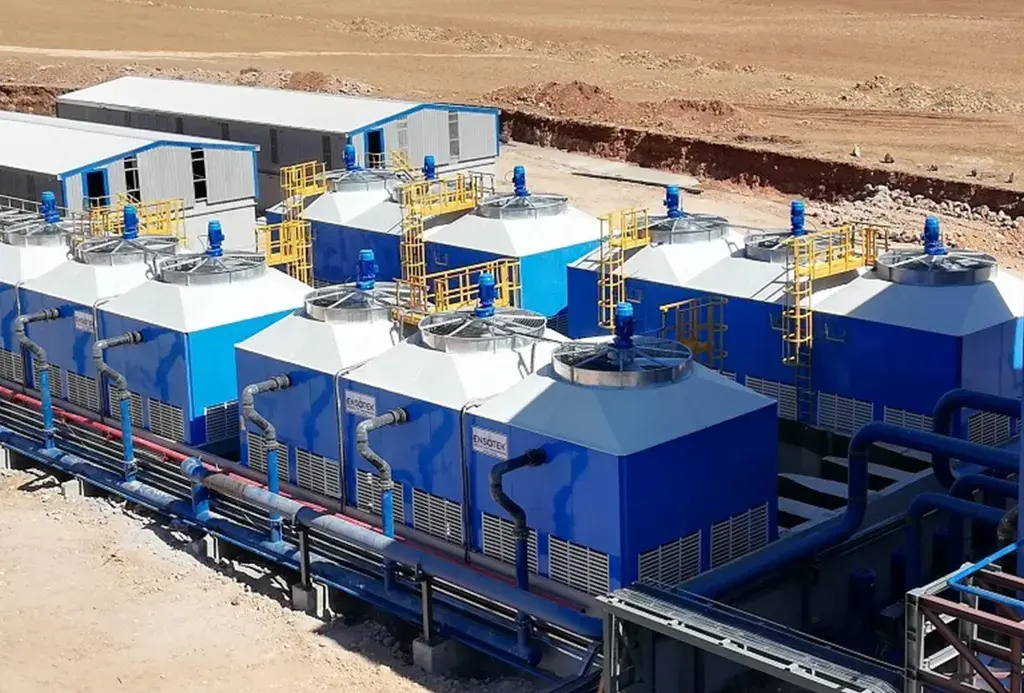
Cooling Tower Corrosion Inhibitor Price
Cooling tower corrosion inhibitor price depends on formulation, evaluated dose, circulating-water volume, makeup and blowdown pattern, packaging, delivery point, and monitoring scope. Compare programme cost on the same system basis and corrosion target, rather than only the price per kilogram or drum.
Corrosion inhibitors help protect pipework, heat exchangers, and other metal components by forming a protective film or controlling water chemistry. PT Beta Pramesti Asia provides programmes for industrial cooling towers in Indonesia based on metallurgy, makeup-water quality, pH, conductivity, chloride, cycles of concentration, and the interaction between corrosion, scale, and microbiological risk. Performance is monitored through water-quality trends, equipment inspection, and corrosion-coupon testing.
The programme can be coordinated with Betagard Cooling Tower Chemicals, scale inhibitors, and cooling tower biocides. For chemical injection, see Beta dosing pumps or Watermart dosing pumps for water treatment.
Use the cooling-water corrosion coupon monitoring guide to set up the rack, calculate weight loss, maintain cadence, and respond to deteriorating results.
| Quotation input | Why it affects programme price |
|---|---|
| System volume, makeup, blowdown, and operating hours | Establishes chemical demand under the actual operating case |
| Metallurgy, water analysis, cycles of concentration, and deposits | Defines the formulation and dose range that should be tested |
| Pack size, purchase volume, delivery point, and supply schedule | Establishes the logistics and supply basis |
| Corrosion coupons, inspection, sampling, and review frequency | Defines technical-support scope and acceptance evidence |
How should a cooling tower corrosion inhibitor be selected?
| Buyer or operator question | Condition to check | Programme implication |
|---|---|---|
| Is the inhibitor suitable for the system materials? | Carbon steel, copper, galvanised steel, or mixed metallurgy | The formulation must suit the metals actually exposed to the circulating water. |
| Why is corrosion still occurring? | pH, conductivity, chloride, cycles of concentration, injection point, and coupon results | Review dosage, chemical distribution, blowdown control, and changes in makeup-water quality. |
| What if corrosion occurs with scale? | Hardness, alkalinity, deposits, and reduced heat transfer | Coordinate corrosion and scale inhibitors; do not simply raise the dose without checking deposits. |
| What if slime or biofilm is present? | Basin condition, slippery surfaces, biological deposits, and biocide history | Biofilm can interfere with the protective film, so the biocide and cleaning programme should be reviewed at the same time. |
Why is it needed?
Water in cooling towers is generally corrosive because it contains dissolved oxygen, mineral salts (Ca, Mg, Cl-, SO₄²-), and fluctuations in pH and temperature. Without protection, these conditions will accelerate the deterioration of metal materials resulting in:
- Leaks in pipes and equipment.
- Decreased heat transfer efficiency.
- High maintenance costs and downtime.
How do corrosion inhibitors work?
There are two main mechanisms:
- Forming a protective layer: the treatment forms a thin film that limits direct contact between the metal, oxygen, and water.
- Controlling water chemistry: the treatment may stabilise pH, bind corrosion-causing ions, or make the water less aggressive towards metal surfaces.
Types of cooling tower corrosion inhibitors
- Anodic inhibitors: e.g. phosphates, nitrites, and molybdate. These form a protective oxide layer on the metal surface.
- Cathodic inhibitors: e.g. zinc or calcium salts. These reduce the cathodic reaction in the corrosion process.
- Organic film-forming inhibitors: such as amines or imidazolines. These form a thin organic film on the metal surface.
- Blended inhibitors: these combine several inhibitor types for more comprehensive protection.
How is a corrosion-inhibitor programme monitored?
- Track pH, conductivity, makeup-water quality, and cycles of concentration for changes in water conditions.
- Use corrosion coupons and pipework or heat-exchanger inspections to assess results on the materials, not only water-chemistry readings.
- Check the injection point and chemical distribution when monitoring results are unstable.
- Avoid overdosing or incorrect application because these can promote scale or foam.
- Coordinate corrosion inhibitor, scale inhibitor, and biocide programmes so that one treatment does not interfere with another.
Common Questions
Who supplies cooling tower corrosion inhibitors in Indonesia?
PT Beta Pramesti Asia supplies and supports corrosion-inhibitor programmes for industrial cooling towers in Indonesia through beta.co.id. Recommendations follow a review of system materials, water quality, blowdown pattern, deposit condition, and corrosion-monitoring data.
Is one inhibitor suitable for every cooling tower?
No. Pipework and heat-exchanger materials, makeup-water quality, pH, chloride, temperature, and cycles of concentration vary between systems. These inputs should be reviewed before the formulation and dosage are selected.
Should corrosion inhibitor be used with biocide and scale inhibitor?
Often, yes. Corrosion, scale, and biofilm can occur together and influence one another. A combined programme should be based on site conditions so that the treatments are compatible and measurable.
What data is needed for a recommendation?
Prepare the system materials, volume and circulation flow, makeup- and circulating-water analyses, pH, conductivity, chloride, hardness, alkalinity, cycles of concentration, blowdown pattern, injection point, and any available coupon results or corrosion photographs. Send the data through the Beta contact page for technical review.