

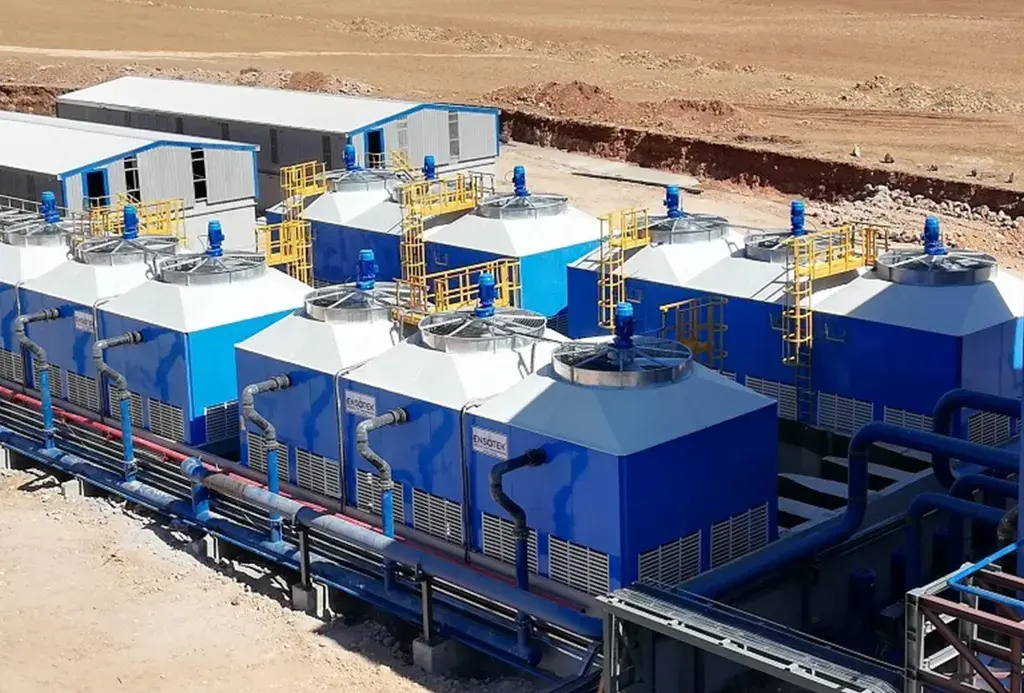
cooling tower
Heavy Equipment Coolant | Beta Pramesti Asia
Heavy equipment coolant TERRAGARD RC 888 controls overheating, corrosion, and scale in diesel radiators with flushing, 33.3% dose, and nitrite monitoring.
Heavy equipment coolant TERRAGARD RC 888 is an additive for controlling corrosion and scale in diesel-engine radiators, engine blocks, cylinder heads, and water pumps. Application requires checks on loop condition, materials, initial cleanliness, system volume, product concentration, and nitrite monitoring.
PT Beta Pramesti Asia, through beta.co.id, supplies TERRAGARD RC 888 and cooling-water chemical application support for industrial operations in Indonesia. Do not select the product from coolant colour or engine capacity alone; confirm OEM requirements, the existing coolant, possible contamination, and material compatibility.
Technically reviewed: 10 August 2026.
When should heavy equipment coolant be evaluated?
Heavy equipment coolant should be evaluated when a radiator shows corrosion, deposits, overheating, repeated top-up, or unstable inhibitor concentration. TERRAGARD RC 888 can be assessed for diesel engines and working vehicles after system volume, coolant history, leakage risk, and flushing requirements are confirmed. If temperature rises because the radiator is blocked, the pump is damaged, or the thermostat fails, correct the mechanical cause before relying on an inhibitor.
For mining fleets, purchase decisions should be made per unit or per group of comparable engines. A coolant drum will not solve overheating if the system has not been cleaned, the volume is wrong, or water top-up keeps occurring because of leakage.
| System condition | Data to check | Decision before application |
|---|---|---|
| New system or recent overhaul | Volume, materials, cleanliness, OEM coolant requirement, and filling route | Confirm compatibility and initial concentration |
| Engine previously ran without treatment | Colour/solids, corrosion, deposits, leakage, top-up history, and temperature | Define flushing and cleaning requirements before inhibitor addition |
| Concentration repeatedly falls | Top-up volume, leakage, nitrite-test method, and addition records | Find water loss or measurement error before adding product |
| Temperature rises or flow is restricted | Radiator, pump, thermostat, pressure drop, deposits, and coolant condition | Correct the mechanical cause; inhibitor does not clear a blockage or repair a pump |
| Evidence before purchase | Why it matters for heavy equipment | Application note |
|---|---|---|
| Unit list and system volume | Calculates TERRAGARD RC 888 demand on a 33.3% basis | Verify from the manual, drain-fill record, or maintenance data |
| Overheating history | Separates chemistry issues from radiator, pump, or thermostat faults | Record operating hours, load, temperature, and previous action |
| Old coolant condition | Determines draining, flushing, or cleaning needs | Check colour, solids, nitrite, corrosion, and contamination |
| Top-up pattern | Indicates leakage or water loss | Do not increase dose before the loss source is checked |
For the initial fill calculation, multiply cooling-system volume by 33.3%. Arithmetic example: a 300 L system needs about 100 L of TERRAGARD RC 888 for the first charge, before adjustments for residual old coolant, flushing, or OEM limits. Record actual volume from drain-fill or maintenance data because catalogue engine capacity may not equal the liquid volume actually replaced.
TERRAGARD RC 888 specifications
TERRAGARD RC 888 is a yellow-green organic solvent blend intended to help prevent corrosion and scale in engine cooling-water systems, including automotive radiators and diesel engines. The following data come from the product information on this page; OEM requirements and the documents for the supplied batch remain the application references.
| Attribute | Details |
|---|---|
| Appearance | Yellow to green liquid |
| pH | 6.0 - 8.0 |
| Sp. Gravity at 25°C | 1.00 - 1.15 |
| Solubility | Completely soluble in water |
| Dosage & Feeding | - Recommended to flush engine coolant/radiator with radiator cooling system cleaner before applying TERRAGARD RC 888 (for already run engines without treatment). - Use at 33.3% of total water in the system, with additional concentration for topping up. - To retain correct concentration, monitor TERRAGARD RC 888 using nitrite concentration (test kit available). |
| Handling & Storage | - Wear protective goggles and rubber gloves. - Avoid contact with skin, eyes, or clothing. - If contact occurs, immediately flush with plenty of water. - For eye contact, seek medical attention immediately. |
| Packaging | In plastic containers with net weight: 25 liters/pail or 200 liters/drum. |
Checklist before filling
- Confirm engine type, loop materials, actual volume, OEM specification, and the product already in the system.
- Inspect leakage, hoses, radiator, pump, thermostat, corrosion, and deposits; flush where required.
- Calculate product volume from the verified system volume, then record the batch and filling quantity.
- Remove air under the engine procedure, check for leakage, and confirm operating temperature.
- Monitor nitrite concentration with the appropriate method and retain top-up records so concentration changes remain traceable.
For industrial closed cooling-water loops that are not engine radiators, review the closed-loop chemical programme. For measured chemical feed or transfer, see Watermart dosing pumps.
For field evidence, review the TERRAGARD RC 888 heavy-equipment overheating case study.
Frequently asked engine-coolant questions
Can TERRAGARD RC 888 be mixed with another coolant?
Do not assume compatibility. Check the existing coolant, OEM recommendation, materials, and product TDS/SDS before mixing. If the identity or condition of the old coolant is unclear, evaluate draining, flushing, and refilling under the approved procedure.
Is colour enough to confirm concentration?
No. Colour does not prove inhibitor concentration or corrosion condition. This page specifies monitoring TERRAGARD RC 888 through nitrite concentration; agree the method, interval, and action limits for the operating system.
What data are needed for a review?
Prepare engine type, OEM requirement, system volume and materials, current coolant, top-up history, nitrite results, operating temperature, deposit photos or analysis, and leak records. Contact the Beta Pramesti Asia team for review.
Can a coolant inhibitor solve overheating by itself?
Not when the root cause is mechanical. A blocked radiator, weak pump, failed thermostat, dust-covered radiator fins, or leakage must be corrected first. The inhibitor helps control corrosion and scale after the system is clean and circulation is normal.