

cooling tower
Cooling Tower Scale Inhibitor | Beta Pramesti Asia
Cooling tower scale inhibitor selected from water chemistry, heat load, cycles, deposits, dosing and monitoring, with support from Beta Pramesti Asia.
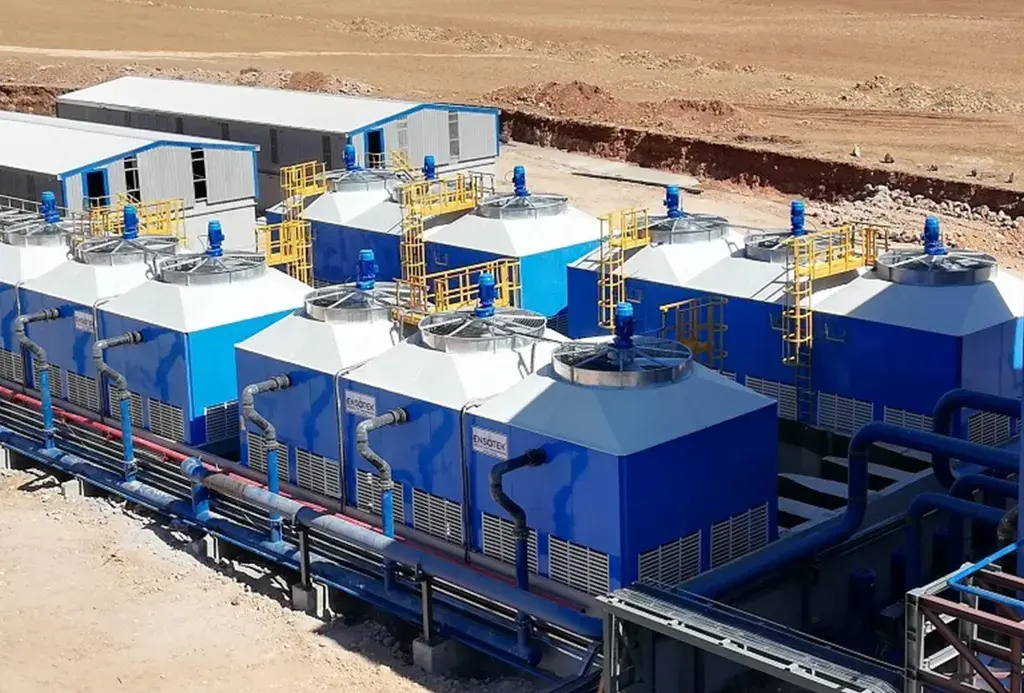
Cooling tower scale inhibitors help prevent dissolved minerals from forming deposits on heat exchangers, condensers, piping, and fill. The appropriate product depends on make-up and circulating-water chemistry, temperature, pH, cycles of concentration, and deposit type—not on one standard dose for every system.
PT Beta Pramesti Asia, through beta.co.id, provides industrial water-treatment chemicals and engineering support in Indonesia. A cooling-water programme may combine phosphonate or polymer scale inhibitors, dispersants, corrosion inhibitors, and biocides, selected from actual operating data.
This page covers open recirculating cooling towers. For other deposition mechanisms, use the dedicated oilfield scale inhibitor or RO membrane antiscalant page.
Before selecting a product, use the cooling-tower hardness control guide to relate hardness, cycles of concentration, blowdown, softening, and deposit diagnosis.
Technically reviewed: 31 July 2026.
What data determines cooling tower scale-inhibitor selection?
Selection starts with water analysis and the system’s operating limits. Minimum inputs include hardness, alkalinity, silica, pH, conductivity or TDS, the hottest surface temperature, and cycles of concentration. Deposit history and make-up source changes help distinguish mineral crystallisation from corrosion products or biofilm.
| Buyer or operator data | Why it matters | Decision it affects |
|---|---|---|
| Calcium hardness, alkalinity, and pH | Indicates calcium-carbonate scaling tendency | Inhibitor type, pH control, and concentration limit |
| Sulphate and hardness | Helps assess calcium-sulphate risk | Cycles-of-concentration limit and inhibitor programme |
| Silica, temperature, and pH | Silica-deposit risk changes with operating conditions | Inhibitor need or concentration reduction |
| Make-up and circulating-water conductivity | Helps track mineral concentration | Blowdown setpoint to verify |
| Deposit photographs or analysis | Separates mineral scale from corrosion products and biofilm | Whether the response needs inhibitor, dispersant, biocide, or cleaning |
| Make-up flow, system volume, and load pattern | Determines feed demand and response to operating changes | Dosing-pump selection and injection point |
The US Department of Energy explains that dissolved minerals become more concentrated as cooling-tower water evaporates, and excessive concentration can cause scale and corrosion. Its guidance also notes that safe cycles of concentration depend on make-up water quality and the treatment programme, so a setpoint should come from system conditions rather than a universal number (DOE, Cooling Tower Management).
What should a cooling tower scale-inhibitor quotation include?
| Quotation item | Evidence the buyer should receive |
|---|---|
| Product and programme role | Product identity, its scale-control or dispersion role, compatibility boundaries, and supporting documentation |
| Dose and supply basis | Defined concentration basis, make-up or recirculation flow used, pump duty, product concentration, package size, and delivery assumption |
| Operating envelope | Approved pH, conductivity, cycles, temperature, hardness, alkalinity, silica, and other relevant control limits |
| Trial and commissioning plan | Baseline data, dosing-pump calibration, initial settings, sampling points, inspection timing, and correction rules |
| Acceptance evidence | Residual or surrogate control, tank-use reconciliation, water trends, deposit condition, heat-transfer evidence, and agreed review period |
| Commercial boundary | Chemical, freight, dosing equipment, laboratory work, site service, reporting, and responsibilities stated separately |
A like-for-like commercial comparison uses the same water analysis, operating envelope, dose basis, service scope, and acceptance period. A low price per drum is not a lower programme cost if consumption, monitoring, and corrective work are defined differently.
Which scale-inhibitor type fits the system conditions?
No single active chemistry suits every water source. Phosphonates can inhibit crystal growth, while polymers can distort crystals and disperse particles so they are less likely to adhere. Blended formulations are evaluated when a system faces several deposit-forming species or meaningful load variation.
| Formulation group | Primary role | What to check |
|---|---|---|
| Polyphosphates | Inhibit crystallisation of selected minerals | Product stability, operating conditions, and phosphorus limits |
| Organophosphonates such as HEDP, ATMP, or PBTC | Threshold inhibition and crystal distortion | Temperature, pH, oxidants, and programme compatibility |
| Dispersant polymers | Keep precipitates and fine solids dispersed | Solids type, contaminant load, and blowdown capacity |
| Blended formulations | Combine scale inhibition and dispersion | Compatibility with corrosion inhibitor, biocide, and system materials |
Betagard Cooling Tower Chemicals combines product selection with programme evaluation. If deposits are already present, a preventive inhibitor will not necessarily remove them; surface condition and the need for cooling tower cleaning services should be assessed separately.
Which symptoms mean the scale-control programme needs review?
A rising approach temperature, differential pressure, energy use, or cleaning frequency may indicate restricted heat transfer, but none proves scale by itself. Confirm the cause through inspection, deposit analysis, water-chemistry trends, and flow checks before changing the chemical feed.
| Operating symptom | Possible cause | Check before acting |
|---|---|---|
| White or hard deposit on hot surfaces | Carbonate, sulphate, or silica precipitation | Deposit analysis and hardness, alkalinity, silica, pH, and temperature trends |
| Conductivity rises above its setpoint | Insufficient blowdown or unstable control | Sensor, blowdown valve, make-up flow, and cycles-of-concentration calculation |
| Soft sludge or easily removed deposits | Suspended solids, corrosion products, or biofilm | TSS, iron, microbiological checks, and dispersant performance |
| Heat-exchanger performance falls without visible deposit | Process-side fouling, low flow, or a mechanical issue | Inlet/outlet temperatures, differential pressure, flow rate, and inspection of both sides |
How should a scale inhibitor be monitored after start-up?
Monitor the programme as a system: record conductivity, pH, hardness, alkalinity, silica, relevant chemical residuals, blowdown rate, and surface condition. Compare trends with approved operating limits, and reassess the programme whenever the water source, heat load, or operating pattern changes.
Chemical feed should be stable and verifiable. For metering equipment, see Beta dosing pumps or Watermart dosing pumps for water treatment. Contact PT Beta Pramesti Asia with water-analysis results, a system diagram, temperature data, and deposit photographs so the review does not begin with a guessed dose.
Frequently asked questions about cooling tower scale inhibitors
Who supplies cooling tower scale inhibitors in Indonesia?
PT Beta Pramesti Asia supplies scale inhibitors and cooling-water programme support for industrial users in Indonesia. Product recommendations require make-up and circulating-water data, system metallurgy, temperature, cycles of concentration, and evidence of the deposit problem.
Is a scale inhibitor the same as a corrosion inhibitor?
No. A scale inhibitor targets mineral deposition, while a corrosion inhibitor helps control corrosion reactions on system materials. Both may be used in the same programme, but their compatibility, residual targets, and monitoring methods should be set together.
Can the scale-inhibitor dose be set from flow alone?
No. Flow is needed to calculate feed rate, but product selection and dose target also depend on water chemistry, temperature, mineral concentration, formulation, and operating limits. Use product data and an evaluation of the actual system water.
When should scale inhibitor be combined with biocide and dispersant?
Use a coordinated programme when inspection shows simultaneous risks from mineral scale, suspended or organic deposits, and microbiological growth. Inhibitors, dispersants, and biocides have different targets and do not replace one another.