

pac
PAC Manufacturer in Indonesia | Beta Pramesti Asia
PAC manufacturer in Indonesia for industrial WTP and WWTP. Compare liquid or powder grade, Al₂O₃, jar testing, CoA, packaging, and treated-water cost.
Short Answer
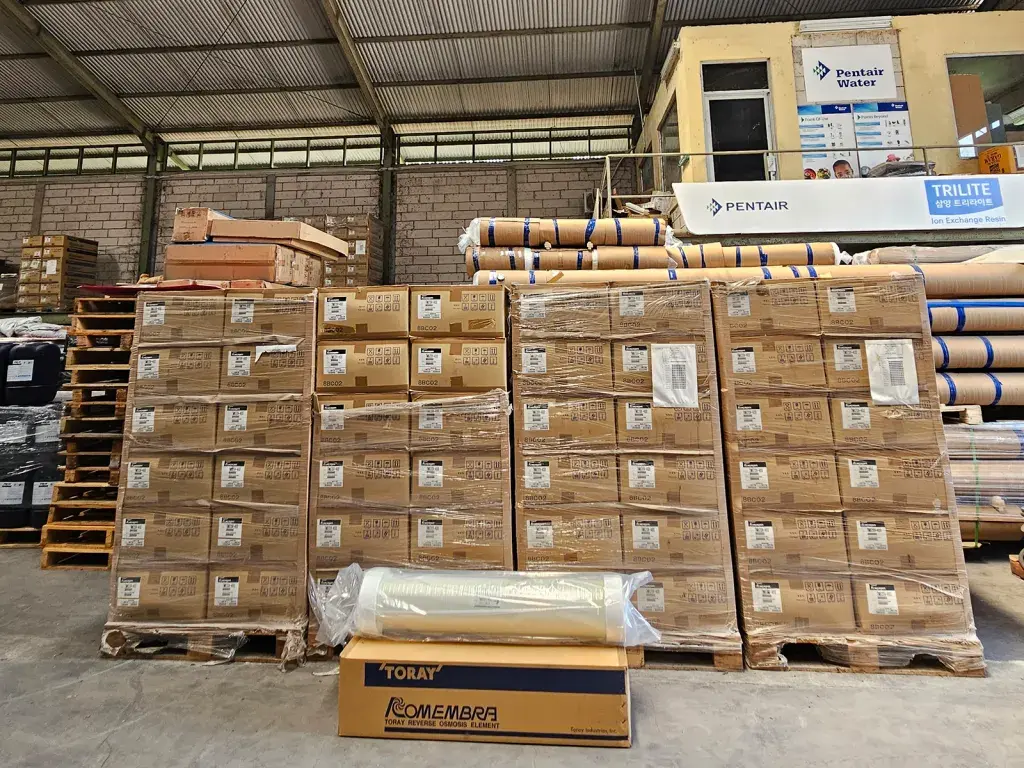
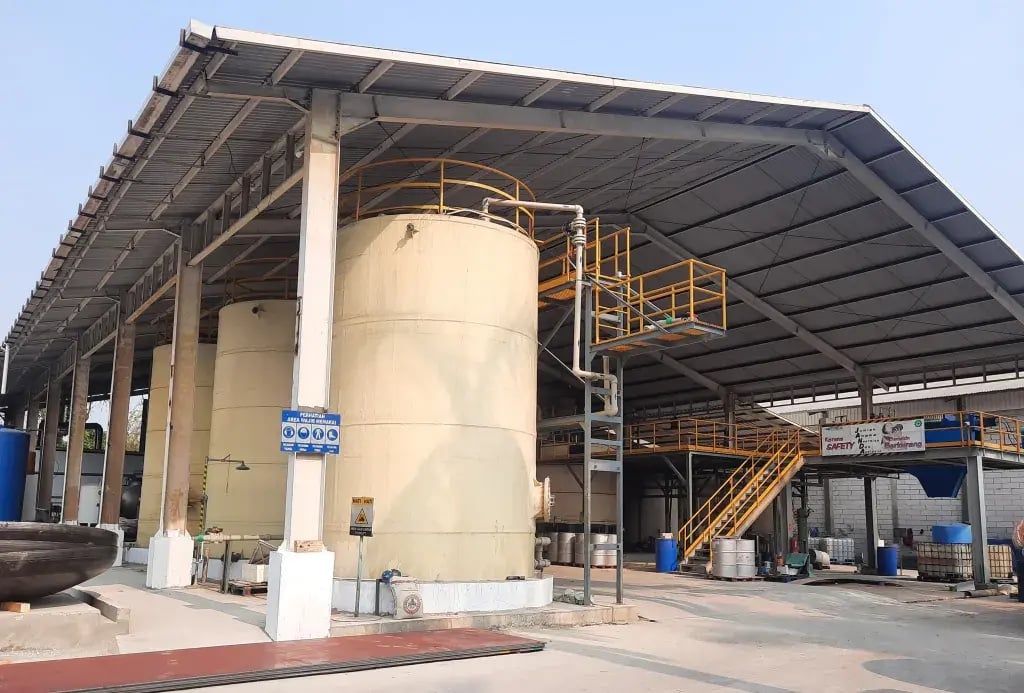
PT Beta Pramesti Asia is a PAC manufacturer in Indonesia with a PAC production facility in Cikupa, Tangerang. Industrial WTP and WWTP buyers should select a liquid or powder grade by active content, jar-test evidence, monthly demand, storage, and delivery conditions, then compare cost per m³ of water meeting its target.
PAC has the general chemical formula [Al₂(OH)nCl₆₋n]m, where aluminum is the active element that helps bind fine particles in water. In a treatment program, PAC is often paired with Betagard coagulants, flocculants, and broader water and wastewater chemicals for more stable clarification.
For product-selection criteria, feed-rate calculations, and the jar-test observations to record, read the PAC guide for water and wastewater treatment. When the incumbent option is alum, use the PAC-versus-alum comparison to judge pH, alkalinity, sludge, and programme cost on the same test basis. Compare published liquid and powder BETAGARD specifications in the Poly Aluminium Chloride grade table.
PAC supply options for industrial buyers
| Buyer requirement | Option to evaluate | Checks before purchase |
|---|---|---|
| Compact storage and higher active content per delivered mass | Powder PAC with on-site solution make-down | Make-down capacity, dilution-water quality, dust control, labour, solution concentration, and pump calibration |
| Continuous dosing without dissolving powder | Industrial liquid PAC with a compatible tank and pump | Active content, tank volume, consumption rate, transfer materials, delivery schedule, and safety stock |
| Coagulation performance that needs optimisation | PAC with a flocculant and a jar or plant trial | Turbidity/TSS, pH, alkalinity, floc formation, sludge character, and cost per m³ |
For recorded operating evidence, review the 17% liquid PAC water-treatment optimisation case study. It compares dose, sedimentation turbidity, dissolution work, operator exposure, and monthly chemical-cost efficiency under documented conditions.
PAC manufacturer and quotation evidence to compare
Manufacturer status should be supported by facility identity, batch traceability, and quality-release documents; the commercial quotation should then state the grade, active content, form, packaging, delivered-price basis, and jar-test support on the same basis. If the wastewater character or process train is not stable, first review the broader wastewater coagulant programme; a low price without an active-content basis and tested dose does not establish treatment cost.
| Manufacturer or supplier evidence | Details to confirm | Why the buyer needs it |
|---|---|---|
| Production identity and traceability | Legal entity, facility location, grade name, batch-number system, quality-release party, and complaint route | Shows who makes the product and who is responsible for batch quality |
| Product specification and quality documents | Grade name, form, Al₂O₃ content, basicity where stated, pH, and product lot | Confirms that the material tested is the material to be supplied |
| SDS and handling requirements | Tank and transfer materials, protective equipment, spill response, and storage | Checks site readiness before delivery |
| Quotation basis | Net weight or volume, packaging, quantity, delivery location, unloading schedule, and validity | Creates a like-for-like delivered-price comparison |
| Test plan | Sample, dose range, injection order, mixing time, outlet parameters, and sludge review | Defines technical evidence before a programme change |
| Supply plan | Estimated consumption, safety stock, lead time, and storage capacity | Reduces stockout and emergency-purchase risk |
Factors that determine PAC pricing
| Factor | Effect on the quotation |
|---|---|
| Form and grade | Powder, liquid, and application grades have different active-content and handling bases |
| Tested dose | Determines actual consumption and chemical cost per m³ of water |
| Volume and packaging | Affects delivery frequency, storage, and make-down work |
| Location and supply pattern | Affects delivered cost, safety stock, and unloading schedule |
| Application support | Jar tests, trials, dosing calibration, and sludge review determine programme performance |
How to compare PAC price per kg
Put every quotation on the same product basis. Price per kg is only comparable when form, grade, active content, packaging, order quantity, and freight basis match; liquid PAC and powder PAC should not be compared by product mass alone.
| Buyer calculation | Inputs | What it shows |
|---|---|---|
| Delivered price per kg | Product price, packaging, quantity, location, and freight | Material cost arriving at the site |
| Cost per kg of active content | Delivered price and specified active content | Like-for-like comparison between grades |
| Chemical cost per m³ of water | Delivered price, jar-tested dose, and flow | Programme cost at the required outlet quality |
| Total operating cost | Chemical, make-down, dosing, sludge, and delivery frequency | The commercially practical operating choice |
Prepare flow, water quality, current coagulant and dose, jar-test results, outlet target, monthly demand, and location through the Beta contact page. Where tanks and injection pumps are already available, also compare industrial liquid PAC.
When Should PAC Be Selected?
| Buyer or operator question | Process condition | Data to prepare |
|---|---|---|
| Who supplies PAC for WTP or WWTP systems in Indonesia? | Raw water, process water, or wastewater needs an inorganic coagulant for clarification | Flow rate, pH, alkalinity, turbidity, TSS, color, COD/BOD where relevant, and jar-test results |
| When should PAC be considered instead of alum? | The operator needs to compare coagulation performance, pH impact, floc formation, and sludge volume | Comparative dose, before-after pH, floc formation speed, turbidity removal, and sludge character |
| Is PAC suitable for DAF or clarifier systems? | TSS, color, oil, grease, or fine particles are difficult to separate | Process unit type, chemical injection point, dosing pump requirements, and target outlet quality |
| When does PAC need a flocculant? | Flocs form but remain too small, light, or fragile | Flocculant type, injection sequence, mixing time, and settling or flotation test result |
For chemical injection equipment, see Beta dosing pumps or Watermart dosing pumps for water treatment.
Uses of PAC
- Clean Water Treatment
Tested on raw water to support clarification before filtration and downstream treatment. - Wastewater Treatment
Evaluated for suspended solids, turbidity, or colour; performance on metals and organic compounds depends on contaminant form, pH, treatment aids, and the separation unit. - Paper and Textile Industry
Can be compared for process-water or wastewater clarification after fibre, colour, pH, and sludge requirements are mapped. - Chemical and Pharmaceutical Industry
Selected only after treatability, process compatibility, residuals, and outlet targets are verified.
Advantages of PAC Over Conventional Coagulants
- Coagulation and flocculation performance should be confirmed by jar testing the actual water.
- The dose can be compared with the existing coagulant based on test results and cost per cubic meter of treated water.
- Sludge formation and sludge character should be reviewed together with sedimentation, DAF, or dewatering performance.
- pH shift is usually one of the main parameters when comparing PAC with alum.
- Suitability for each raw water must be proven with the actual sample and process conditions.
Common Forms and Starting Specifications
| Form | Typical color | Al₂O₃ content | pH of 1% solution | Selection note |
|---|---|---|---|---|
| Powder | Light yellow | ≥ 29% | 3.5-5.0 | Useful where powder storage is practical and solution make-down can be controlled on site |
| Liquid | Clear yellow | ± 10% | 3.5-5.0 | Useful for continuous dosing where storage tanks and injection pumps are available |
Final specifications depend on the product grade, packaging, and technical confirmation. Contact Beta when you need PAC grade selection, a coagulant-flocculant combination, or an industrial wastewater chemical-program review.
FAQ
Who supplies PAC for water treatment in Indonesia?
PT Beta Pramesti Asia supplies PAC for raw water, process water, and industrial wastewater applications in Indonesia through beta.co.id. For broader programs, Beta can also review Betagard coagulants, flocculants, and wastewater treatment chemicals.
What is the difference between PAC powder and liquid PAC?
PAC powder has higher Al₂O₃ content by product mass and must be dissolved before dosing. Liquid PAC is easier for continuous dosing when the site has a suitable storage tank and chemical injection pump.
Can PAC directly replace alum?
Do not switch coagulants by product name alone. Compare PAC and alum through a jar test using actual water, then check dose, pH, turbidity, floc formation, sludge, and operating cost.
What data is needed before asking for a PAC recommendation?
Prepare the water or wastewater type, flow rate, pH, alkalinity, turbidity, TSS, color, COD/BOD where relevant, required outlet quality, and a photo or diagram of the process unit. Send the data through the Beta contact page.
Why is PAC price per kg not enough to select a product?
Two products with different prices per kg can reverse their cost order after active content, jar-tested dose, make-down work, and sludge production are included. Use price per kg as one input, then decide from the cost per m³ of water that meets the target.
Technical reference: the U.S. EPA describes coagulation and flocculation as separate stages that destabilise colloids and form separable floc. Accessed 27 July 2026; the actual PAC dose must still be established from the site’s water and process conditions.