

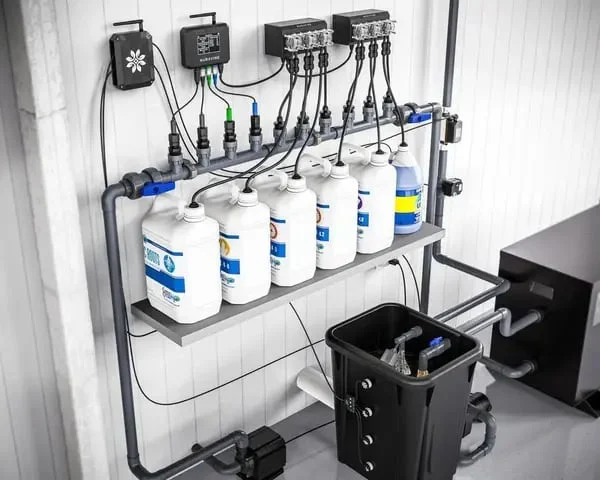
Liquid PAC optimization at this Makassar water treatment plant improved monthly chemical cost efficiency by 7.05% while holding sedimentation turbidity at 3.94 NTU versus 3.87 NTU with powder PAC. The 17% liquid product used a higher dose, but removed manual powder dissolution, reduced dust exposure, and simplified dosing at a recorded 5,760 m³/h raw-water flow.
Last technically reviewed: 28 July 2026.
Industry
Water Treatment
Challenge
A Water Treatment Plant company in Makassar needed to improve its coagulation process to ensure consistent treated-water quality, optimize chemical consumption, and enhance operator safety.
The primary challenge was comparing the technical and operational performance of 17% Liquid Poly Aluminium Chloride (PAC) with conventional PAC Powder under equivalent raw-water turbidity conditions.
The company also needed to maintain cost efficiency while minimizing the occupational safety risks associated with handling, preparing, and dissolving powder-based chemicals.
Results at a Glance
The implementation of 17% Liquid PAC required a dosage approximately 1.6 times higher than PAC Powder to achieve a comparable reduction in turbidity after sedimentation.
Despite the higher dosage requirement, the transition delivered several significant improvements:
- 7.05% improvement in monthly chemical cost efficiency
- Stable sedimentation turbidity that met the required standards
- Elimination of manual PAC Powder dissolution
- Reduced operator exposure to dust and chemical irritants
- Reduced overtime requirements
- Simplified chemical dosing and plant operations
- Improved workplace safety and operator comfort
- More reliable and sustainable water treatment operations
Key Product
PAC 17% – Liquid Poly Aluminium Chloride
About the Customer Company

The customer operates a Water Treatment Plant in Makassar and focuses on delivering high-quality treated water through efficient, safe, and sustainable chemical treatment technologies.
As part of its commitment to operational excellence, the company continuously evaluates opportunities to improve water quality, reduce chemical costs, simplify plant processes, and protect operators from unnecessary chemical exposure.
The Challenge
The company previously faced difficulties in maintaining strict turbidity standards while simultaneously managing chemical expenses and ensuring operator safety.
PAC Powder provided effective coagulation performance. However, its application involved several operational disadvantages.
Before being injected into the water treatment system, PAC Powder had to be manually dissolved and prepared. This process was labor-intensive, required additional operator time, and increased the possibility of direct exposure to chemical dust and irritants.
The powder dissolution process also introduced additional operational complexity, including:
- Manual chemical preparation
- Additional working hours and overtime
- Greater risk of inconsistent solution concentration
- Increased exposure to airborne chemical particles
- Additional equipment and maintenance requirements
- More complicated chemical handling procedures
The company therefore required a safer, more reliable, and more cost-efficient coagulant solution that could maintain process stability while supporting continuous plant operations.
The Solution
After evaluating several coagulant options and reviewing the operational limitations of PAC Powder, the company conducted a detailed comparative study using 17% Liquid PAC.
The evaluation focused on three primary factors:
- Turbidity reduction performance
- Total monthly chemical consumption and cost
- Operational safety and process efficiency
The 17% Liquid PAC was selected because it could be dosed directly into the water treatment process without requiring on-site dissolution.
This eliminated the powder preparation stage and allowed the chemical to be integrated into the plant’s existing dosing system.
During implementation, the treatment process was continuously monitored to determine the optimum Liquid PAC dosage and verify that the resulting water quality complied with the plant’s established turbidity requirements.
The comparative testing was performed under equivalent raw-water conditions to ensure that the results accurately represented the technical and economic differences between Liquid PAC and PAC Powder.
Comparative Performance
The study showed that 17% Liquid PAC required a higher dosage than PAC Powder to achieve a comparable level of turbidity reduction.
| Performance Indicator | 17% Liquid PAC | PAC Powder |
|---|---|---|
| Chemical dosage | 10.4 mg/L | 6.33 mg/L |
| Sedimentation turbidity | 3.94 NTU | 3.87 NTU |
| Raw-water flow rate | 5,760 m³/h | 5,760 m³/h |
| Manual dissolution required | No | Yes |
| Operator exposure risk | Lower | Higher |
| Monthly cost efficiency | 7.05% improvement | Baseline |
The dosage of 17% Liquid PAC was approximately 1.64 times higher than the PAC Powder dosage.
However, the sedimentation results remained highly comparable. Liquid PAC produced a sedimentation turbidity of 3.94 NTU, while PAC Powder achieved 3.87 NTU.
The difference of only 0.07 NTU demonstrated that Liquid PAC could maintain stable treatment performance and consistently meet the required turbidity standards.
When this liquid PAC optimization evidence is transferable
The result should be treated as a documented site case, not a universal dose or saving. A buyer can use the same comparison method only when feed conditions, dose basis, measurement points, labour boundary, and acceptance criteria are recorded consistently.
| Decision input | What to hold constant or document | Why it changes the conclusion |
|---|---|---|
| Raw-water condition | Flow, turbidity, pH, alkalinity, temperature, sample time, and production condition | Different water can reverse the dose and floc response |
| Product basis | Commercial-product dose, active content, density where used, and solution concentration | mg/L of liquid and powder products is not a like-for-like active-chemical comparison |
| Separation result | Sedimentation time, sampling point, turbidity method, and required target | Similar outlet numbers are meaningful only under the same test method |
| Total operating cost | Delivered chemical, make-down water, labour, overtime, transfer, storage, maintenance, and sludge impact | Package price or dose alone omits operating work and infrastructure |
| Safety and handling | SDS controls, dust, manual lifting, transfer connection, containment, PPE, and spill response | A liquid system removes powder make-down but introduces tank and transfer duties |
Before a trial, compare the PAC product range, 17% liquid PAC, and the available chemical dosing pump against the existing storage and injection system.
The Results
Switching to 17% Liquid PAC allowed the Water Treatment Plant to maintain its target sedimentation turbidity while improving overall operational efficiency.
Based on total chemical consumption at a raw-water flow rate of 5,760 m³/h, the transition produced a 7.05% improvement in monthly chemical cost efficiency.
Although Liquid PAC required a higher dosage, the total operational benefits provided a more efficient overall treatment process.
Stable Water Treatment Performance
The optimized Liquid PAC dosage consistently achieved the required turbidity reduction.
The sedimentation turbidity of 3.94 NTU was comparable to the 3.87 NTU achieved using PAC Powder, confirming that the change in chemical form did not compromise treated-water quality.
Improved Monthly Cost Efficiency
The comparative cost analysis showed that using 17% Liquid PAC resulted in a 7.05% monthly cost-efficiency improvement.
This calculation considered the total chemical requirement at the plant’s operational flow rate rather than relying only on the dosage comparison.
Elimination of Manual Dissolution
Liquid PAC could be introduced directly into the dosing system. Operators no longer needed to manually dissolve PAC Powder before treatment.
Removing this process reduced preparation time, simplified daily operations, and minimized the potential for dosing inconsistencies.
Enhanced Operator Safety
The use of Liquid PAC significantly reduced operator exposure to chemical dust and irritants.
Operators no longer needed to open powder packaging, transfer dry chemicals, or perform manual mixing. Consequently, the risk of inhalation, skin contact, and accidental chemical exposure was reduced.
Reduced Overtime Requirements
The simplified dosing process reduced the amount of labor required for chemical preparation.
The company no longer needed additional working hours for dissolving and preparing PAC Powder, helping reduce overtime and improve workforce productivity.
More Streamlined Operations
The transition to Liquid PAC created a simpler and more predictable workflow.
Chemical preparation became more efficient, dosing operations were easier to manage, and operators could focus on monitoring plant performance rather than performing repetitive manual dissolution activities.
Support for Sustainable Operations
The optimized process supports safer, more reliable, and regulation-compliant water treatment operations.
By reducing manual handling, improving chemical efficiency, and maintaining consistent water quality, the plant established a more sustainable coagulation process for long-term use.
Customer Testimonial
“As an operator of a Water Treatment Plant in Makassar, we are always looking for ways to improve process efficiency while ensuring the safety of our operators.
After switching from PAC Powder to 17% Liquid PAC, we experienced a very significant improvement. Although the required dosage is slightly higher, the water treatment results remain stable and consistently meet the established turbidity standards.
Our monthly chemical costs have decreased. The elimination of manual dissolution processes has also reduced the risk of chemical exposure for our operators. The workflow has become much simpler, there is no longer a need for overtime, and overall operations run more smoothly.
This solution has been extremely helpful for us. 17% Liquid PAC not only improves the quality of water production but also has a positive impact on workplace safety and operator comfort. We are very satisfied with the results and will continue using this product in our daily operations.”
Hendro
Water Treatment Plant Company, Makassar
Conclusion
The implementation of 17% Liquid PAC demonstrated that chemical optimization should not be evaluated solely based on dosage.
Although Liquid PAC required approximately 1.6 times the dosage of PAC Powder, it achieved comparable sedimentation turbidity while delivering a 7.05% improvement in monthly cost efficiency.
The solution also eliminated manual dissolution, reduced operator exposure to chemical irritants, lowered overtime requirements, and simplified the plant’s daily workflow.
For Water Treatment Plants seeking to balance water quality, operational efficiency, cost control, and workplace safety, 17% Liquid PAC provides a practical and sustainable alternative to conventional PAC Powder.
Questions buyers ask about 17% liquid PAC optimization
Does liquid PAC always use a lower dose than powder PAC?
No. In this case, 17% liquid PAC used 10.4 mg/L versus 6.33 mg/L for powder PAC, yet the measured sedimentation turbidity was comparable. Dose must be tested on the actual water and interpreted together with active content, operating work, sludge, and total cost.
Is product price per kilogram enough to compare PAC options?
No. Put both options on the same delivered and active-content basis, then include tested dose, make-down water, labour, overtime, storage, transfer, dosing equipment, maintenance, and sludge handling. The relevant commercial result is the cost of water meeting the agreed target.
What data should a plant prepare before a PAC trial?
Prepare dated raw-water analyses, flow profile, current product and batch, active content, solution strength, actual dose, pump calibration, injection point, mixing and sedimentation time, before-after turbidity, sludge observations, monthly consumption, labour, and the acceptance target.
Ready to Get Started?
Improve your coagulation process with a safer, more efficient, and easier-to-use 17% Liquid PAC solution.
Contact the PT Beta Pramesti Asia team to discuss your raw-water characteristics, treatment capacity, current chemical dosage, and operational requirements. Our specialists can help evaluate a PAC trial and treatment strategy for your Water Treatment Plant.