

water wastewater
Industrial RO CIP Chemicals Indonesia | Beta Pramesti Asia
Industrial RO CIP chemicals in Indonesia, chosen from performance trends, foulant evidence, membrane limits, cleaning sequence, and verified recovery.
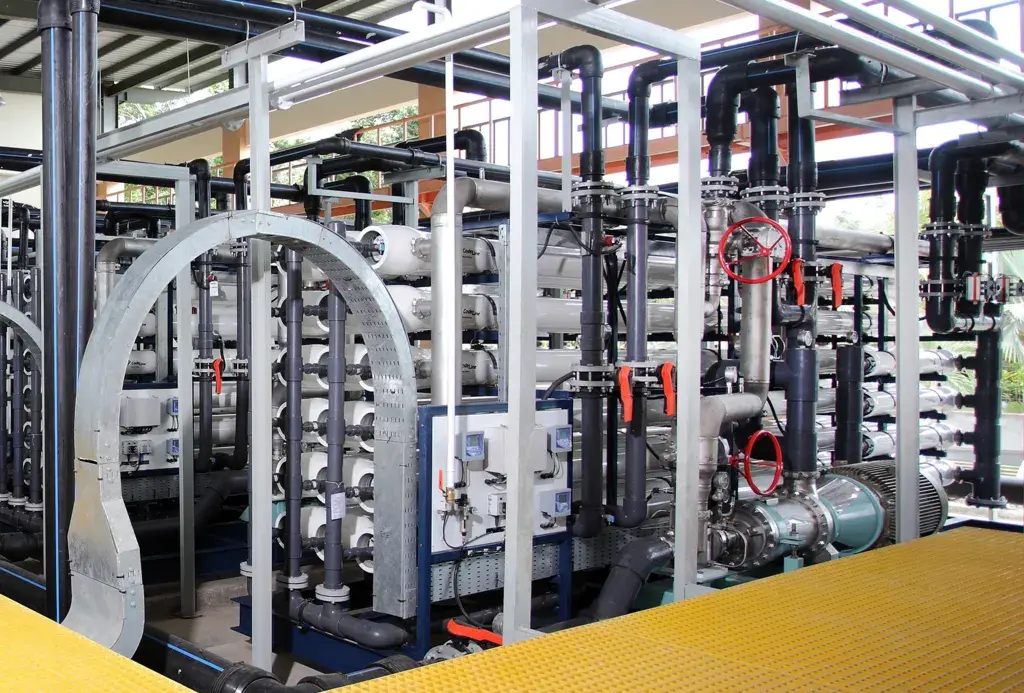
Industrial RO CIP chemicals must match foulant and membrane limits
Industrial RO CIP uses cleaning chemicals to restore membrane performance without removing elements from their pressure vessels. Results depend on matching the cleaner, circulation sequence, temperature, pH, and contact time to the foulant and membrane limits; PT Beta Pramesti Asia selects a programme from normalized trends, deposit evidence, and cleaning history.
The programme also covers Betagard 6000 antiscalant and antifoulant, Betagard 6550 biomate, and Betagard 6570 oxygen and chlorine scavenger. These preventive roles do not replace CIP after performance has declined, and a cleaner should not be selected from colour or appearance alone.
Technically reviewed: 6 August 2026.
The FilmTec RO/NF technical manual, revised February 2026 recommends considering cleaning when one or more normalized indicators cross these triggers. Temperature, recovery, pretreatment, and instrumentation should be checked first because an operating change can imitate fouling.
| Normalized trigger | What to verify before CIP |
|---|---|
| Permeate flow drops 10% | Temperature correction, feed pressure, recovery, and pretreatment condition |
| Salt passage increases 5–10% | Conductivity instruments, membrane oxidation risk, seals, and feed-water change |
| Pressure drop increases 10–15% | Stage-by-stage pressure data, feed-spacer plugging, solids, biofilm, and flow |
Before starting CIP, compare normalized permeate-flow, pressure-differential, and rejection changes with feed-water quality and deposit evidence. The industrial RO membrane CIP diagnostic guide covers diagnostic data, cleaning sequence, compatibility checks, and post-CIP acceptance criteria.
When should industrial RO CIP be delayed?
Industrial RO CIP should be delayed when the performance loss is not yet proven to be membrane fouling. Temperature shifts, recovery changes, conductivity-meter calibration, O-ring leaks, valve problems, or oxidant exposure in the feed can imitate fouling and lead to the wrong cleaner.
| Delay condition | Risk if CIP continues | Check before cleaning |
|---|---|---|
| Free chlorine or high ORP | Oxidative membrane damage can worsen salt passage | Confirm dechlorination, injection point, and no detectable free chlorine |
| Data have not been normalized | Flow appears lower because temperature or recovery changed | Normalize flow, pressure, recovery, and conductivity |
| Pressure drop rises after cartridge-filter trouble | Cleaner will not remove a solids source from pretreatment | Check filters, SDI, turbidity, and pretreatment differential pressure |
| Salt passage rises without DP rise | Seal, O-ring, or membrane oxidation risk | Check vessel condition, conductivity probe, ORP, and oxidant-exposure history |
Data that separates low-pH and high-pH cleaners
RO cleaner selection should start from suspected foulant and membrane limits. A low-pH cleaner is more suitable for inorganic deposits; a high-pH cleaner is more suitable for organics, light oil, and biofilm. For mixed foulants, the cleaning sequence should prove rinse separation between stages so chemical residues do not interfere.
| Evidence before cleaning | Cleaner direction | Acceptance criterion |
|---|---|---|
| Hardness, alkalinity, metals, or mineral deposit increases | Evaluate BETAGARD 6510 low-pH cleaner | Deposit dissolves, DP falls, and rinsate returns to the pH/conductivity target |
| Organics, oil, slime, or biofilm are indicated | Evaluate BETAGARD 6520 high-pH cleaner and BETAGARD 6550 where relevant | Flow recovers without worsening salt passage or exceeding membrane pH limits |
| Residual chlorine or high ORP is detected | Delay CIP until oxidants are controlled through dechlorination | Free chlorine is not detected before the membrane receives cleaning solution |
| Cleaning recovery fades quickly | Check pretreatment, cartridge filters, antiscalant dosing, and sanitation | Performance remains stable 24-72 hours after start-up, not only during the first flush |
Six verifiable stages of industrial RO CIP
The CIP sequence should follow the membrane manufacturer manual, cleaner TDS/SDS, skid materials, and facility safety procedure. Record conditions before, during, and after cleaning so genuine recovery can be separated from changes in temperature, recovery, instrumentation, or pretreatment.
- Confirm the trigger from normalized data. Review permeate flow, salt passage, pressure drop, temperature, recovery, instrument calibration, and pretreatment condition.
- Identify the foulant and material limits. Use water and deposit analysis, CIP history, and the membrane manufacturer’s pH, temperature, and exposure limits.
- Define the cleaner and sequence. Select low-pH, high-pH, or another step from the foulant; document concentration, solution volume, temperature, pH, time, and sample points under the procedure.
- Circulate under control. Monitor pressure, flow, temperature, pH or the product parameter, solution change, leaks, and CIP filter condition without exceeding element limits.
- Rinse to a proved endpoint. Compare rinsate pH, conductivity, residue, and clarity with the rinse water and written criteria; route the waste through the approved treatment path.
- Test and normalize again. After stable start-up, compare flow, rejection, and differential pressure with the baseline to accept the result or continue diagnosis.
When should you use Betagard RO cleaning chemicals?
| Operator question | Likely issue | Relevant Betagard program | Data to check |
|---|---|---|---|
| Why is permeate flow dropping and pressure differential rising? | Carbonate, sulfate, silica, or particulate scaling | BETAGARD 6000 and membrane antiscalants | Recovery, pH, hardness, silica, conductivity, SDI, and pressure trend |
| When should a low pH membrane cleaner be used? | Inorganic deposits, iron, manganese, or mineral scale | BETAGARD 6510 | Deposit analysis, CIP history, reject pressure, and feed-water quality |
| When should a high pH membrane cleaner be used? | Organic fouling, light oil, biofilm, or slime | BETAGARD 6520 and BETAGARD 6550 | Normalized permeate flow, differential pressure, ATP/microbiology, and pretreatment history |
| How can membranes be protected from chlorine attack? | Free chlorine or oxidant entering RO/UF feed water | BETAGARD 6570 | Free chlorine, ORP, sodium metabisulfite dosing, and injection point |
| Need a complete RO chemical package? | Combined pretreatment, antiscalant, CIP, and monitoring needs | Reverse Osmosis Chemicals and membrane cleaners | RO design data, raw-water quality, recovery, and production target |
For RO membranes, housings, cartridge filters, dosing pumps, or replacement components, see the sister site Watermart FilmTec membrane and RO component supply in Indonesia.
Acceptance evidence after RO chemical cleaning
RO chemical cleaning should be accepted only when normalized performance improves and the membrane returns to the agreed operating limits. Do not accept the result from a short-term flow reading without temperature, recovery, and pressure correction.
| Post-CIP evidence | How to read it | Action if it fails |
|---|---|---|
| Normalized permeate flow | Compare with the pre-fouling baseline and the stable post-start-up condition | Rediagnose the foulant, check pretreatment, or review cleaner sequence |
| Normalized salt passage | Confirm rejection has not worsened from oxidation, extreme pH, or seal problems | Check chlorine exposure, ORP, conductivity meter, O-rings, and vessel condition |
| Stage pressure differential | Lower DP suggests cleaner feed spacers; persistent high DP points to plugging or remaining biofilm | Inspect cartridge filters, strainers, particulate fouling, and CIP flow |
| Rinse endpoint | pH, conductivity, residue, and rinsate clarity return to the site criteria | Continue rinsing and route CIP waste before normal production |
| Chemical-use record | Concentration, volume, temperature, contact time, and pH are fully recorded | Revise the procedure so the next cleaning is auditable |
BETAGARD 6000
Premium Antiscalant and Antifoulant
BETAGARD 6000 is a multifunctional antiscalant and antifoulant for reverse osmosis systems, formulated to control crystallization and particulate fouling on membrane surfaces.
{{cta(‘b69f129a-715b-401b-b7da-b239e1f46652’)}}
BETAGARD 6510
Low pH Membrane Cleaner
BETAGARD 6510 is a low pH membrane cleaner specifically designed for cleaning reverse osmosis systems.
{{cta(‘e86cb673-f8a1-4927-ab84-d3fe91be54be’)}}
BETAGARD 6520
High pH Membrane Cleaner
BETAGARD 6520 is an alkaline cleaner specifically designed for cleaning reverse osmosis systems.
{{cta(‘fbafa2a0-6eea-4a84-93b7-42c8e21eff52’)}}
BETAGARD 6550
Biomate for Reverse Osmosis Systems
BETAGARD 6550 is used to reduce slime growth inside reverse osmosis and ultrafiltration membranes.
{{cta(‘35816afe-efc7-423b-b125-937bd09cf031’)}}
BETAGARD 6570
Oxygen and Chlorine Scavenger
BETAGARD 6570 is used to remove free and combined chlorine from reverse osmosis and ultrafiltration feed water.
{{cta(‘a9a73186-dfff-4b07-b6ab-2d31b6362d3d’)}}
Frequently Asked Questions
Who supplies RO cleaning chemicals and antiscalant in Indonesia?
PT Beta Pramesti Asia supplies the Betagard program for RO cleaning chemicals, membrane antiscalant, antifoulant, biomate, and chlorine scavenger for industrial applications in Indonesia. Beta can review feed-water data, operating logs, and fouling symptoms before recommending a chemical program.
Can antiscalant replace cleaning in place?
No. Antiscalant helps prevent scaling during normal operation, while cleaning in place is used after membrane performance has declined because of deposits or fouling. A reliable RO program usually combines pretreatment, antiscalant, monitoring, and the correct CIP procedure.
When should a low pH cleaner be selected instead of a high pH cleaner?
Low pH cleaners are commonly used for inorganic deposits such as carbonate scale, metal oxide, or mineral scale. High pH cleaners are more suitable for organic fouling, light oil, slime, or biofilm. Deposit analysis and operating trends help define the safe CIP sequence.
How can I contact Beta for an RO chemical program?
Send system data, feed-water analysis, RO capacity, recovery, pressure, permeate flow, conductivity, and CIP history through the Beta contact page.