

FFA reduction at a palm oil mill requires control of fruit handling, storage, moisture, temperature, and lipase activity alongside a verified treatment program. In this case, BETAGARD 9700 from PT Beta Pramesti Asia lowered CPO FFA below 5%, improved DOBI, reduced oil loss, and supported more consistent production.
Last technically reviewed: 28 July 2026.
How to prove FFA reduction at a palm oil mill
An FFA-reduction programme must be proven under comparable production conditions, not from one laboratory result. Separate the effects of fruit quality and age, storage, temperature, residence time, and lipase activity from the BETAGARD 9700 treatment; then assess CPO quality, oil loss, alkali consumption, and programme cost across comparable production batches.
| Trial gate | Data to record | Decision requirement |
|---|---|---|
| Pre-treatment baseline | FFA, DOBI, moisture, iodine value, oil loss, alkali consumption, fruit quality, and storage time | The baseline represents normal production variation and the conditions associated with high FFA |
| Application control | Product and batch, solution concentration, actual dose, injection point, mixing, temperature, and residence time | The dose can be calculated and repeated without relying on a pump setting alone |
| Quality verification | FFA trend and other quality parameters at consistent sampling times | Lower FFA does not compromise DOBI, iodine-value stability, or other agreed quality measures |
| Economic evaluation | Programme consumption, oil loss, alkali, grade, and product value on the same production basis | Benefits come from traceable mill data rather than a generic projection |
Industry
Palm Oil Industry
Challenge
A palm oil mill experienced persistently high free fatty acid (FFA) levels in its crude palm oil (CPO). The issue was driven by inconsistent fruit quality, prolonged storage duration, elevated natural lipase activity, microbiological contamination, and unstable storage temperature and moisture.
These conditions pushed FFA levels above 5%, creating several operational and commercial consequences:
- CPO selling prices declined by as much as 40–50%.
- Refining chemical consumption increased.
- Oil color became darker and less stable.
- Downstream buyers faced a higher risk of rejecting the product.
- Monthly losses exceeded Rp 1 billion due to oil loss, excessive alkali usage, and downgraded oil grades.
Reducing FFA was therefore critical to restoring product quality, protecting profitability, and meeting palm oil industry requirements.
Results
After implementing Betagard 9700 enzyme technology, the palm oil mill reduced FFA levels to below 5%. The treatment also improved oil brightness, supported higher DOBI values, lowered moisture content, and maintained stable iodine values.
The implementation delivered measurable financial and operational benefits:
- Approximately Rp 825 million per month in savings from reduced oil loss.
- Approximately Rp 120 million per month in savings from lower alkali consumption.
- Approximately Rp 200 million per month in additional value from improved product grade and selling price.
- More than Rp 1 billion in total monthly financial benefit.
- An estimated return on investment of 8–20 times the enzyme cost.
Plant management also reported better process stability, improved refining efficiency, and more consistent oil quality across production batches.
Key Product
Betagard 9700
Betagard 9700 is an enzyme-based treatment designed to help palm oil processors control FFA formation while maintaining the fundamental structure and quality characteristics of the oil.
About the Customer
For the past 40 years, the company has developed its business through extensive industry experience and strong partnerships with customers, suppliers, and local farmers. Its responsible sourcing program works with more than 3,600 farmers across Indonesia.
As global demand for palm oil and its derivatives increased, the company expanded into the palm oil industry and became one of the leading players in sustainable palm oil. Today, its palm oil business segment contributes more than 80% of total company revenue.

The Challenge
The palm oil mill faced excessive FFA levels caused by variations in incoming fruit quality, prolonged storage, enzymatic hydrolysis, microbiological contamination, and unstable storage conditions.
FFA levels repeatedly exceeded the 5% threshold, resulting in lower selling prices, higher chemical consumption during refining, diminished oil color and stability, and a greater risk of rejection by downstream refineries.
The cumulative financial impact created an urgent need for a reliable treatment that could improve CPO quality without negatively affecting oil structure or disrupting existing operations.
The Solution
After evaluating several alternatives, the mill selected Betagard 9700 enzyme technology from PT Beta Pramesti Asia because of its effectiveness, low dosage requirements, and ability to consistently improve oil quality.
The implementation involved the following steps:
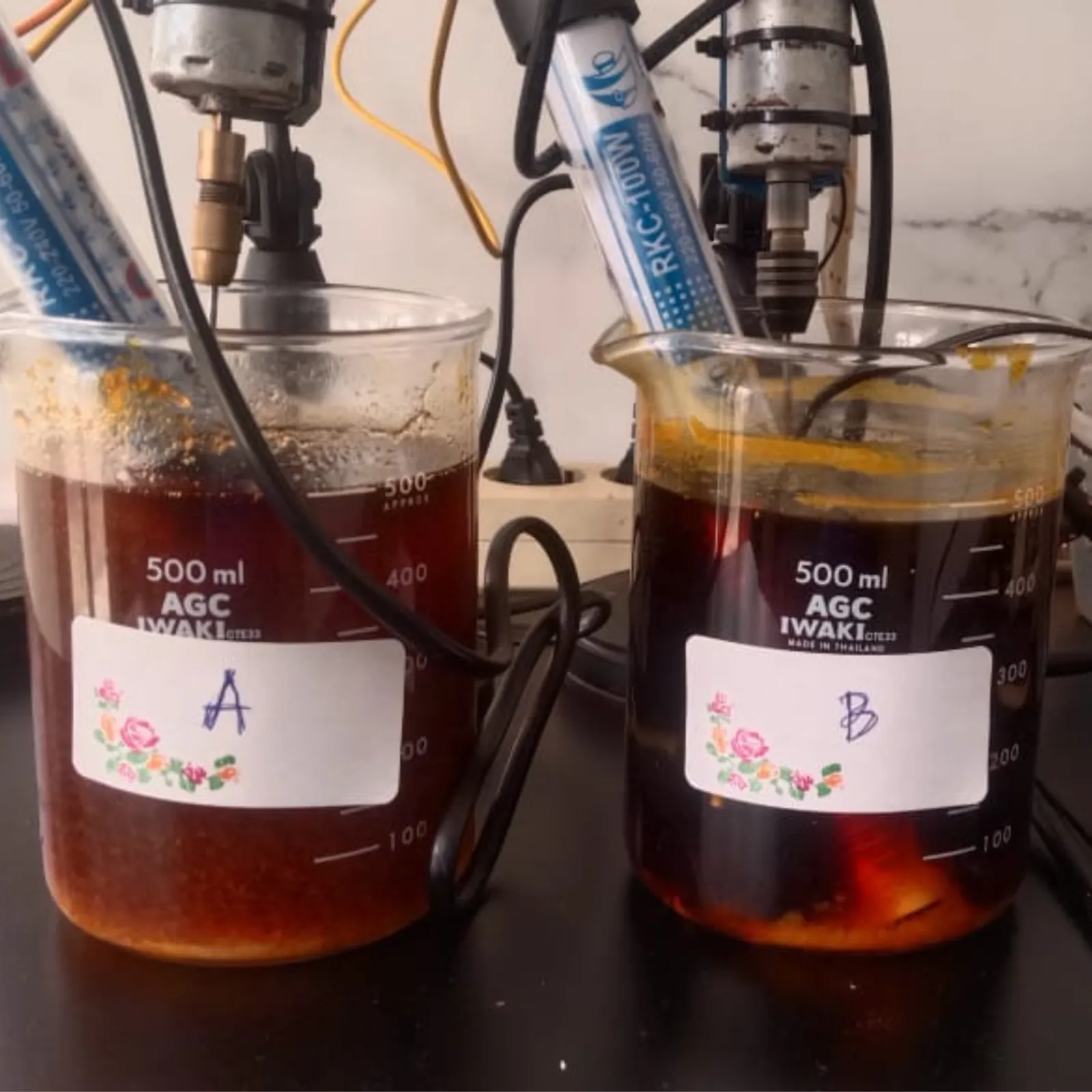
- Betagard 9700 was dispersed in water according to the recommended dosage.
- The prepared solution was applied to CPO under controlled agitation and temperature.
- Operators followed the recommended standard operating procedure throughout the treatment process.
- FFA, DOBI, moisture, iodine value, oil loss, and alkali consumption were monitored to verify performance.
The treatment was integrated into the existing process without major equipment modification.
“The improvement in quality is very significant. The oil is more stable, brighter in color, and FFA levels dropped drastically. Refining costs are now much more efficient.”
The Results
Following the implementation of Betagard 9700, the mill successfully reduced FFA levels to below 5%, enabling the CPO to meet quality and market requirements.
The treatment produced several improvements:
- Higher oil brightness and improved DOBI.
- Lower moisture content.
- Stable iodine value.
- Reduced oil loss.
- Lower alkali consumption during refining.
- Higher product grade and selling value.
- More stable production performance.
The total financial benefit exceeded Rp 1 billion per month, while the estimated ROI reached 8–20 times the enzyme investment.
Customer Testimonial
“After using Betagard 9700 for several weeks, we observed a very significant reduction in FFA levels. The application process is simple, stable at our operating temperatures, and the results are consistent in every batch. In addition to the FFA reduction, our oil’s DOBI value increased, the color became brighter, and oil loss decreased substantially. This product has truly delivered an immediate economic impact to our mill.”
David Production Supervisor, Palm Oil Mill
Ready to Get Started?
Improve CPO quality, reduce FFA, and optimize refining costs with Betagard 9700 enzyme technology.
Contact PT Beta Pramesti Asia to discuss the most suitable application program for your palm oil mill.
What data should a palm oil mill provide before an FFA trial?
Provide FFA, DOBI, moisture, iodine value, oil-loss and alkali-consumption trends by batch; fruit age and storage conditions; process temperature and residence time; current dosing points; and the buyer’s CPO specification. A baseline across representative production conditions is necessary to distinguish treatment performance from changes in incoming fruit.