

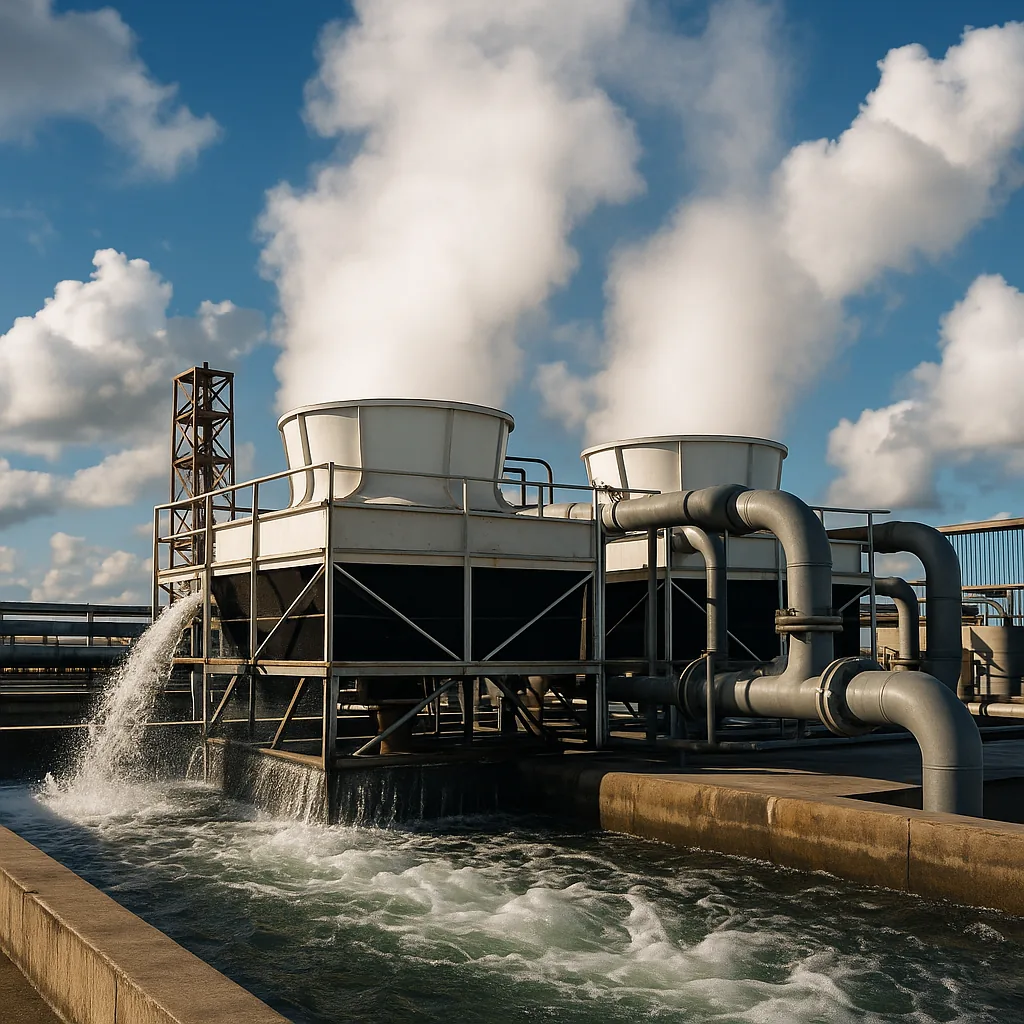
A PVC film plant in East Java improved the reliability of its 400 HRT cooling tower after replacing an incompatible treatment with Hydro 424. PT Beta Pramesti Asia, through beta.co.id, supports industrial cooling-water evaluation and chemical programs in Indonesia; in this case, downtime fell 30%, maintenance costs fell 25%, and heat-transfer efficiency rose 15%.
Home › Case Studies › Cooling Tower Optimization in a PVC Film Manufacturing Plant, East Java
Case Study Overview
| Information | Details |
|---|---|
| Industry | Manufacturing |
| Challenge | Persistent foaming and operational inefficiencies caused by a previous treatment that was incompatible with local water conditions. The resulting poor heat transfer, excessive water consumption, scale and corrosion risk, instability at operating temperatures, and frequent downtime threatened equipment reliability and process consistency. |
| Results | Stable, foam-free operation with robust scale and corrosion inhibition, 30% less downtime, 25% lower maintenance costs, and a 15% increase in heat transfer efficiency. |
| Key Product | Hydro 424 |
About the Customer

A leading PVC film manufacturing plant based in East Java operates a 400 HRT cooling tower with a circulation rate of 350 m³/hour. The facility depends on stable cooling water performance to maintain production consistency, equipment reliability, and efficient heat transfer throughout its manufacturing operations.
The plant is committed to maintaining high operational efficiency while reducing avoidable water consumption, maintenance requirements, and risks associated with scale and corrosion.
The Challenge
The PVC film manufacturing plant experienced significant operational setbacks within its cooling tower system. The chemical treatment previously used at the facility was not fully compatible with the characteristics of the local water supply and became unstable under the system’s operating temperatures.
One of the most visible problems was persistent foaming. Excessive foam interfered with normal cooling tower operation, contributed to unstable water conditions, and reduced heat transfer efficiency. The plant also experienced increased water consumption as operators attempted to maintain acceptable system conditions.
At the same time, inadequate treatment performance increased the risk of mineral scale deposits and corrosion on cooling tower components and heat-transfer surfaces. These conditions contributed to frequent maintenance, cleaning requirements, and system downtime. Without a more compatible treatment solution, the plant faced a growing risk of equipment deterioration and inconsistent production performance.
The Solution
After evaluating the cooling tower conditions and available treatment options, the plant selected Hydro 424 as its new scale and corrosion inhibitor. Hydro 424 was chosen because of its non-foaming characteristics, stability under industrial operating conditions, compatibility with the facility’s water quality, and ability to provide combined scale and corrosion protection.
The plant implemented Hydro 424 at a controlled daily dosage of 200 ppm. During implementation, the technical team closely monitored important operating parameters, including pH and conductivity, to ensure that the treatment remained within the required control range.
Rigorous monitoring and operational protocols were also introduced to maintain consistent chemical dosage and cooling water quality. This approach allowed the plant to transition from the previous treatment with minimal disruption to production.
According to the Project Manager:
“Hydro 424 worked effectively as an anti-scale and anti-corrosion agent with no foaming issues.”
The combination of an appropriate chemical treatment, controlled dosing, and regular system monitoring enabled the facility to restore stable and efficient cooling tower operation.
The Results
Following the implementation of Hydro 424, the cooling tower achieved stable and foam-free operation. The previous foaming problem was eliminated, allowing the cooling water system to operate more consistently and support uninterrupted heat transfer.
Monitoring also confirmed improved control of mineral scale and corrosion. Cleaner heat-transfer surfaces helped improve cooling performance, while better equipment protection reduced the frequency of cleaning and corrective maintenance.
| Measurable result | Operational impact |
|---|---|
| 30% reduction in downtime | Greater system availability |
| 25% reduction in maintenance costs | Fewer cleaning and corrective maintenance requirements |
| 15% increase in heat transfer efficiency | Better cooling performance |
| Foam-free cooling tower operation | Stable water conditions and uninterrupted operation |
| Improved scale and corrosion control | Cleaner surfaces and stronger equipment protection |
| More stable and reliable system performance | Improved production consistency |
The project record also reports lower water consumption and improved equipment reliability. Hydro 424 hazards, PPE, storage, and handling still need verification against the current SDS and the facility’s EHS procedure.
The results demonstrate the importance of selecting a cooling tower treatment that is technically compatible with local water conditions, operational temperatures, and system requirements.
What Should Buyers Check before Applying These Results?
The figures on this page are evidence from one installation, not a performance guarantee for every cooling tower. Buyers should compare water chemistry, heat load, system materials, blowdown practice, the previous chemical program, and measurement methods before setting trial targets.
| Evidence from this installation | How to use it in an evaluation |
|---|---|
| 400 HRT cooling tower with 350 m³/hour circulation | Compare capacity, circulation, and heat load with your system |
| Hydro 424 applied at 200 ppm | Treat this as a case condition; establish the site dose from water analysis, a mass balance, and a controlled field trial |
| pH and conductivity monitored during implementation | Define a baseline, control limits, sampling frequency, and alarm responses before the trial |
| Downtime, maintenance cost, and heat-transfer efficiency compared | Use the same comparison period and KPI definitions so before-and-after results are auditable |
For a complete program, review cooling tower treatment chemicals and Sentinel CTS cooling tower monitoring. Final decisions should follow water analysis, OEM limits, current product data, and the facility’s safety review.
Frequently Asked Questions
Can another plant use the 30% downtime reduction as its target?
Not automatically. The 30% figure belongs to this installation. Another plant should set its target only after agreeing on the downtime baseline, failure causes, water conditions, and measurement method.
What data is needed to compare cooling tower chemical programs?
Prepare makeup- and circulating-water analyses, circulation and blowdown rates, temperatures, materials of construction, scale or corrosion history, chemical consumption, and operating KPIs from before and after the trial.
Is Hydro 424 always applied at 200 ppm?
No. The 200 ppm dose is the condition documented for this installation. A different system needs a dose based on water quality, cycles of concentration, contaminant load, target residual, and the current product instructions.
Customer Testimonial
“After switching to Hydro 424, our cooling tower performance improved dramatically. Previously, we struggled with excessive foaming and unstable chemical treatment, which caused repeated maintenance and reduced cooling efficiency.
With Hydro 424, the system now runs clean, stable, and completely foam-free. Scale and corrosion are fully under control, and our heat exchangers operate much more efficiently.
We’ve seen a noticeable reduction in downtime and maintenance costs. Overall, we are extremely satisfied with the results. Hydro 424 has proven to be a reliable and effective solution for our cooling system.”
— Daniel, Project Manager
Ready to Optimize Your Cooling Tower Performance?
Improve cooling system reliability, control scale and corrosion, and eliminate treatment-related foaming with a solution designed for industrial cooling tower applications.
Consult Our Water Treatment Specialist
Explore Our Cooling Water Solutions
Related Case Studies
Explore additional field-proven solutions in the case study library.