

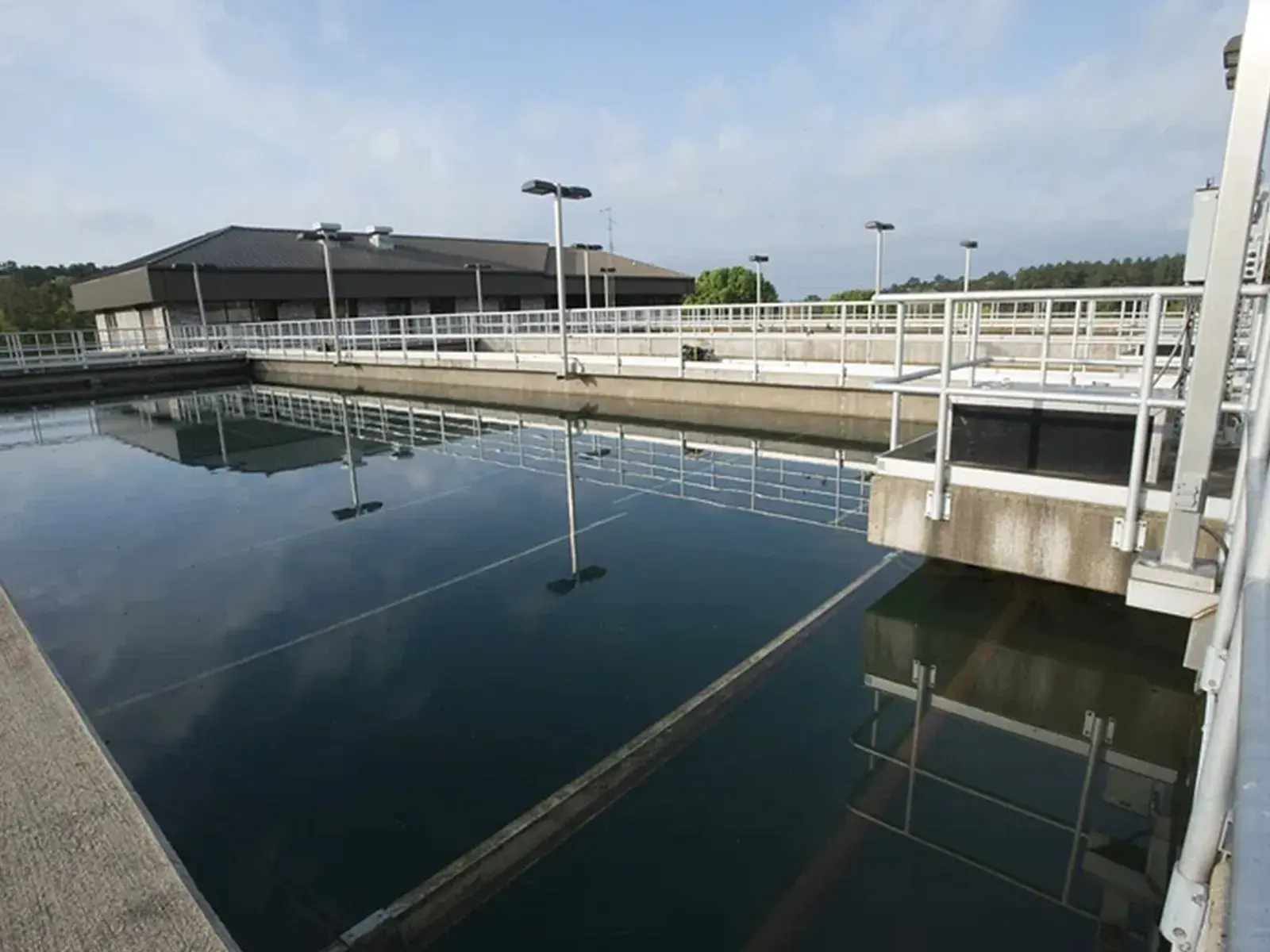
Representative industrial wastewater sampling captures the process condition behind a decision—not merely water from an outlet. Define the objective, point, timing, sample type, flow, analytes, containers, preservation, and chain of custody before fieldwork. Use grabs for short-lived conditions or unstable analytes; use composites for average quality and mass-load calculations only when the method permits.
PT Beta Pramesti Asia uses sampling evidence to establish pollutant loads, screen treatment processes, and prepare industrial WWTP design bases. A laboratory result can support engineering only when the stream identity, operating condition, flow, method, and custody history remain traceable.
Should the sample be grab, time composite, or flow-weighted?
Choose the sample type from the question it must answer. A grab records one moment; a time composite averages equal portions taken at fixed intervals; a flow-weighted composite gives more weight to high-flow periods. The facility’s Technical Approval, analytical method, and laboratory instructions still determine the valid sample type for compliance reporting.
| Decision to make | Starting sample type | Appropriate when | Risk to control |
|---|---|---|---|
| Capture a spill, batch dump, pH or temperature peak, oil slug, or volatile constituent | Event-timed grab | A short condition would disappear in an average | Wrong event time, poor mixing, or analyte change during storage |
| Estimate average quality across a shift with reasonably steady flow | Time composite | Equal aliquots are collected at fixed intervals | Large flow changes make the concentration average unrepresentative of mass load |
| Calculate average concentration and load while flow varies | Flow-weighted composite | A synchronized, sufficiently accurate flowmeter is available | Bad flow data, blocked tubing, failed cooling, or poor final mixing |
| Map process variability for design | Dated grab series plus matching flow | Product changes, CIP, startup, shutdown, and batches must remain visible | One composite can conceal the peak that sets equalization or pretreatment duty |
| Verify removal across a unit | Paired samples offset by hydraulic residence time | The same parcel can be followed through the process | Comparing unrelated influent and effluent parcels |
Indonesia’s SNI 6989.59:2008 remains listed as current by the National Standardization Agency and specifically addresses wastewater sample collection. ISO 5667-10:2020 provides international guidance on designing sampling programmes and collecting representative domestic and industrial wastewater samples. Neither replaces parameter-specific methods or a facility’s approval conditions.
Start the sampling plan with the decision it must support
A field plan should identify the decision waiting for the data. Compliance monitoring, design characterization, upset diagnosis, and trial verification need different sampling patterns even when they request the same analytes.
- State the objective and decision boundary. Specify compliance, mass balance, equalization design, chemical selection, treatability testing, or unit-performance verification.
- Map every stream. Mark process drains, CIP, sanitary flow, utilities, laboratory drains, contaminated stormwater, concentrated batches, recycle, and bypasses on the PFD, P&ID, and drainage layout.
- Build an operating calendar. Record product, shift, startup, shutdown, washdown, CIP, batch release, rain, and events that have upset the WWTP.
- Select points and periods. Use safe, accessible, sufficiently mixed points without combining streams that must be assessed separately.
- Lock the laboratory package first. For every analyte, obtain the method, reporting limit, bottle, volume, blank requirements, preservation, holding time, and shipping instructions.
- Synchronize flow and time. Align the clocks and time zone on flowmeters, samplers, field meters, cameras, production logs, and custody forms.
- Write data-acceptance rules. Decide in advance when a sample will be rejected, qualified, repeated, or excluded from design.
For compliance work, begin with the Indonesia industrial wastewater compliance guide. The required parameters, point, frequency, and sample type come from the facility documents and applicable sector rules—not a generic checklist.
Sampling points must separate sources, processes, and the outlet
The best point answers one question without interference from another stream. A final outlet is essential for compliance, but it is normally too late to show which source or treatment stage created the load.
| Location | Question answered | Minimum field context |
|---|---|---|
| Process source before mixing | Which stream carries COD, TSS, oil, metals, salts, toxicity, or extreme pH? | Product/batch, flow, temperature, chemicals, duration, appearance |
| Equalization inlet | What is the combined load and how variable is it? | Tank level, mixer, recycle, inflow, batch events, rainfall |
| Equalization outlet | Does blending reduce peaks and provide a stable feed? | Residence time, level, pump pattern, pH, outflow |
| Before and after one unit | What does that unit actually remove? | Hydraulic offset, dose, mixer/pump/blower status, sludge wasting |
| Compliance point | Does the discharge meet the binding condition? | Point identity, coordinates, bypass check, flow, production state |
| Sludge or recycle line | Does pollutant mass return to the headworks or leave the system? | Volume, solids, return schedule, filtrate/centrate, residual destination |
Avoid surface scum, an inactive sediment bed, a dead leg, or a point immediately after chemical injection before mixing is complete—unless that condition is the study target. Photograph the point and flow direction, assign a permanent code, and use the same code on bottles, field records, and drawings.
Flow-weighted composites preserve the mass-load calculation
Concentration without matching flow does not quantify the problem. Calculate load over the same period represented by the sample:
Load (kg/day) = concentration (mg/L) × flow (m³/day) ÷ 1,000
At 600 m³/day and a composite COD of 800 mg/L, the plant receives 480 kg COD/day. If flow rises to 900 m³/day at the same concentration, load becomes 720 kg/day. Equalization, oxygen demand, sludge production, and chemical consumption should not be based on 800 mg/L alone.
To prepare a flow-weighted composite of a fixed final volume:
Flow volume for interval i (m³) = mean flow during interval i (m³/h) × interval duration (h)
Aliquot volume i = final composite volume × flow volume for interval i ÷ total flow volume
When every interval has the same duration, time cancels and the measured flows can be used directly as weights. For three equal intervals at 20, 40, and 80 m³/h with a 3 L final composite, the respective aliquots are approximately 0.43 L, 0.86 L, and 1.71 L. When interval durations differ, use flow volume Q × Δt; weighting on flow alone produces the wrong composite. This is a weighting example, not a field procedure. The plan must still define intervals, minimum aliquot volume, tubing material, cooling, and which analytes can be composited.
Retain event grabs where peaks matter. A composite may calculate the daily load well while concealing a two-hour toxic shock or chemical-feed demand that controls the design.
Unstable analytes need dedicated bottles and timelines
Do not collect one composite drum and divide it among every test at the end. pH, temperature, dissolved oxygen, oil and grease, volatile compounds, microbiology, dissolved metals, BOD, COD, TSS, and other analytes may require different collection techniques, containers, preservation, or holding times.
| Analyte group | Field decision | Reference to confirm |
|---|---|---|
| pH, temperature, dissolved oxygen, residual chlorine | Measure in the field or immediately as the method directs; record calibration and temperature | SNI 6989.11:2019 for pH and the applicable parameter method |
| BOD | Use the bottle, cooling, and delivery window set by the laboratory | SNI 6989.72:2009 |
| TSS and TDS | Preserve representativeness without losing solids; distinguish total from dissolved results | SNI 6989.3:2019 for TSS and SNI 6989.27:2019 for TDS |
| Oil and grease | Use a dedicated grab and glass bottle; avoid transfers that leave oil on equipment or container walls | SNI 6989.10:2011 and the project-approved method |
| COD, ammonia, nutrients, metals, cyanide, sulfide, volatile organics | Separate bottles and preservation by analyte; never add preservative without written instructions | Laboratory method, accreditation scope, and Technical Approval |
ISO 5667-3:2024 sets general requirements for preservation, handling, transport, and storage of water samples. As a public comparison—not an Indonesian requirement—40 CFR 136.3 Table II shows why this work must be coordinated before collection: its maximum holding times are 15 minutes for pH and dissolved oxygen, 48 hours for BOD, and seven days for TSS/TDS under the stated preservation conditions. The binding method and timeline remain those agreed with the laboratory and specified for the facility.
Chain of custody must close every sample transfer
Chain of custody records who controlled the sample from bottle preparation until laboratory receipt. A complete form cannot rescue an unrepresentative sample, but without it the identity, seal integrity, times, and shipping condition are difficult to prove.
Each bottle and shipment should record:
- a unique sample ID shared by the label, field sheet, and custody form;
- facility, point, matrix, sample type, date, start/end time, and time zone;
- collector, collection method, requested analytes, bottle, volume, and preservation;
- cooler temperature at receipt, coolant, cooler number, seal number, and bottle condition;
- signature, date, and time for every transfer;
- analytical request, method, reporting limit, deadline, and report recipient;
- deviations such as sampler stoppage, lost ice, broken bottle, low volume, exceeded holding time, or damaged label;
- production condition, flow, weather, field pH, alarms, dosing, out-of-service units, and relevant photographs.
The laboratory should report sample acceptance or qualification rather than erase a deviation. Data with nonconforming temperature, seal, timing, or volume needs explicit review before it enters an engineering design basis.
Field QA/QC separates process variability from sampling error
Select quality controls from the contamination risk and data objective. A field blank tests environmental and handling contamination; an equipment blank checks reusable apparatus; a trip blank supports volatile-organic work; and a field duplicate measures combined sampling and analytical variability.
Record each meter’s ID, pre- and post-checks, calibration standards, results, and corrective action when performance leaves tolerance. State blank and duplicate frequency in the QA/QC plan. No single percentage is automatically correct for every matrix, project, or decision consequence.
The sampling package controls the WWTP process choice
Issue raw data with its context, not just the laboratory certificate. Designers need flow patterns, concentration statistics, mass loads, batch variation, methods, reporting limits, QA/QC results, and operating events to choose the next test.
| Sampling finding | Next test or decision | Relevant handoff |
|---|---|---|
| High TSS with solids capable of forming settleable floc | Jar testing, settling curve, sludge production | Coagulants, flocculants, and clarifiers |
| Dispersed oil or poorly settling floc | Emulsion, coagulation, and flotation testing | Dissolved Air Flotation |
| Variable COD/BOD or suspected inhibition | Fractionation, respirometry, biological testing, and pilot work | Industrial wastewater treatability test guide |
| High TDS or conductivity | Ion identification, salt balance, and membrane/evaporation testing where relevant | A dissolved-solids process basis—not clarification |
| Chemical treatment increases sludge | Thickening, filterability, filtrate, cake, and residual-route tests | Sludge-treatment programmes |
Where an environmental laboratory is needed for field collection and analysis, A3 Laboratories water-testing services are a relevant next step. For process evaluation, send the sampling plan, flow diagram, dated results, flow records, production logs, and chain of custody to the PT Beta Pramesti Asia team.
Industrial wastewater sampling FAQ
How many samples are enough for WWTP design?
There is no universal count. The dataset must cover relevant production cycles, shifts, products, CIP, concentrated batches, flow peaks, seasons or rainfall, and conditions that have upset the plant. One hundred samples from the same operating state can still miss the design event.
Can one final-effluent sample select a treatment technology?
No. It shows the combined result of the existing system but does not isolate pollutant sources, unit performance, inhibitory streams, or recycle. Design characterization needs source, inlet, process, outlet, flow, and operating context.
Can oil and grease be included in a composite sample?
Do not assume so. Oil can adhere to tubing and container walls, and some methods require dedicated grabs and containers. Confirm sample type, bottle, preservation, and any laboratory compositing procedure before collection.
What happens if the chain of custody is broken?
Document the deviation, hold the data from critical decisions, and assess whether identity and integrity remain provable. If not, resample. Never reconstruct signatures or transfer times after the event.
This article was checked against sources available on 27 July 2026. Regulations, standards, laboratory scopes, and Technical Approvals can change; confirm the current edition and project requirements before compliance sampling.