

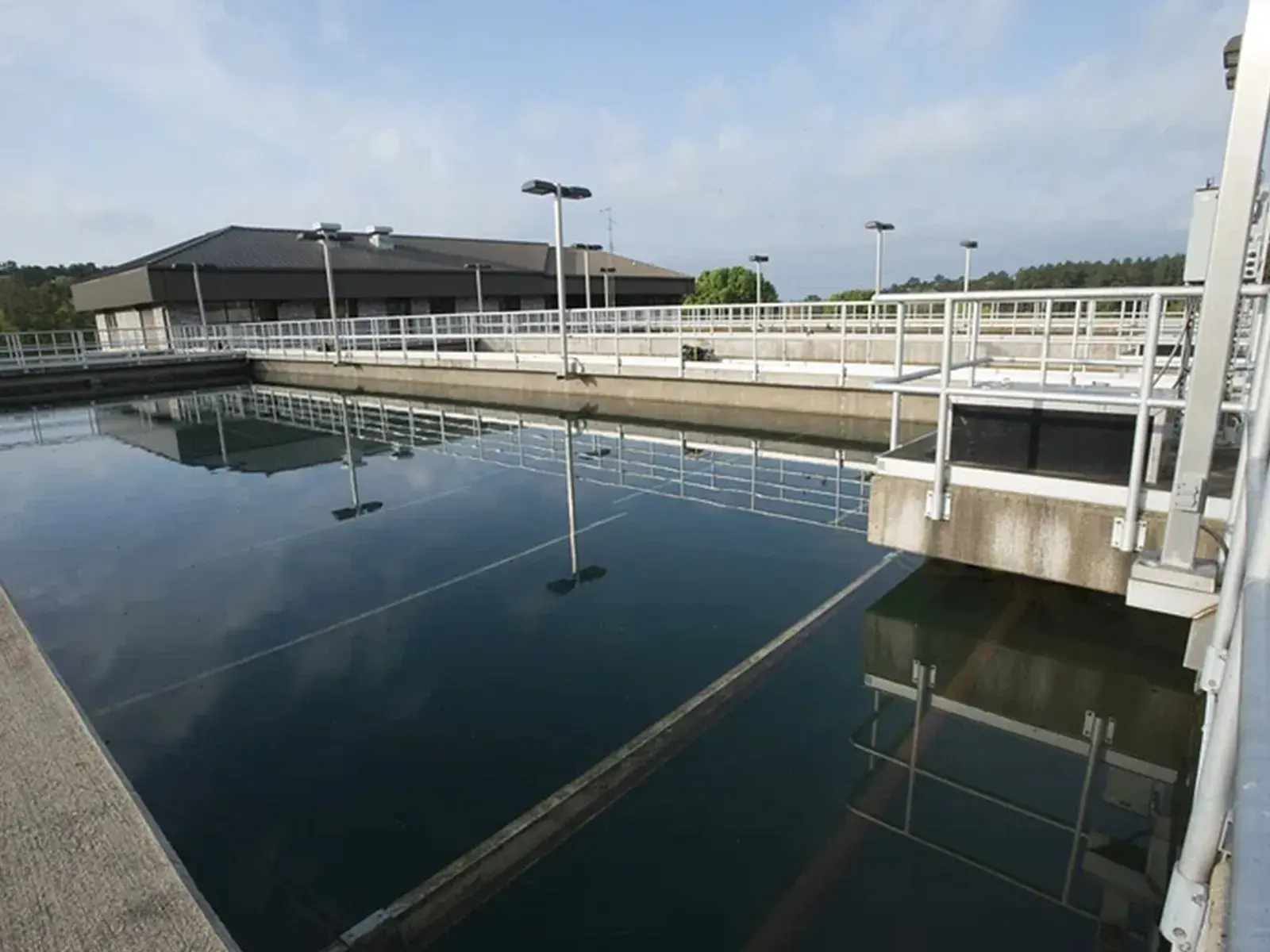
An industrial wastewater treatability test proves which process is viable before WWTP capacity, chemical dose, or performance guarantees are fixed. Start with representative samples and controls; test coagulation–settling or flotation according to the actual mechanism; evaluate biological inhibition and residuals; then pilot the strongest candidate. Judge final water, sludge, operability, and repeatability—not one jar’s highest removal.
PT Beta Pramesti Asia uses bench and pilot evidence to convert influent data into a treatment train, design loads, operating envelope, and comparable acceptance criteria. A defensible test answers a stated decision and records its limitations. A photograph of clear water does not constitute a procurement basis.
Treatability decision matrix before process selection
No single jar test can prove an entire WWTP. Settling, DAF, biological systems, membranes, and dewatering use different mechanisms; each candidate needs measurable responses and a defined scale-up gate.
| Design question | Minimum test | Required record | Decision the result can support |
|---|---|---|---|
| Can suspended or colloidal matter settle? | Untreated control, pH/coagulant-dose matrix, flocculant, settling curve | pH, active dose, turbidity/TSS/COD, settling time, sludge volume and character | Candidate chemistry, dose window, and clarifier pilot basis |
| Can oil, light floc, or fine solids float? | Chemical screening followed by representative bench flotation | Test pressure/recycle, rise rate, subnatant quality, float, skimmability | DAF candidate and conditions for pilot proof |
| Can biology remove COD without inhibition? | COD/BOD fractionation, respiration test, nutrient demand, no-wastewater control | Oxygen uptake, inhibition/stimulation, ammonia, pH, temperature, biomass | Need for segregation, equalization, pretreatment, and longer biological testing |
| Does the process repeatedly meet the target? | Repeats on normal, peak, batch, CIP, and credible worst conditions | Mean, range, worst result, deviations, and shock recovery | Influent envelope and pilot scenarios |
| How much residual material must be handled? | Thickening, filterability, or dewatering screen on generated sludge | Dry solids, wet volume, filtrate/centrate, cake, chemical content | Storage, pumps, dewatering, and residual route |
| Can the result transfer to the plant? | Pilot with representative hydraulics, mixing, aeration, recycle, and controls | Mass load, turndown, energy, chemical use, downtime, hourly data | Design basis, guarantees, acceptance test, and initial SOP |
ASTM D2035-19 is an active practice for evaluating coagulants, coagulant aids, concentrations, and order of addition under common experimental conditions followed by gravity settling. It disciplines comparison; it does not prove flotation, long-term biology, membrane fouling, or full-scale operator response.
Build the test basis from representative samples and targets
One normal-day effluent sample is not enough. Use an industrial wastewater sampling plan that captures stream sources, flow, shifts, products, CIP, concentrated batches, peaks, temperature, and events that have upset the WWTP. Retain an untreated portion for baseline analysis and document sample homogenization before distributing it among test reactors.
The minimum test basis includes:
- Binding targets: sector limits, reuse requirements, or downstream-unit specifications by parameter.
- Influent envelope: average/peak flow, representative P50/P90/maximum concentrations, batch volume and duration, temperature, and pH.
- Mass balance: sources, recycle, sludge return, chemical inventory, and load by stream.
- Analytical basis: methods, reporting limits, QA/QC, preservation, holding time, and laboratory.
- Process conditions: mixing, residence time, aeration, temperature, dosing sequence, materials, and separation mechanism.
- Acceptance criteria: water, sludge, consumption, operability, repetition, and failure limits agreed before the results are viewed.
Calculate the mass that each process must remove:
Load (kg/day) = flow (m³/day) × concentration (mg/L) ÷ 1,000
Ninety-percent removal from 100 kg/day leaves 10 kg/day; the same percentage from 1,000 kg/day leaves 100 kg/day. Removal percentage without flow, final concentration, and influent condition can therefore produce the wrong design conclusion.
A coagulation jar test should change one variable per series
Use an untreated control and the same physical conditions in every vessel. Change one factor per series—pH, coagulant family, dose, flocculant, or addition order—so the cause of each response remains traceable.
- Homogenize without destroying the solids behaviour under study. Measure pH, temperature, turbidity/TSS, total and dissolved COD where relevant, alkalinity, oil/grease, and the target analyte.
- Prepare dated stock solutions and record concentration, density, active fraction, batch, and expiry. Select pipettes and balances so a tiny stock volume does not dominate error.
- Run a pH series first when the reaction is pH-sensitive. Include a pH-adjusted blank so acid/base effects are not attributed to the coagulant.
- Compare coagulant families on an equivalent active-dose basis. Narrow the range, then screen flocculants after the best coagulation condition is known.
- Hold sample volume, rapid mix, slow mix, settling time, temperature, and addition order constant within a series.
- Measure both supernatant and sludge: turbidity/TSS, dissolved targets, residual metals where relevant, sludge volume, settleability, filterability, and pH/alkalinity change.
- Repeat the leading candidates on other representative production samples before a plant trial.
A dose check makes the reporting basis explicit. In a 1 L jar, 1 mL of a 10 g/L stock adds 10 mg/L of stock material. If the product is 40% active, the active dose is 4 mg/L. State whether a result is product dose, active ingredient, metal ion, or polymer; those four numbers are not interchangeable.
The U.S. EPA notes that chemical-precipitation dose depends on pH, alkalinity, competing reactions, injection location, and mixing; accurate dose should be found by jar testing and confirmed in field evaluation (U.S. EPA, Chemical Precipitation, EPA 832-F-00-018). Use the result to screen coagulants and flocculants, not to set a permanent plant dose without a trial.
A settling curve separates chemical removal from hydraulic capacity
One reading after 30 minutes does not show interface velocity or sludge re-expansion. Record interface height and supernatant quality at consistent times—such as 1, 5, 10, 20, 30, and 60 minutes—and plot height against time. Keep vessel geometry, temperature, and sample depth common when comparing candidates.
Measure the residual volume as well. If a 1 L jar produces 20 mL of settled sludge, the initial wet-volume projection is 20 L per m³ treated before thickening or dewatering. This is not a final tank size, but it exposes a recipe that produces the clearest water at an unmanageable sludge volume.
A clarifier candidate needs settleable floc, supernatant quality, an interface curve, solids capture, and high-load response. Combine these results with the clarifier solids-loading calculation. Do not convert jar settling time directly into a surface overflow rate without a stated pilot or scale-up model.
A DAF test must reproduce flotation—not only floc formation
Floc that settles in a jar is not automatically able to capture microbubbles, rise, form a stable float, and leave a clean subnatant. Follow chemical screening with a bench flotation cell or representative pressurized recycle.
Record saturation pressure, recycle ratio, contact time, temperature, pH, dose, dosing order, mixing, rise time, subnatant quality, float thickness and solids, drainage, and skimmability. Repeat credible maximum oil/surfactant and minimum-temperature conditions because emulsion stability and viscosity change.
Where free oil is present, run a quiescent-separation test first. DAF should not receive oil that gravity can economically recover. Use the API, CPI, and DAF selection guide and industrial DAF sizing guide to structure testing and scale-up. A Betaqua DAF package becomes the equipment handoff only after flotation is proven.
Biological inhibition testing separates toxicity from high COD
High COD is not necessarily biodegradable. Moderate COD can inhibit biomass when it contains biocide, solvent, metals, salinity, or extreme pH. Compare activated-sludge oxygen uptake in a no-wastewater control with several concentrations of the actual wastewater blend.
OECD Test Guideline 209 assesses effects on activated-sludge microorganisms by measuring respiration for carbon and/or ammonium oxidation. It operates at 20 ± 2°C and measures exposure up to 180 minutes. ISO 8192:2007 covers the same general inhibition principle for water, wastewater, chemicals, and mixtures.
For a project screen, use a control, the protocol’s reference control where required, and a dilution series spanning the real blend—for example 0%, 25%, 50%, 75%, and 100% wastewater after correcting volumes. Record oxygen uptake, pH, temperature, ammonia, and abiotic oxygen demand. Replication and validity criteria must follow the selected protocol.
Do not describe that example dilution series as an OECD 209 test unless the complete protocol is followed. To determine NOEC and ECx, OECD 209 recommends six blank controls and five treatment concentrations in a geometric series, each with five replicates. Mean oxygen uptake in the blank controls must be at least 20 mg O₂ per gram of activated-sludge dry weight per hour, and the coefficient of variation among control replicates must not exceed 30% at the end of the definitive test. If those control criteria fail, the inhibition result is invalid and the test must be repeated as the protocol directs.
A short respiration test shows inhibition or stimulation; it does not prove long-term COD removal. The biological candidate still needs acclimation or pilot work measuring soluble COD/BOD, NH4-N/TN, nutrients, alkalinity, sludge yield, settleability or membrane fouling, and recovery after shocks. Interpret the result with the CAS, MBBR, and MBR selection guide.
Sludge and residuals are treatment outcomes
Every removed pollutant must appear in sludge, float, concentrate, gas, or reaction products. Close the balance with wet volume, total and volatile solids where relevant, density, settling/thickening, filterability, cake, filtrate/centrate, oil or metal content, and storage demand.
Calculate initial chemical consumption as:
Product (kg/day) = product dose (mg/L) × flow (m³/day) ÷ 1,000
At 1,200 m³/day and an 80 mg/L product dose, theoretical consumption is 96 kg/day. At a product density of 1.20 kg/L, this is about 80 L/day before operating factors, losses, and margin. Procurement must use the performance curve, influent variability, active concentration, materials, and pump calibration—not one optimum jar.
Compare candidates by final water and total residual cost. The sludge-treatment programme and any dewatering trial should use sludge actually generated by the selected recipe, not a generic substitute.
Acceptance criteria prevent cherry-picking one good run
Write the acceptance matrix before reviewing the results. Each line needs a target, method, statistic, influent condition, repeat count, owner, and action if it fails.
| Acceptance group | Evidence to state |
|---|---|
| Influent envelope | Covered flow, pH, temperature, concentration/load, batches, and inhibitory compounds |
| Final water | Final value by parameter, method, reporting limit, and margin to the binding target |
| Repeatability | Individual runs, mean/range, worst result, controls, and rejected data |
| Chemicals | Product and active dose, order, pH/alkalinity, daily use, storage, and compatibility |
| Residuals | Dry solids/day, volume, character, dewatering, filtrate, classification, and route |
| Operability | Turndown, startup, shutdown, shock, cleaning, alarms, interlocks, staffing, and recovery |
| Scale-up | Parameters held constant, parameters changed, margin, train count, and guarantee boundaries |
| Utilities and cost | Power, water, air, chemicals, consumables, labour, downtime, sludge haulage, and spares |
There is no universal pass number for every industry. The facility’s Technical Approval, reuse or downstream need, process risk, and agreed acceptance test set the targets. The non-negotiable rule is to define them before selecting a result and compare every candidate on the same basis.
Move from bench to pilot through documented gates
Bench tests screen mechanisms and ranges. A pilot proves hydraulics, mixing, mass transfer, separation, controls, feed variation, and operator work. A defensible sequence is:
- approve characterization and mass balance;
- approve the bench method, QA/QC, safety, and residual disposal;
- require candidates to pass water, sludge, repeatability, and operability criteria;
- expose the pilot to normal, peak, batch, and credible worst conditions;
- close pilot balances for water, pollutants, chemicals, sludge, energy, and downtime;
- require the supplier to state scale-up, margin, turndown, duty/standby, acceptance test, and conditions outside the guarantee;
- begin the plant trial with a fallback setting, hold points, and authority to stop.
Do not change full-scale chemistry without reviewing safety, material compatibility, off-spec water containment, and operating approval. The laboratory optimum still needs conversion to actual injection flow and pressure. Where separate metering hardware is required, Watermart industrial dosing pumps are the equipment handoff after L/h, pressure, wetted materials, and control signals are known.
Compliance and service handoff need the same design basis
Government Regulation PP No. 22 of 2021 remains Indonesia’s environmental protection and management framework. Minister of Environment and Forestry Regulation No. 5 of 2021 governs Technical Approval and the Operational Feasibility Certificate; as of July 2026 it remains in force with a partial carve-out for animal-feed and aquaculture-feed activities under Regulation No. 2 of 2026. Confirm the project target against the sector, discharge/reuse route, and facility documents.
For an evaluation, send the PFD, stream balance, dated dataset, sampling methods, effluent targets, chemical inventory, sludge data, site and utility constraints, and raw test results to the PT Beta Pramesti Asia team. The same evidence can map industrial wastewater equipment and water and wastewater chemical programmes, allowing technical proposals to be compared fairly.
Industrial wastewater treatability test FAQ
Is a jar test enough to buy a DAF or clarifier?
No. A jar test can screen chemistry and gravity settling. DAF needs representative bubble/recycle and float-removal testing; a clarifier needs settling/solids-flux and hydraulic checks. Both still require a stated scale-up method and acceptance test.
What removal percentage counts as a pass?
There is no universal percentage. Pass criteria come from final concentration and load, the binding limit or reuse target, margin, repeatability, sludge, cost, and peak-condition performance. High percentage removal can still fail when the final concentration exceeds the target.
How many samples should be tested?
Use enough to cover every operating mode that controls design rather than chasing a count. At minimum, distinguish normal, peak, batch/CIP, relevant temperature or season, and known upset conditions. If one mode is absent, the test basis is incomplete.
When should a pilot be considered essential?
A pilot is especially valuable for highly variable feed, inhibitory compounds, difficult emulsions, uncertain sludge, strict reuse targets, scale-sensitive processes, or failure that would stop production. It resolves uncertainties a beaker cannot.
This article was checked against sources available on 27 July 2026. Standards, regulations, and facility documents can change; confirm the current edition, method scope, safety requirements, and project obligations before testing.